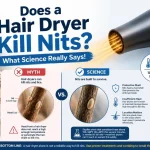
The discovery of head lice can send a shiver of panic through any household, leading to a frantic search for solutions beyond the pharmacy aisle. In this quest, an old home remedy often surfaces: the common hair dryer. The idea is tantalizingly simple—use intense, direct heat to dehydrate and eliminate these stubborn pests without harsh chemicals. But does this method stand up to scientific scrutiny, or is it a well-intentioned myth that could do more harm than good?
Understanding the efficacy and safety of home treatments like the hair dryer is crucial for effective lice management. Misinformation can lead to prolonged infestations, unnecessary discomfort, and even scalp damage. This article will dissect the science behind using heat against lice, compare it to proven treatments, and provide a clear, actionable guide for dealing with an infestation. You will learn the specific conditions required for heat to be effective, the significant risks involved, and how to integrate safe practices into a comprehensive lice elimination strategy.
The Science of Heat vs. Lice: Can They Survive the Blow?
Head lice, or Pediculus humanus capitis, are parasitic insects that have evolved to thrive in the specific environment of the human scalp. Their survival depends on a consistent temperature range and frequent blood meals from the host. The core question is whether the hot air from a standard hair dryer can disrupt their biology enough to kill them. Research indicates that lice are indeed susceptible to extreme heat, but the lethal threshold is higher than one might assume. Studies on thermal treatments show that sustained exposure to air temperatures at or above 52 degrees Celsius (approximately 125.6 degrees Fahrenheit) can be fatal to lice and their eggs (nits).
However, achieving this lethal temperature on the scalp with a consumer hair dryer is fraught with difficulty. The scalp itself is sensitive and can be burned at temperatures not far above the lethal range for lice. Furthermore, hair acts as an insulator, protecting the lice and nits nestled close to the scalp. A hair dryer blowing on the surface of the hair may create a very hot environment on the outer layers, but the heat often fails to penetrate sufficiently to the base of the hair shaft and the scalp where the lice reside and lay their eggs. This creates a significant efficacy gap.
Practically, this means that while a hair dryer might kill some adult lice on the surface, it is highly unlikely to eradicate all lice or, more importantly, the nits firmly cemented to hair strands. Nits are particularly resilient due to their protective shell. A partial treatment is a recipe for reinfestation, as surviving nits will hatch in 7-10 days, restarting the cycle. Therefore, relying solely on a hair dryer is an incomplete and unreliable strategy.
The Real Risks: Scalp Burns, Hair Damage, and Spreading Lice
Beyond its questionable effectiveness, using a hair dryer as a lice treatment carries tangible risks. The most immediate danger is thermal burns to the scalp, ears, and neck. Children's skin is especially delicate. To even approach temperatures that might affect lice, you must use the dryer on its highest heat setting held uncomfortably close, significantly increasing burn risk. These burns can be painful, may blister, and pose a risk of infection, turning a nuisance into a medical issue.
The high heat can also cause severe damage to the hair itself. Prolonged, direct exposure to intense heat strips hair of its natural moisture, leading to dryness, brittleness, split ends, and breakage. It can also damage the hair cuticle, leaving hair frizzy, dull, and unmanageable. This cosmetic damage can take months to repair. Additionally, the forceful air from the dryer can inadvertently blow live lice and nits off the hair and into the surrounding environment—onto furniture, bedding, or other family members—potentially spreading the infestation.
Perhaps the most significant risk is the false sense of security it provides. Believing the hair dryer has solved the problem may lead parents to forgo proven, systematic treatment methods. This delay allows the infestation to grow, as surviving lice continue to breed. The subsequent, more entrenched infestation becomes harder to control, causes more distress, and may require more aggressive treatment. It’s a risk that outweighs the perceived convenience of the method.
Proven Alternatives: From Over-the-Counter to Professional Care
For safe and effective lice elimination, turn to methods with clinical evidence supporting their use. The first line of defense is often over-the-counter (OTC) pediculicide shampoos and lotions containing ingredients like permethrin or pyrethrins. These are neurotoxins to lice and, when used exactly according to package directions—including the crucial second application 7-10 days later to kill newly hatched nymphs—can be very effective. It is essential to follow instructions meticulously to avoid under-dosing or triggering pesticide resistance.
For resistant infestations or for those seeking non-pesticide options, prescription treatments are available. These include stronger topical medications like ivermectin or spinosad, and even oral medications in severe cases. Another highly effective, physical approach is the use of dimethicone-based lotions. These silicone oils coat the lice, suffocating them by blocking their breathing spiracles. Dimethicone treatments are often preferred as lice cannot develop resistance to them, and they are generally gentler on the scalp.
The single most important mechanical method is meticulous combing with a high-quality, metal nit comb. This is not an alternative but a necessary adjunct to any treatment. Wetting the hair with conditioner (a technique often called "wet combing") immobilizes lice and makes combing easier. The process involves systematically combing small sections of hair from the scalp to the tip to remove all adult lice and nits. This must be repeated every 2-3 days for at least two weeks to break the life cycle. Many experts argue that thorough, repeated combing is the cornerstone of successful lice removal.
The Role of Controlled Heat: Specialized Devices vs. Home Hair Dryers
It is important to distinguish between a consumer hair dryer and medical devices designed specifically for lice treatment using controlled heat. These devices, such as the FDA-cleared AirAllé machine, represent the legitimate application of the heat principle. They are not hair dryers; they are clinical devices that use carefully calibrated, dry air at a specific temperature and flow rate to dehydrate lice and nits. A trained operator uses a handpiece that resembles a hair dryer nozzle to direct the air while meticulously parting the hair to ensure the heat reaches the scalp.
The key differences are precision and safety. These devices operate at a temperature that is lethal to lice but monitored to prevent scalp burns. Treatment sessions are methodical, covering every part of the head, and typically take 30-60 minutes. Clinical studies on the AirAllé device show a high success rate, often above 99%, in killing live lice and eggs in a single treatment. This highlights that the concept of heat treatment is valid, but only when delivered under controlled, clinical conditions.
For the average consumer, this means the takeaway is not to dismiss heat entirely, but to understand that proper thermal lice eradication is a professional procedure. Using a hair dryer at home attempts to replicate this without the necessary safety controls, precision, or guaranteed efficacy. Investing in a professional heat treatment is a viable, chemical-free option, but attempting a DIY version with a hair dryer is not an equivalent or safe substitute.
Building an Effective Action Plan: Steps for Lice Elimination
Upon confirming a lice infestation, a calm, systematic approach is your best weapon. Your first step should be to select a primary treatment from the proven categories: an OTC pediculicide, a dimethicone-based product, or a plan for rigorous wet-combing. Consult a pharmacist or pediatrician if you are unsure. Purchase a high-quality metal nit comb—plastic combs included in many kits are often ineffective. Inform your child’s school, close friends, and family to help prevent ping-pong reinfestations.
On treatment day, follow the product instructions to the letter. After any topical treatment, the essential next phase begins: combing. Section wet, conditioned hair and comb from the root to tip, wiping the comb on a paper towel after each stroke. Inspect the towel for lice and nits. This process must be repeated on days 1, 5, 9, and 13 to catch any newly hatched lice before they can mature and lay eggs. This breaks the life cycle definitively. Check all household members daily for two weeks.
Concurrently, manage the environment wisely. While lice cannot survive long off the human head, take simple steps to reduce remote risks. Wash bedding, hats, and recently worn clothes in hot water and dry on high heat. Items that can’t be washed can be sealed in a plastic bag for two weeks. Vacuum upholstered furniture and carpets. Avoid excessive cleaning or using insecticide sprays in the home, as lice spread primarily by head-to-head contact, not from the environment. Focus your energy on the head, not the house.
Key Takeaways
- ✓ A standard hair dryer is an ineffective and risky primary treatment for head lice, as it is unlikely to kill all lice and nits and poses a high risk of scalp burns and hair damage.
- ✓ Lice and nits can be killed by sustained, high heat (above 52°C/125.6°F), but this requires specialized medical equipment, not a consumer hair dryer, to be done safely and effectively.
- ✓ Proven treatment methods include OTC/prescription pediculicides, dimethicone-based suffocating agents, and the meticulous, repeated use of a metal nit comb in a wet-combing protocol.
- ✓ The cornerstone of any successful treatment is systematic nit combing over a two-week period to physically remove all eggs and break the lice life cycle.
- ✓ Environmental cleanup should be simple and focused on high-contact items like bedding and hats; excessive home disinfection is unnecessary as lice are spread almost exclusively by direct head-to-head contact.
Frequently Asked Questions
Can I use a hair dryer on the cool setting to suffocate lice by depriving them of oxygen?
No, this is a common misconception. Lice do not breathe in a way that would be affected by blowing air. They have breathing spiracles that close to retain moisture. Cool air from a dryer will not kill them and may even help disperse them. The theory behind professional heat devices is dehydration, not suffocation by air flow.
If a hair dryer doesn't work, what about straighteners or curling irons?
Using hot styling tools directly on the scalp to kill lice is extremely dangerous and strongly discouraged. The risk of severe burns is very high, and it is impossible to safely apply the iron to every part of the scalp where lice and nits reside. Furthermore, the direct heat can severely damage and break the hair. This method is ineffective for eradication and hazardous.
How long can lice live off the head, and do I need to fumigate my house?
Adult lice can only survive 1-2 days away from the human scalp, and nits (eggs) cannot hatch at room temperature away from the scalp’s warmth. You do not need to fumigate. Focus on practical steps: wash bedding and recently worn clothes in hot water, dry on high heat, and vacuum floors and furniture. Sealing non-washable items in a plastic bag for two weeks is sufficient.
Are natural remedies like mayonnaise, olive oil, or tea tree oil effective?
While some anecdotally report success with occlusive substances like mayonnaise or olive oil, their efficacy is not well-supported by robust science. They aim to suffocate lice, but achieving complete coverage and leaving it on long enough (often overnight) is messy and difficult. Tea tree oil has some insecticidal properties but can be a skin irritant and is not a reliable standalone treatment. These methods should not replace proven combing and treatment protocols.
My child’s school has a "no nit" policy. Is this necessary?
Many health organizations, including the American Academy of Pediatrics, discourage "no nit" policies. The presence of nits (eggs) does not necessarily indicate an active, contagious infestation, as many may be empty or non-viable. These policies often lead to unnecessary absences and stigma. The focus should be on the presence of live, crawling lice, which indicate an active case that requires treatment.
Conclusion
The quest to use a hair dryer to kill head lice is understandable but ultimately misguided. While heat can be a powerful weapon against these parasites, it requires precise, controlled application via specialized medical equipment to be both safe and effective. The common household hair dryer fails on both counts, offering false hope while risking burns, hair damage, and the spread of infestation. The path to successful lice elimination lies in evidence-based methods: proven topical treatments, the indispensable metal nit comb, and a patient, systematic approach over a two-week period.
Arm yourself with accurate information and the right tools. If you suspect lice, confirm the diagnosis, choose a proven treatment, and commit to thorough combing. Consult a healthcare professional or a reputable lice removal clinic if you need guidance. By focusing on safe, effective strategies, you can manage an infestation with confidence and minimize disruption to your family’s life, leaving the hair dryer for its intended purpose—styling hair, not treating parasites.

Oliver Bennett is a home appliance writer specializing in washer and dryer solutions, laundry care, and energy-efficient appliances. He provides detailed reviews, buying guides, and maintenance tips to help users choose reliable machines and achieve better laundry results.