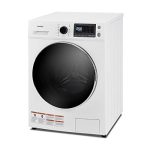
Imagine doing laundry without needing to cut a hole in your wall or snake a long, rigid duct through your home. This is the promise of the ventless dryer, a compact and versatile appliance that has moved from a European niche to a mainstream laundry solution. By defying the traditional need for external venting, these machines offer a new world of flexibility for apartment dwellers, small home owners, and anyone looking to simplify their laundry setup.
Understanding how a ventless dryer works is crucial for making an informed purchase. This technology isn't just a minor tweak; it's a fundamentally different approach to drying clothes that comes with distinct advantages and considerations. In this article, you will learn the core mechanics behind ventless drying, compare its two main types, evaluate its pros and cons for your lifestyle, and receive practical guidance on installation, maintenance, and optimal use to ensure you get the best performance from this innovative appliance.
The Core Principle: Rejecting the Need for an External Vent
At its heart, a ventless dryer operates on a simple but ingenious principle: instead of expelling hot, moist air from your home through a duct, it captures that moisture from the wet laundry and disposes of it within the machine itself. Traditional dryers work by heating air, tumbling clothes through it to absorb moisture, and then blowing that saturated air outside. This process requires a constant intake of new, dry air from your living space and an exhaust path to the outdoors. A ventless dryer breaks this cycle by creating a closed-loop system. It continuously recirculates the same air, removing the moisture from it after each pass, so no external vent is necessary.
The magic lies in how the machine extracts and handles the water vapor. After the warm, humid air passes through the drum and picks up moisture from your clothes, it is directed through a system that condenses the vapor back into liquid water. This is a critical phase change—turning gas back into liquid—which allows the dryer to separate the water from the air stream. The now-drier air is then reheated and sent back into the drum to pick up more moisture, creating an efficient, repeating cycle. This closed-loop design means all the heat energy is retained within the system, making it inherently more energy-efficient than vented models, which constantly waste heated air.
Because it doesn't exhaust air, a ventless dryer must be more precise in its temperature and moisture control. Advanced sensors constantly monitor the dryness of the load and the condition of the air within the system. This allows the dryer to adjust heating elements and cycle timing with great accuracy to prevent overheating and protect delicate fabrics. The result is a gentler drying process that can be better for your clothes, albeit often over a longer period than a powerful vented dryer.
The Two Main Technologies: Condenser vs. Heat Pump
Ventless dryers are primarily available in two distinct technological flavors: condenser dryers and heat pump dryers. While both are ventless, their methods of moisture removal and energy use differ significantly. A condenser dryer, the more common and typically less expensive type, uses a secondary stream of cool air (often from the room) to cool down a heated exchanger. As the hot, moist air from the drum hits this cool surface, the water vapor condenses—much like droplets form on a cold glass. The condensed water is then collected in a removable tank or can be pumped directly into a drain.
A heat pump dryer represents a more advanced and efficient evolution. Instead of using a simple heating element, it employs a refrigerant-based heat pump system, similar to what powers an air conditioner or refrigerator. The system has a compressor and two heat exchangers. One heats the air going into the drum, while the other cools the moist air coming out to condense the water. The key advantage is that the heat pump recycles the thermal energy; the heat extracted during condensation is used to warm the incoming air again. This makes heat pump dryers dramatically more energy-efficient, using up to 50% less electricity than even condenser dryers.
Choosing between them often comes down to budget and priority. Condenser dryers are a solid entry point into ventless drying, with faster drying times for some loads but higher energy consumption. Heat pump dryers have a higher upfront cost but offer superior energy savings, lower operating temperatures (ideal for delicate fabrics), and are generally quieter. For example, drying a standard load of cotton in a condenser dryer might take 90 minutes, while a heat pump dryer might take 120 minutes, but for a fraction of the energy cost. Your local electricity rates and drying frequency will determine the payback period for the investment in a heat pump model.
Weighing the Pros and Cons: Is a Ventless Dryer Right for You?
The flexibility of installation is the most celebrated advantage of ventless dryers. Since they don't require external venting, they can be placed virtually anywhere you have a standard electrical outlet and, optionally, a drain connection. This makes them perfect for apartments, condos, closets, basements, RVs, and small laundry rooms where running a duct is impossible or prohibitively expensive. Many models are also stackable or designed as all-in-one washer-dryer combos, saving even more space. You can install one in a bathroom, kitchen, or under a counter without any major renovation.
However, this convenience comes with trade-offs. The most commonly cited drawback is longer drying times. Ventless cycles can be 20-50% longer than those of a powerful vented gas dryer. They also typically have smaller capacities, so overloading the drum will drastically increase drying time and may lead to unsatisfactory results. Maintenance is also more hands-on; the condenser unit or internal filters need regular cleaning (often after every cycle) to maintain efficiency, and the water tank must be emptied if you don't have a drain hose attached. Neglecting this can lead to musty odors, mildew, and machine failure.
To decide if it's right for you, assess your lifestyle and space. A ventless dryer is an excellent fit if you lack a vent, prioritize energy savings (especially with a heat pump model), value gentle fabric care, and don't mind planning your laundry schedule around slightly longer cycles. It's less ideal for large families with massive, daily laundry loads who need the fastest possible turnaround, or for those who want a completely "set it and forget it" appliance with minimal filter maintenance. For a couple or small household in a compact space, the pros will likely outweigh the cons.
Installation, Maintenance, and Best Practices for Optimal Performance
The Future of Ventless Drying and Market Evolution
The ventless dryer market is rapidly evolving, driven by global trends toward energy efficiency and urban living. Stricter energy regulations in North America, following long-standing standards in Europe, are pushing manufacturers to innovate. Heat pump technology, once a premium feature, is becoming more affordable and widespread. We are seeing a new generation of hybrid models that combine the speed of traditional drying with the efficiency of heat pumps, and smart features that allow for remote monitoring of filter status and energy consumption via smartphone apps.
Integration with home ecosystems is the next frontier. Future ventless dryers will not only be Wi-Fi enabled but may also sync with your washer to automatically select the perfect drying cycle based on the wash load's fabric and soil level. They could connect to home energy management systems to run during off-peak electricity hours, saving money and reducing grid strain. Advances in sensor technology will further refine moisture detection, eliminating guesswork and preventing over-drying, which wastes energy and damages textiles.
For the consumer, this means more choice, better performance, and greater convenience. As the technology matures, prices will continue to become more competitive with traditional vented models. The environmental argument is also strengthening; the significantly lower carbon footprint of heat pump dryers, especially when paired with renewable energy sources, makes them a compelling choice for the eco-conscious homeowner. The ventless dryer is no longer just an alternative for tight spaces; it is becoming a leading contender for anyone looking to upgrade their laundry routine with an eye on efficiency, fabric care, and modern convenience.
Key Takeaways
- ✓ Ventless dryers use a closed-loop system to condense moisture from the air inside the machine, eliminating the need for an external exhaust duct.
- ✓ The two main types are condenser dryers (which use cool air to condense moisture) and more efficient heat pump dryers (which use a refrigerant cycle to recycle heat).
- ✓ Primary advantages include flexible installation anywhere with power, superior energy efficiency (especially heat pump models), and gentler drying on fabrics.
- ✓ Key drawbacks are typically longer drying cycles, smaller load capacities, and more frequent required maintenance of internal filters and water containers.
- ✓ Optimal performance requires proper installation, adherence to load size limits, regular cleaning of multiple filters, and using a high washer spin speed to remove excess water first.
Frequently Asked Questions
Do ventless dryers take much longer to dry clothes?
Yes, generally. Ventless drying cycles can be noticeably longer than those of powerful vented dryers, often by 20-50%. A load that takes 40 minutes in a vented dryer might take 60-90 minutes in a ventless model. This is due to the lower temperatures and the more complex moisture-removal process. However, this slower, gentler drying is often better for your clothes.
Where does the water go in a ventless dryer?
The water extracted from your clothes is condensed into liquid form within the machine. You have two disposal options. The most convenient is to connect the dryer's drain hose to a standpipe or floor drain, similar to a washing machine. Alternatively, you can use the built-in water reservoir tank, which you must manually empty after every one or two drying cycles.
Are ventless dryers more expensive to run?
It depends on the type. Condenser ventless dryers can be more expensive to run than efficient vented electric models because they use significant electricity for heating. However, heat pump ventless dryers are the most energy-efficient dryers on the market, using up to 50% less energy than standard condenser or vented electric models, leading to substantial savings on your utility bill over time.
Can you install a ventless dryer in a closet?
Yes, this is a major advantage. Since no external vent is needed, you can install a ventless dryer in a closet, under a counter, or in a bathroom. However, you must ensure the closet has adequate ventilation. The dryer needs to draw in ambient air for its cooling process, so a closet door should be louvered or left ajar during operation, and you must follow the manufacturer's specified clearance space around the appliance.
Do ventless dryers cause mold or humidity problems in the room?
When functioning correctly and maintained properly, they should not. The entire design is meant to contain and condense the moisture. However, if the filters are clogged, the drain is blocked, or the water tank overflows, excess humidity can escape into the room. Regular cleaning and ensuring the machine is level (for proper drainage) are essential to prevent any moisture-related issues.
Conclusion
Ventless dryers represent a significant shift in home laundry technology, offering a practical solution where traditional vented models fall short. By understanding the closed-loop mechanics of condensation and the differences between condenser and heat pump systems, you can appreciate how these appliances turn water vapor into liquid without an external duct. Their flexibility for installation in diverse spaces, coupled with impressive energy efficiency—particularly from heat pump models—makes them a compelling choice for modern living situations, from urban apartments to eco-conscious homes.
Before making a decision, honestly assess your laundry habits, available space, and budget. If you value placement flexibility and energy savings and are committed to simple maintenance routines, a ventless dryer could be an excellent investment. Visit appliance showrooms, read recent model reviews from 2026, and consider your long-term utility costs. Embracing this technology could simplify your home layout and contribute to a more efficient, gentle, and adaptable laundry routine for years to come.

Oliver Bennett is a home appliance writer specializing in washer and dryer solutions, laundry care, and energy-efficient appliances. He provides detailed reviews, buying guides, and maintenance tips to help users choose reliable machines and achieve better laundry results.