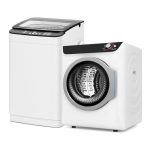
You stand in the appliance aisle, bombarded by a sea of gleaming stainless steel and a dizzying array of logos. Among them, the familiar blue ENERGY STAR label beckons, promising savings and efficiency. But what does that star truly mean for your laundry routine, your wallet, and the planet in 2026? It’s more than just a sticker; it’s a complex certification that has evolved significantly, and understanding its nuances is the key to making a smart, sustainable purchase.
This topic matters because laundry appliances are among the top energy and water consumers in the modern home. With utility costs rising and environmental consciousness at an all-time high, choosing the right machine is a critical financial and ecological decision. This article will demystify the 2026 ENERGY STAR standards for washers and dryers. You will learn how the ratings are calculated, the real-world impact on your bills, the latest technological innovations behind the certification, and how to navigate the labels to find the perfect machine for your household’s needs.
The Evolution of ENERGY STAR: Beyond Basic Efficiency
The ENERGY STAR program, launched by the U.S. Environmental Protection Agency (EPA) in 1992, began as a simple marker for energy-efficient computers. Its expansion to major appliances revolutionized the market. For washers and dryers, the criteria have undergone several major revisions, each raising the bar for performance. The standards in 2026 are vastly more stringent than those of a decade ago. A model that earned the label in 2015 would likely not qualify today, as the program continuously adapts to technological advancements and higher conservation goals. This evolution ensures that the blue star remains a meaningful indicator of true leadership in efficiency.
The latest criteria focus on a holistic view of appliance performance. For washers, it’s no longer just about kilowatt-hours per cycle. The 2026 standards heavily weigh the Integrated Modified Energy Factor (IMEF) and the Integrated Water Factor (IWF). IMEF measures the energy required to run the machine and heat the water, normalized for capacity and cycle performance. A higher IMEF is better. The IWF measures water efficiency in gallons per cycle per cubic foot of capacity—lower is better. This dual focus ensures top-tier models excel at saving both power and water, which are often interconnected costs.
For dryers, the key metric is the Combined Energy Factor (CEF), expressed in pounds of clothing per kilowatt-hour. The 2026 standard favors heat pump dryer technology, which recycles hot air within a sealed system, as it is dramatically more efficient than traditional electric resistance or gas heating. The latest standards have made qualifying with a conventional vented electric dryer nearly impossible, pushing consumers toward the superior efficiency of heat pump and condensing models. Understanding these metrics is the first step to interpreting the detailed yellow EnergyGuide label found on every appliance.
Deciphering the Labels: EnergyGuide vs. ENERGY STAR
When shopping, you’ll encounter two primary labels: the bright yellow EnergyGuide and the blue ENERGY STAR mark. They work in tandem but serve different purposes. The EnergyGuide label, mandated by the Federal Trade Commission, is a comparison tool. It provides estimated yearly operating costs and energy consumption, comparing that specific model to others in its category. For a washer in 2026, it will show estimated yearly electricity cost, kilowatt-hour usage, and water consumption. This allows you to make a direct, cost-based comparison between any two models on the showroom floor.
The blue ENERGY STAR label is a certification of excellence. It signifies that the appliance meets or exceeds the strict efficiency criteria set by the EPA for that year. Think of it this way: all ENERGY STAR models have an EnergyGuide label, but not all models with an EnergyGuide label earn the ENERGY STAR. The certification is a binary yes/no—it either has the star or it doesn’t. However, within the ENERGY STAR category, you can still use the EnergyGuide numbers to find the most efficient among the efficient. For example, two certified washers may have different yearly cost estimates; the lower one represents greater savings.
Practically, you should use both. First, narrow your search to ENERGY STAR-certified models to ensure you’re looking at top-tier performers. Then, compare the yellow EnergyGuide labels of your shortlisted models. Pay close attention to the estimated yearly operating cost. A difference of $15 per year might seem small, but over the 10+ year lifespan of the appliance, that amounts to over $150 in direct savings, not even accounting for potential future utility rate increases.
The Real-World Impact: Savings, Performance, and Planet
The promise of ENERGY STAR is tangible savings, and the numbers in 2026 are compelling. Compared to a standard, non-certified model, an ENERGY STAR certified washer can save over 30% on energy and nearly 40% on water. For an average household running nearly 300 loads per year, this translates to annual savings of approximately $50 on utility bills, and over 3,000 gallons of water conserved. For dryers, the savings are even more stark when moving to a certified heat pump model, which can use up to 60% less energy than a conventional electric dryer, saving over $100 annually.
A common misconception is that high efficiency means poor performance. The opposite is now true. To earn the 2026 ENERGY STAR, washers must also meet stringent cleaning performance standards. They must effectively remove stains and soil in high-efficiency cycles, ensuring you don’t have to re-wash clothes. Modern efficient washers use sophisticated wash actions—like powerful tumble washes or dual-motion agitators—that are gentler on fabrics yet tough on dirt. Similarly, heat pump dryers are renowned for being gentler on clothes, as they operate at lower temperatures, reducing wear, tear, and shrinkage.
The environmental benefits extend far beyond your home. Reduced energy consumption means lower greenhouse gas emissions from power plants. Significant water savings alleviate stress on municipal water supplies and treatment facilities. By choosing an ENERGY STAR appliance, you are directly contributing to a reduction in carbon footprint and water resource depletion. In 2026, with climate concerns pressing, this collective impact is a powerful reason to choose certified models, making your laundry routine a small but meaningful part of the solution.
Smart Features and Future-Proofing Your Purchase
Navigating the Purchase: A Step-by-Step Checklist
Armed with knowledge, your appliance shopping trip can be focused and effective. Start by determining your household’s specific needs: capacity, layout constraints (stackable vs. side-by-side), and fuel type for dryers (electric heat pump is the efficiency leader). Use online tools like the ENERGY STAR Product Finder to filter and compare certified models before you ever step into a store. This pre-screening saves time and helps you identify top contenders based on the latest certified product lists.
When you are in the store, physically inspect the shortlisted models. Look for the blue ENERGY STAR label and study the yellow EnergyGuide tag. Ask the sales associate specific questions: “What is this washer’s IMEF and IWF?” or “What is this heat pump dryer’s CEF?” Their ability to answer will indicate their knowledge. Inquire about utility rebates; many local providers offer significant instant rebates or mail-in offers for purchasing ENERGY STAR appliances, which can dramatically reduce the upfront cost premium associated with high-efficiency models.
Finally, read professional and user reviews focusing on real-world efficiency and performance. A model might have stellar lab numbers, but how does it handle a bulky comforter or a week’s worth of toddler clothes? Pay attention to comments about cycle length, noise, and actual utility bill changes reported by owners. Remember, the goal is to find a machine that is not only certified efficient but also a practical and reliable workhorse for your home. The perfect balance of verified efficiency, robust features, and user satisfaction is the ultimate target.
Key Takeaways
- ✓ ENERGY STAR standards are dynamic and have become significantly stricter by 2026, focusing on combined energy and water efficiency metrics like IMEF, IWF, and CEF.
- ✓ The yellow EnergyGuide label is for cost comparison, while the blue ENERGY STAR mark is a certification of top-tier efficiency; use both to make the best choice.
- ✓ Upgrading to 2026 ENERGY STAR washers and dryers can save hundreds of dollars in utility costs over the appliance's life and conserve thousands of gallons of water.
- ✓ Modern efficient appliances do not sacrifice performance; they use advanced technology like sensors and heat pumps to clean and dry effectively while being gentler on fabrics.
- ✓ Smart shopping involves using online tools, understanding key metrics, asking about utility rebates, and researching real-world performance to future-proof your investment.
Frequently Asked Questions
Is an ENERGY STAR washer or dryer more expensive upfront?
Yes, there is typically an initial price premium for ENERGY STAR certified models, especially for advanced technologies like heat pump dryers. However, this higher upfront cost is almost always offset by lower utility bills over the appliance's lifetime. Additionally, many utility companies and states offer rebates that can significantly reduce the purchase price, improving the payback period.
Can I use regular detergent in a high-efficiency (HE) ENERGY STAR washer?
No, you must use HE detergent. ENERGY STAR certified washers are almost exclusively High-Efficiency models that use much less water. HE detergent is formulated to be low-sudsing and quick-dispersing to work effectively in these low-water conditions. Using regular detergent can create excessive suds, leading to poor rinsing, residue on clothes, and potential mechanical problems.
Are heat pump dryers worth the hype, and do they take longer to dry?
Absolutely worth the hype for efficiency. They can use up to 60% less energy than conventional dryers, leading to major cost savings. A common trade-off is longer cycle times, as they dry at lower, gentler temperatures. However, 2026 models have improved dramatically, with many featuring faster cycles and combination technologies. The extended cycle is a fair exchange for drastically lower operating costs and gentler fabric care.
How do I know if an older ENERGY STAR model is still a good buy?
Check the certification date or model year. An older certified model may still be efficient compared to a non-certified one, but it will not meet the latest, more rigorous 2026 standards. It might use more energy and water than a newly certified model. Always compare the yellow EnergyGuide labels directly. If the older model is deeply discounted and still shows good estimated yearly costs, it could be a budget-friendly option, but a new model will maximize long-term savings.
Do gas dryers have ENERGY STAR ratings?
As of the latest 2026 standards, it is extremely difficult for traditional vented gas dryers to qualify for ENERGY STAR. The program now strongly favors heat pump technology due to its superior efficiency. While some advanced condensing gas dryers might exist, the vast majority of ENERGY STAR certified dryers on the market will be electric heat pump models. For maximum efficiency, electric heat pump is the current recommended path.
Conclusion
Navigating the world of washer and dryer efficiency in 2026 requires moving beyond a simple glance at a blue star. As we’ve explored, the ENERGY STAR certification represents a sophisticated set of standards measuring integrated energy and water use, driving innovation in sensor technology and heat pump systems. Understanding the difference between comparison labels and certification, the real-dollar impact on household bills, and the advanced features that enable these savings empowers you to make an informed decision that benefits your finances and the environment.
Your next step is to put this knowledge into action. Before your next appliance purchase, visit the ENERGY STAR website to use their product finder and rebate locator. Head to the store with a checklist of key metrics and questions. By choosing a highly efficient, well-suited model, you’re not just buying an appliance—you’re making a long-term investment in lower home operating costs, conservation of vital resources, and a more sustainable household. The power to transform your laundry room from a utility hog into a hub of efficiency is now firmly in your hands.

Oliver Bennett is a home appliance writer specializing in washer and dryer solutions, laundry care, and energy-efficient appliances. He provides detailed reviews, buying guides, and maintenance tips to help users choose reliable machines and achieve better laundry results.