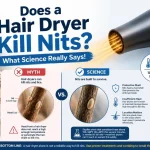
Imagine discovering tiny, unwelcome guests have taken up residence in your child's hair. The immediate panic is often followed by a desperate search for solutions that don't involve harsh chemicals or tedious combing. In this frantic search, a common household item often comes to mind: the hair dryer. The idea is tantalizingly simple—blast the pests with hot air until they're gone. But does this method hold up under scientific scrutiny, or is it merely a well-intentioned myth?
Understanding the limitations and potential of heat treatments for head lice is crucial for effective eradication and preventing reinfestation. This article will dissect the science behind using heat against lice, compare it to proven methods, and provide a clear, actionable guide for dealing with an infestation. You will learn the specific conditions required for heat to be effective, why nits are so resilient, and how to integrate safe practices into a comprehensive lice removal strategy, ensuring you can tackle the problem with knowledge and confidence.
The Science of Heat vs. Lice: What Actually Works?
Lice are parasites that have evolved to thrive in the specific microenvironment of the human scalp, which is typically around 88-90 degrees Fahrenheit (31-32 degrees Celsius). To kill them with heat, you must raise the temperature of their habitat significantly beyond this comfortable range. Research indicates that sustained exposure to temperatures above 128.3°F (53.5°C) for more than 5 minutes is lethal to live, crawling lice. The mechanism is straightforward: the extreme heat denatures their proteins and essentially cooks them, leading to dehydration and death. However, achieving this temperature uniformly on a living scalp without causing burns or injury is the primary challenge.
The real adversaries in a lice battle are the nits, or lice eggs. Nits are cemented firmly to the hair shaft near the scalp and are protected by a remarkably tough, shell-like casing called the chorion. This casing is designed by nature to protect the developing louse embryo from environmental threats, including fluctuations in temperature and humidity. Studies have shown that nits can survive brief exposures to much higher temperatures than live lice. To reliably kill nits with heat alone, temperatures often need to exceed 130°F (54.4°C) for a duration of 30 minutes or more—conditions that are simply unsafe to replicate on a human head with a standard hair dryer.
This scientific backdrop explains why anecdotal stories of hair dryer success are inconsistent. A typical consumer hair dryer, even on its highest setting, blows air that may feel very hot to the touch, but its temperature at the scalp is rarely consistent or sustained enough to meet the lethal threshold for all lice and nits. The airflow can also scatter live lice, potentially spreading them to other surfaces or people. Therefore, while heat has a biological effect on lice, the practical application with a home hair dryer is fraught with limitations and risks.
The Hair Dryer Method: Risks and Limitations
Using a hair dryer on a high-heat setting directly on the scalp and hair for an extended period poses significant safety risks. The most immediate danger is first, second, or even third-degree burns to the sensitive skin of the scalp, ears, and neck. Children's skin is particularly vulnerable. Furthermore, prolonged exposure to intense heat can damage hair itself, leading to dryness, brittleness, split ends, and breakage by stripping away its natural moisture and oils. The potential for causing pain, injury, and hair damage far outweighs the unproven benefits of this method.
Even if one attempts to use a hair dryer carefully, its effectiveness is severely hampered by practical limitations. The airflow is not uniform; it creates hot and cooler spots throughout the hair. Lice and nits hiding at the roots, behind the ears, or at the nape of the neck may never reach the critical temperature needed to die. The dryer may kill some surface lice while leaving others, and the nits almost certainly remain viable. This creates a false sense of security, leading parents to believe the problem is solved when, in fact, a new generation of lice will hatch in 7-10 days, restarting the infestation cycle.
Another often-overlooked risk is the potential for spreading the infestation. The powerful blast of air from a dryer can dislodge live lice and blow them several feet away, landing on furniture, bedding, carpets, or another person's head. This turns a contained problem into a broader environmental issue, increasing the chance of reinfestation or spreading lice to other household members. For these reasons, most health professionals and lice-removal experts strongly advise against relying on a standard hair dryer as a treatment method.
Professional-Grade Heat Treatments: A Closer Look
In contrast to the haphazard use of a hair dryer, specialized medical devices have been developed and clinically tested to use heated air safely and effectively. The most notable example is the AirAllé device, which is an FDA-cleared medical device available through professional lice-removal clinics. This device uses carefully controlled, circulated air that is much hotter than a hair dryer but applied in a precise manner to dehydrate and kill both lice and nits. The treatment is performed by trained technicians and includes a session of thorough combing.
The key difference lies in the technology and protocol. These devices use a manifold applicator that distributes heated air evenly down to the scalp, maintaining a specific temperature (around 140-150°F) for a controlled period. The process typically takes about 30-60 minutes per person. Clinical studies on such devices have shown success rates in killing live lice and eggs exceeding 99%. This level of efficacy is due to the combination of precise temperature control, consistent application, and the follow-up manual removal.
While professional heat treatment is a powerful, pesticide-free option, it comes with considerations. It is significantly more expensive than over-the-counter products and requires a visit to a specialized clinic, which may not be available in all areas. However, for families dealing with persistent, treatment-resistant infestations, or for those seeking a chemical-free solution, it represents a scientifically valid use of heat that a home hair dryer cannot replicate. It underscores that heat can work, but only under very specific, controlled conditions.
Building an Effective, Multi-Pronged Lice Elimination Plan
The most successful approach to eliminating head lice is integrated and persistent. Your first line of defense should be an over-the-counter or prescription pediculicide (lice-killing product), used exactly according to the label instructions. These are formulated to be safe for scalp application and target the nervous system of the lice. It is critical to understand that most products do not reliably kill all nits, which is why a second application is usually recommended 7-10 days later to catch any newly hatched lice before they can mature and lay more eggs.
The single most important component of any treatment plan, whether using chemicals, heat, or natural methods, is meticulous combing with a high-quality, metal nit comb. This physical removal is non-negotiable. After any treatment, you must section wet, conditioned hair and comb from the scalp to the end of each strand, wiping the comb on a paper towel after every stroke. This process should be repeated every 2-3 days for at least two weeks to remove dead lice and, crucially, any surviving nits. Conditioner stuns live lice, making them easier to catch.
Finally, environmental measures are necessary to prevent reinfestation, but they should be reasonable, not frantic. Focus on items that have had recent head contact. Wash pillowcases, hats, and bedding in hot water (at least 130°F) and dry on a high-heat cycle. Items that can't be washed can be sealed in a plastic bag for two weeks, as lice cannot survive without a human host for more than 48 hours. Vacuum upholstered furniture and carpets where the infested person has rested. Avoid excessive spraying of pesticides in the home, as this poses more risk to your family than to the lice.
Debunking Myths and Embracing Proven Strategies
Beyond the hair dryer myth, several other folklore remedies persist, such as suffocating lice with mayonnaise, olive oil, or petroleum jelly. While these substances may slow down lice, they rarely kill all of them and do nothing to the nits. The comb-out after such treatments is exceedingly difficult due to the greasy residue. Similarly, essential oils like tea tree or lavender may have some repellent or mild insecticidal properties in laboratory settings, but they are not regulated or proven as standalone treatments and can cause allergic reactions or skin irritation.
The psychological toll of a lice infestation is real, often accompanied by stigma and shame. It’s vital to remember that head lice are a common nuisance, not a sign of poor hygiene. They prefer clean hair because it’s easier to grip. Communicating calmly with schools, parents of your child’s friends, and other caregivers is essential for community-wide management and preventing ping-pong reinfestations. Approaching the situation with facts, not fear, reduces stress for everyone involved.
Your best strategy is to rely on the gold standard: a proven pediculicide (when appropriate) combined with relentless, thorough wet-combing. If you seek an alternative, investigate professional options like the AirAllé device. View the hair dryer as a tool for drying hair after the wet-combing process or for potentially aiding in home prevention by using it on a cool setting to help desiccate stray lice on brushes or combs after cleaning them—not as a treatment. Empower yourself with accurate information and a clear, step-by-step action plan.
Key Takeaways
- ✓ A standard hair dryer is ineffective and unsafe for killing lice and nits, posing high risks of burns and hair damage while offering unreliable results.
- ✓ Nits (lice eggs) are exceptionally resilient, protected by a hard shell that can survive brief, high-heat exposures that are unsafe for human skin.
- ✓ Professionally administered heat treatments, using FDA-cleared medical devices, can be effective but are fundamentally different from using a home hair dryer.
- ✓ Successful lice eradication requires a multi-pronged approach: using a proven treatment product as directed, followed by meticulous and repeated combing with a metal nit comb.
- ✓ Manage the environment sensibly by laundering recent head-contact items in hot water and drying on high heat, but avoid extreme home pesticide use.
Frequently Asked Questions
Can I use a hair dryer on a cool setting to help get rid of lice?
A cool setting will not kill lice or nits. However, some experts suggest using a cool air setting after combing to help dry the hair and potentially stun or slow any remaining live lice, making them easier to spot. It is not a treatment but may be a minor辅助 in the combing process. The primary tool must remain the metal nit comb.
How long can lice live off the human head?
Adult head lice can typically survive for only 24 to 48 hours away from their human host, as they need to feed on blood regularly. Nits (eggs) off the scalp will generally die within a week and cannot hatch at temperatures lower than those found near the scalp. This is why extensive home fumigation is unnecessary; focus on items used in the 48 hours before treatment.
Are natural remedies like mayonnaise or essential oils effective?
Suffocation agents like mayonnaise or oils are not reliably effective. They may kill some adult lice by blocking their breathing pores, but they are completely ineffective against nits. Furthermore, they make the essential follow-up combing extremely difficult. Essential oils are not FDA-approved as lice treatments, can be toxic if ingested, and may cause severe skin irritation or allergic reactions, especially in children.
Why do lice sometimes come back after treatment?
Reinfestation is common and usually has two causes. First, surviving nits hatched after the initial treatment, which is why a second treatment 7-10 days later is crucial. Second, the person was re-exposed to lice from an untreated source, such as a friend, sibling, or contaminated item. Incomplete combing, which fails to remove all nits, is also a major contributor to "treatment failure."
Should I treat everyone in the house for lice?
Only treat individuals who have a confirmed active infestation (live, crawling lice). Check all household members and close contacts thoroughly. It is not necessary or advisable to use chemical treatments on people who do not have lice as a preventative measure, as this can promote pesticide resistance. However, all household members should be checked regularly during an active outbreak.
Conclusion
Navigating a head lice infestation requires separating fact from widespread fiction. While the concept of using a hair dryer's heat is rooted in a logical premise, the reality is that consumer devices cannot safely or consistently deliver the lethal conditions needed to eradicate both lice and their tenacious eggs. Relying on this method can lead to burns, hair damage, and a false sense of security that allows the infestation to rebound. The proven path to success lies in understanding the biology of the pest and employing a disciplined, integrated strategy.
Arm yourself with a high-quality metal nit comb, a recommended treatment product, and a dose of patience. Focus your efforts on meticulous physical removal through wet-combing and sensible environmental cleanup. If you desire a chemical-free approach, seek out professional clinics that use FDA-cleared heat devices, not your bathroom appliance. By letting go of quick-fix myths and embracing evidence-based methods, you can effectively solve the problem, reduce stress, and restore peace of mind to your household.

Oliver Bennett is a home appliance writer specializing in washer and dryer solutions, laundry care, and energy-efficient appliances. He provides detailed reviews, buying guides, and maintenance tips to help users choose reliable machines and achieve better laundry results.