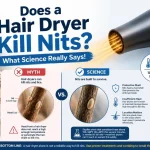
The discovery of head lice in your family can trigger a wave of panic, sending you scrambling for solutions beyond the pharmacy aisle. In this search, you may have stumbled upon an intriguing home remedy: using a hair dryer to blast the tiny pests into oblivion. The idea is compellingly simple—heat kills, and a hair dryer produces heat. But does this common household appliance truly stand up to the tenacious reputation of the head louse, or is it a dangerous myth?
Understanding the real efficacy and risks of such methods is crucial for effective treatment and family safety. This article delves into the scientific evidence, separates fact from folklore, and provides a comprehensive guide to modern, proven lice management strategies. You will learn the biological limitations of heat treatment, the potential dangers of using a hair dryer incorrectly, and how to integrate safe, supplemental heat techniques into a multi-pronged attack for a lice-free household.
The Biology of Head Lice: Why They're So Resilient
To understand why a hair dryer might not be the silver bullet you hope for, you must first understand your adversary. Head lice, or Pediculus humanus capitis, are highly specialized parasites adapted to live exclusively on the human scalp. They are not a sign of poor hygiene; they are simply opportunistic insects that have evolved over millennia to survive in a very specific environment. Their primary weaknesses are desiccation, extreme temperatures, and the inability to live away from a human host for more than 24-48 hours. However, their resilience lies in their biology and behavior.
Lice have three life stages: the egg (nit), the nymph, and the adult. The female louse cements each nit firmly to a hair shaft, very close to the scalp where the temperature is ideal for incubation. This glue is remarkably strong, designed to withstand normal hair washing, brushing, and even most chemical treatments. Nits are also protected by a hard shell. While adult lice and nymphs might be somewhat vulnerable to environmental changes, nits are extraordinarily resistant, requiring sustained temperatures or specific chemical actions to be neutralized. Their entire lifecycle is geared towards staying anchored in the warm, nourishing environment of the human head.
Furthermore, lice are adept at avoiding threats. When they sense heat, vibration, or light—such as from a blow dryer—their instinct is not to sit still and be cooked. They can quickly move away from the intense airflow and heat source, seeking refuge deeper in the hair or on the cooler scalp. This behavioral adaptation makes a standard hair dryer an imprecise and unreliable tool for targeting every single louse, let alone the securely attached nits. Their resilience is a product of evolution, making them a challenge that requires a strategic, not a simplistic, approach.
The Hair Dryer Experiment: What Research Actually Says
The concept of using heat against lice isn't entirely without merit, but the devil is in the details. A notable study published in the journal Pediatrics examined the use of a custom-built, high-temperature air device called the "LouseBuster." This clinical-grade machine delivers a carefully controlled, consistent flow of air at a specific temperature and volume, dehydrating and killing both lice and nits. The study reported a near 100% kill rate on eggs and 80% on live lice. This is where the hair dryer myth gains a sliver of credibility, but it's a critical misapplication of the data.
The key distinction is that the LouseBuster is not a consumer hair dryer. It is a medical device that operates with precise parameters a regular hair dryer cannot match. Consumer hair dryers lack the consistent, evenly distributed airflow and the exact temperature control needed to safely and effectively kill lice without harming the scalp. The LouseBuster uses lower heat over a longer, more controlled period, while a typical hair dryer uses higher, more concentrated heat in bursts, which is more likely to cause burns than to eradicate an infestation. Relying on a hair dryer because of this study is like trying to perform dentistry with a power drill because both tools rotate.
Practical attempts with a standard hair dryer often fail for several reasons. The heat is uneven, creating hot spots that can burn the scalp and ears while leaving other areas untreated. The airflow can blow lice and nits off the hair and into the surrounding environment, potentially spreading the infestation. Most importantly, the temperature required to reliably kill nits with a quick pass of a hair dryer is dangerously high for human skin. Therefore, while controlled, medical-grade heated air shows promise, the common hair dryer is an ineffective and hazardous substitute.
The Real Risks: Scalp Burns, Spreading Lice, and Wasted Time
Pursuing the hair dryer method carries tangible and significant risks that far outweigh its unproven benefits. The most immediate danger is thermal injury. Children's scalps are particularly sensitive. Using a hair dryer on a high heat setting, holding it close in an attempt to "fry" the lice, can easily cause first or even second-degree burns. The ears, neck, and face are also vulnerable. These injuries are painful, can become infected, and add unnecessary trauma to an already stressful situation for a child.
Another major risk is inadvertently worsening the infestation. The forceful air from a dryer can dislodge live lice and nits, launching them into the air and onto furniture, carpets, bedding, or other family members. This environmental contamination can lead to re-infestation or spread the lice to others, creating a cycle that is hard to break. Furthermore, the time and energy spent on an ineffective method is time wasted. Lice reproduce quickly; a female can lay up to 8 eggs per day. Delaying proven treatments by experimenting with a hair dryer allows the infestation to grow, making eventual eradication more difficult and prolonged.
Finally, there is a psychological risk. When a parent tries a seemingly logical home remedy and it fails, it can increase feelings of frustration, helplessness, and stigma. The child may feel blamed or subjected to uncomfortable and scary procedures that don't work. This can damage trust and make compliance with subsequent, necessary treatments more challenging. It’s crucial to approach lice treatment with methods that are safe, effective, and minimize distress for everyone involved.
Effective Heat-Based Strategies: The Safe Alternatives
While your bathroom hair dryer is not the answer, controlled, applied heat through other means can be a valuable component of a comprehensive lice management plan. The principle of dehydration through heat remains valid when applied correctly and safely. One of the most effective consumer-available tools is a professional-grade medical device like the AirAllé, an FDA-cleared machine based on the original LouseBuster technology. Used by many lice removal clinics, it applies carefully regulated warm air to desiccate lice and eggs in a single treatment, often with high success rates.
For at-home care, your clothes dryer is a far more effective heat tool than a hair dryer. Any item that can withstand high heat—such as bedding, pillowcases, hats, and recently worn clothing—should be dried on the high-heat cycle for at least 30 minutes. The sustained, enveloping heat of a clothes dryer is lethal to lice and nits that may have fallen off. This is a critical step for managing the environment and preventing re-infestation after a primary treatment on the head has been performed.
Another supplemental heat technique involves the use of a straightening or curling iron on individual strands of hair. While this is too tedious and risky for treating a full infestation, it can be used cautiously on isolated sections or for peace of mind on hair extensions after treatment. The key is extreme caution to avoid burns. The most important takeaway is that these heat methods are for supplementing proven primary treatments—such as FDA-approved pediculicides or thorough combing—and for environmental control, not for replacing them. They are part of a system, not a standalone solution.
Building Your Effective Lice Elimination Plan for 2026
A successful battle against head lice requires a multi-faceted, meticulous, and patient approach. Your first step should always be accurate identification and, if needed, confirmation from a school nurse or pharmacist. Once confirmed, choose a primary treatment from one of two proven categories: FDA-approved over-the-counter or prescription pediculicide products (like permethrin or ivermectin), or the physical removal method of "wet-combing" with a high-quality, fine-toothed nit comb. Many experts recommend combining these approaches for best results, as combing can remove nits that survive chemical treatment.
The second pillar of your plan is thorough environmental management. This is where heat plays its proper role. Focus on items that have had recent head contact. Machine-wash and dry on high heat all bedding, clothing, and soft toys. For non-washable items, seal them in a plastic bag for two weeks to starve any stray lice. Soak combs and brushes in hot water (above 130°F) for 10 minutes. Vacuum carpets and furniture where the infested person has rested. Avoid widespread spraying of pesticides in the home, as this is unnecessary and poses health risks.
The final, often overlooked, component is follow-up and prevention. All primary treatments must include a second application 7-10 days later to kill any newly hatched nymphs before they can mature and lay eggs. Conduct regular head checks on all family members for a few weeks after treatment. For prevention, discourage head-to-head contact and sharing of personal items like hats and brushes. While no product can guarantee prevention, some leave-in conditioners or sprays containing essential oils like rosemary or tea tree may offer a mild deterrent, though their efficacy is not as robust as treatment products.
Key Takeaways
- ✓ A standard consumer hair dryer is ineffective and dangerous for treating head lice, with high risks of scalp burns and spreading the infestation.
- ✓ Head lice and their eggs (nits) are biologically resilient, with nits cemented firmly to hair shafts and the ability to avoid heat sources.
- ✓ Medical-grade heated air devices exist but are fundamentally different from hair dryers; they use controlled, lower heat for a longer duration.
- ✓ Safe and effective heat is best applied through a clothes dryer for laundering items and as part of environmental cleanup, not on the human scalp.
- ✓ Successful lice elimination requires a multi-step plan: proven primary treatment (medicine or combing), meticulous environmental management, and strict follow-up.
Frequently Asked Questions
Can I kill lice by using a hair dryer on the hottest setting?
No, this is not effective and is very dangerous. The heat required to instantly kill lice and nits with a brief pass of a hair dryer is high enough to severely burn the scalp, ears, and neck. Lice will also move away from the heat source, and nits are largely unaffected. This method risks injury and wastes valuable time.
What is the most effective way to use heat against lice?
The most effective and safe use of heat is in your laundry routine. Dry bedding, hats, clothing, and stuffed animals on the high-heat cycle for at least 30 minutes. For items that can't be washed, sealing them in a plastic bag for two weeks starves any lice. On the scalp, only FDA-cleared medical devices like the AirAllé, used by professionals, are proven to use heat effectively.
Do lice die in a hot shower or bath?
No, lice are adapted to survive the conditions of a normal shower or bath. They can close their respiratory spiracles and hold their breath for an extended period. The water temperature that is safe for your skin is not hot enough to kill them. Washing hair is important for hygiene but does not constitute a treatment.
If a hair dryer doesn't work, what is the best first treatment to try?
Start with an FDA-approved over-the-counter pediculicide, such as one containing permethrin or pyrethrins, following the package instructions exactly. Alternatively, the physical removal method of wet-combing with a premium nit comb (like a metal comb with micro-grooved teeth) is highly effective when done meticulously. Many families use both: the product to kill live lice and combing to remove all nits.
How can I prevent my family from getting lice again?
While no method is foolproof, you can reduce risk by educating children to avoid head-to-head contact during play and to not share personal items like hats, scarves, hairbrushes, headphones, or helmets. Regular visual checks, especially after sleepovers or camp, can catch an infestation early. Some use repellent sprays with essential oils, but their primary value is as a deterrent, not a guarantee.
Conclusion
The quest to use a hair dryer to kill head lice is a well-intentioned but misguided strategy rooted in a misunderstanding of both the technology and the tenacious biology of lice. As we've explored, while the concept of heat has scientific merit in controlled medical applications, the common hair dryer is an imprecise and hazardous tool that poses risks of burns, spread of infestation, and treatment delay. Effective lice management in 2026 relies on evidence-based methods, not household appliance myths.
Arm yourself with knowledge and a clear, multi-step plan. Choose a proven primary treatment, be it careful combing or an approved product, and commit to the necessary follow-up. Use heat smartly and safely in your laundry to manage the environment. By abandoning ineffective home remedies and adopting a thorough, patient approach, you can overcome an infestation efficiently and with minimal stress, restoring peace of mind and a lice-free home.

Oliver Bennett is a home appliance writer specializing in washer and dryer solutions, laundry care, and energy-efficient appliances. He provides detailed reviews, buying guides, and maintenance tips to help users choose reliable machines and achieve better laundry results.