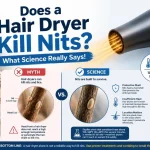
The discovery of head lice in a child's hair often triggers a frantic search for solutions beyond the pharmacy aisle. Among the myriad of home remedies and old wives' tales, one persistent question emerges: can the common hair dryer be a weapon against these stubborn pests? The idea is tantalizingly simple—use heat to dehydrate and kill lice eggs, known as nits, clinging to hair shafts. This article delves into the evidence behind this popular theory, separating hopeful myth from scientific reality.
Understanding the limits and potential of heat treatment is crucial for effective lice management. Misapplied methods can waste time, spread infestation, or even cause harm. You will learn the precise temperature required to kill nits, the practical challenges of using a hair dryer, and how to integrate safe, evidence-based heat techniques into a comprehensive lice elimination plan. By the end, you'll be equipped with knowledge to make informed decisions for your family's health and peace of mind.
The Biology of Nits: Why They Are So Resilient
A nit is not just a live insect; it is the egg of a head louse, sealed in a remarkably tough, glue-like substance that cements it to a hair shaft. This casing, called the operculum, is designed by nature to protect the developing louse nymph from environmental threats, including many chemical treatments and fluctuations in temperature. The nit's resilience is its defining characteristic, which is precisely why standard treatments often require multiple applications over time—to catch newly hatched nymphs before they mature and lay more eggs.
The development of a nit is temperature-dependent. The ideal incubation temperature is around the warmth of the human scalp, approximately 86-90°F (30-32°C). Significant deviations from this range can disrupt development. Research indicates that sustained temperatures significantly higher than this comfort zone can be lethal. However, the key word is "sustained." Brief exposure to high heat, such as a quick pass with a hair dryer, may not penetrate the protective shell sufficiently to kill the embryo inside. The nit's location, glued firmly to the hair, also provides insulation against sudden temperature changes.
Understanding this biology explains the failure of many quick-fix home remedies. Drowning nits in conditioner or suffocating them with oil often fails because the operculum is water-resistant and the embryo requires minimal oxygen. Similarly, a fleeting blast of hot air might discomfort a live louse on the scalp's surface but is unlikely to transfer enough sustained thermal energy to the nit cemented an inch down the hair shaft. This resilience necessitates a strategic, rather than haphazard, approach to heat.
The Science of Thermal Death: What Temperature Kills Lice and Nits?
Scientific studies have quantified the thermal death point for head lice and their eggs. Research published in journals like Pediatrics has shown that lice and nits begin to die when exposed to temperatures at or above 128.3°F (53.5°C) for more than five minutes. This is a critical benchmark. It is not the peak temperature of the air, but the combination of heat and exposure time that determines effectiveness. The heat must be consistently applied to the nit itself to raise its core temperature to this lethal threshold.
A standard hair dryer on its highest heat setting can indeed produce air exceeding 140°F (60°C) at the nozzle. The problem lies in delivery and consistency. As the hot air travels from the dryer to the scalp, it cools rapidly. More importantly, it is challenging to direct concentrated heat onto every single nit on the head for a continuous five-minute period without causing discomfort or thermal injury to the scalp. The live louse, being mobile and on the scalp, might be more susceptible to a hot air blast, but the primary target—the nit—remains shielded by its casing and its placement on the hair.
This science has led to the development of professional medical devices. FDA-cleared devices like the AirAllé use carefully controlled, circulated hot air to desiccate lice and nits. These devices are designed to maintain a specific temperature at the scalp and hair root level for a prescribed treatment time, typically around 30 minutes. They differ fundamentally from a consumer hair dryer in their precision, airflow design, and safety controls, underscoring that not all heat application is equal.
The Practical Experiment: Using a Hair Dryer at Home
Attempting to use a hair dryer as a primary nit-killing tool is fraught with practical difficulties. First is the issue of application. To even approach effectiveness, you would need to systematically section the hair and slowly direct the dryer's nozzle at each section, holding it inches away, for several minutes. This process for an entire head would be exceedingly time-consuming, often taking over an hour, and is impractical for a squirming child. The risk of burning the scalp, ears, or neck with concentrated hot air is significant.
Second, the process can inadvertently spread the infestation. The powerful airflow from a hair dryer can blow live lice and detached nits into the air and onto surrounding furniture, bedding, or other people. This aerosolizes the problem, potentially contaminating the environment and leading to reinfestation or spreading lice to others. This counterproductive outcome makes the hair dryer a potentially risky tool if used incorrectly in the midst of an active infestation.
If one chooses to use a hair dryer as a supplementary measure, extreme caution is advised. It should never be used on wet hair treated with chemical pediculicides, as some ingredients can be broken down by heat. The safest, albeit limited, use is for potentially aiding in the dehydration of lice on items that cannot be washed. For example, briefly using a hair dryer on the hot setting on a car seat headrest or a stuffed animal (while being mindful of fire risk) can provide some辅助 heat treatment alongside other non-chemical cleaning methods like bagging items for two weeks.
Integrated Lice Management: Where Heat Fits In
Effective lice eradication is never about a single miracle tool; it is a multi-pronged campaign. The cornerstone is meticulous combing with a high-quality, long-toothed metal nit comb on wet, conditioned hair. This physically removes nits and lice. Heat, in its proper place, serves as a valuable supporting actor in this process. For instance, after thorough combing, using a hair dryer on a warm (not hot) setting to completely dry the hair can make the environment less hospitable for any stray lice, as they prefer the humid, warm environment of damp hair near the scalp.
The most significant role for heat in lice management is in decontaminating the environment, not directly treating the head. Washing bedding, hats, and clothing in hot water (at least 130°F/54°C) and drying them on a high-heat cycle for at least 40 minutes is a proven and effective way to kill lice and nits that may have fallen off. This is where household appliances truly shine. Items that cannot be washed can be sealed in plastic bags for two weeks (the time it takes for a nit to hatch and die without a host) or, if durable, can be treated in a clothes dryer on high heat for 30 minutes.
For direct on-head treatment, if over-the-counter or prescription shampoos fail or are undesirable, seeking a professional treatment center that uses an FDA-cleared hot air device is the evidence-based thermal approach. These treatments, while costly, offer a high success rate in a single session by applying the scientific principles of thermal death correctly and safely. Integrating this with manual combing and environmental cleaning provides the most comprehensive attack plan.
Debunking Myths and Embracing Effective Strategies
The belief that a hair dryer alone can cure a lice infestation is a persistent myth that can prolong the problem. Other common heat-related myths include using curling irons or flat irons on individual nits. This is dangerous, poses a high burn risk to the child's scalp and ears, and is ineffective for treating the whole head. Another myth is that extreme cold (like freezing items) is instantly effective; while cold can kill lice, it requires sustained temperatures below freezing for several hours, not just a brief stint in a home freezer.
The most effective strategy remains the less-glamorous, labor-intensive method of wet combing. This should be done every 2-3 days for at least two weeks to break the life cycle. Pair this with environmental heat (hot water washes and hot dryer cycles) for belongings. If you seek a technology-assisted solution, invest in a good quality nit comb and consider a professional hot air treatment if the infestation is severe or recurrent. Avoid the temptation of quick fixes that lack scientific backing.
Ultimately, managing head lice is about patience, thoroughness, and evidence. It is not a reflection of hygiene, and it happens to millions of families every year. By focusing on proven methods and understanding the limitations of tools like the hair dryer, you can navigate the situation with less stress and greater success. Communicate with schools, check all household members, and remember that the goal is complete nit removal, not just killing live lice.
Key Takeaways
- ✓ Nits are protected by a resilient shell, making them resistant to brief, inconsistent heat from a consumer hair dryer.
- ✓ Scientific evidence shows lice and nits require sustained exposure to temperatures above 128°F (53.5°C) for over five minutes to die.
- ✓ Using a hair dryer directly on the head is impractical, time-consuming, risky for burns, and can spread lice via airflow.
- ✓ Heat is most effectively used in lice management for laundering and drying bedding/clothing on high-heat cycles.
- ✓ The cornerstone of treatment is meticulous wet combing with a metal nit comb, potentially supplemented by professional hot-air devices.
Frequently Asked Questions
Can I kill lice and nits by using a hair dryer on my child's hair every day?
Daily use of a hair dryer on high heat is not recommended as a reliable treatment. While it may kill some live lice on the surface, it is highly unlikely to consistently reach and kill all nits due to their protective casing and insulated location on the hair shaft. The risks of scalp burns, skin irritation, and hair damage outweigh the minimal potential benefit. It is also extremely tedious and uncomfortable for a child.
What is the difference between a regular hair dryer and professional lice heat devices?
Professional devices like the AirAllé are medically graded tools designed specifically for lice treatment. They use a controlled, lower-temperature airflow (around 140°F/60°C) that is evenly distributed through a large applicator tip for a sustained period (~30 mins). This ensures the heat desiccates lice and nits without burning the scalp. Consumer hair dryers concentrate very hot air in a small stream, are not designed for even scalp coverage, and cannot maintain a safe, effective temperature for the required time.
Are flat irons or curling irons effective for killing nits?
No, using hot styling tools directly on the scalp to target nits is dangerous and ineffective. While the iron may crush and kill a nit it directly contacts, it cannot possibly treat all nits on the head. The extreme heat (often over 300°F/150°C) poses a severe burn risk to the child's ears, neck, and scalp. It can also severely damage hair. This method is strongly discouraged.
How hot does my dryer need to be to kill lice on bedding?
To effectively kill lice and nits on fabric items, you need a sustained temperature. Washing in water at least 130°F (54°C) is effective. For drying, use the high-heat cycle for at least 40 minutes. The internal temperature of a standard dryer on high can reach 135-150°F (57-66°C), which is sufficient if the items are dried completely. For non-washable items, 30 minutes in a clothes dryer on high heat can also work.
If heat isn't reliable from a hair dryer, what is the best way to get rid of nits?
The most reliable method is physical removal via "wet combing." Saturate the hair with conditioner or a dedicated nit removal solution to immobilize lice. Section the hair and meticulously comb from the scalp to the end with a long-toothed metal nit comb, wiping the comb on a paper towel after each stroke. Repeat this every 2-3 days for at least two weeks. This, combined with environmental cleaning (hot wash/dry of linens), is the gold standard for non-chemical eradication.
Conclusion
The question of whether a hair dryer can kill nits reveals a broader truth about head lice treatment: well-intentioned shortcuts often fall short against a pest engineered for survival. While the application of controlled, sustained heat is a scientifically valid principle, the common household hair dryer is not the right tool for this precise job. Its design makes it ineffective for safely delivering the lethal combination of temperature and time required to eradicate nits cemented to the hair, and its use can even exacerbate the problem.
Arm yourself with knowledge and proven tactics. Commit to the thorough, if tedious, process of manual nit combing. Harness the power of heat correctly through hot laundry cycles for fabrics. If you desire a technological solution, research professional hot-air treatment options. By moving past myths and focusing on integrated, evidence-based strategies, you can overcome an infestation efficiently and minimize the stress for your entire family. The path to a nit-free head is built on patience and precision, not on the hope of a quick blast of hot air.

Oliver Bennett is a home appliance writer specializing in washer and dryer solutions, laundry care, and energy-efficient appliances. He provides detailed reviews, buying guides, and maintenance tips to help users choose reliable machines and achieve better laundry results.