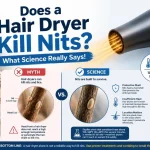
Imagine discovering tiny, unwelcome visitors in your child's hair, and your first frantic thought is to reach for the hair dryer, hoping the blast of hot air will solve the problem instantly. This common reaction speaks to the desperation many feel when facing a lice infestation, a situation that affects millions of households every year, regardless of cleanliness or social status. The idea of using a common household appliance as a weapon against these persistent pests is both appealing and logical on the surface, but does it actually work?
Understanding the truth behind home remedies for head lice is crucial for effective treatment and preventing the spread. Misinformation can lead to prolonged infestations, unnecessary stress, and potential harm. This article will dissect the science behind using heat against lice, compare it to clinically proven methods, and provide a comprehensive, actionable guide to tackling an infestation safely and successfully in 2026. You will learn not only about the hair dryer's role but also how to build a multi-pronged, effective strategy for lice elimination.
The Science of Heat vs. Lice: Anatomy of a Pest
To understand if a hair dryer can be effective, we must first examine the enemy. The head louse (Pediculus humanus capitis) is a remarkably resilient parasite adapted specifically to the human scalp. An adult louse is about the size of a sesame seed, with six claws designed to cling tenaciously to hair shafts. They feed on small amounts of blood drawn from the scalp and can survive for only about 24 to 48 hours away from their human host. Their real defense, however, lies in their reproduction: female lice glue their eggs, called nits, firmly to the base of hair shafts with a waterproof, glue-like substance. These nits are extraordinarily resistant to many physical and chemical challenges.
Lice and their nits have a defined thermal death point. Research indicates that sustained exposure to temperatures at or above 128.3 degrees Fahrenheit (53.5 degrees Celsius) for more than 5 minutes is lethal to live lice. For nits, the temperature required to kill the embryo inside is even higher, often needing to exceed 130 degrees Fahrenheit (54.4 degrees Celsius) for a similar duration. The critical factor here is sustained, direct heat. A brief, intense blast may not penetrate deeply enough to raise the temperature at the scalp and the base of the hair shaft, where lice and nits reside, to the required lethal level for the necessary amount of time.
Therefore, the theoretical possibility exists. If you could consistently apply air hot enough, directly to every square millimeter of the scalp for over five minutes, you could kill lice. However, the practical application is where this theory falls apart. The anatomy of the pest—its location at the scalp, its grip on the hair, and the protective casing of the nit—makes uniform heat delivery with a consumer hair dryer exceptionally difficult and potentially dangerous.
The Hair Dryer Test: Practical Limitations and Risks
In practice, using a standard hair dryer on its hottest setting to kill lice presents significant challenges. First is the issue of consistency and coverage. Even with careful sectioning, it is nearly impossible to direct the hot air stream evenly across the entire scalp for the sustained 5-10 minutes per section required. Lice can move away from the direct flow of heat, and the thick hair acts as insulation, protecting the pests and nits close to the scalp. The result is often a patchy treatment that leaves many lice and most nits alive.
The second and more serious concern is the risk of burns and hair damage. Consumer hair dryers can emit air exceeding 140 degrees Fahrenheit, which is hot enough to cause first- and second-degree burns on sensitive scalp skin, especially in children. Prolonged exposure to such high heat can also scorch hair, leading to dryness, brittleness, and breakage. The goal is to eradicate lice, not to create a new problem of injured skin and damaged hair. The risk simply outweighs any potential, unproven benefit.
While a standard hair dryer is not a reliable treatment tool, it can have a supportive role in a broader lice management protocol. Using a hair dryer on a cool setting after wet-combing can help immobilize lice, making them easier to spot and remove with a nit comb. The cool air may temporarily stun the lice, slowing them down. Furthermore, using high heat from a dryer on non-washable items like stuffed animals (by placing them in a dryer on high heat for 30 minutes) is a proven and effective method for killing lice on objects, not people.
Clinically Proven Heat Treatments: The Professional Approach
The Integrated Elimination Strategy: What Actually Works
Effective lice treatment in 2026 relies on an integrated strategy, often called the "Three-Pronged Approach." The first prong is the use of an appropriate treatment product. This can be an over-the-counter or prescription pediculicide (lice-killing product), but due to widespread pesticide resistance, many experts now recommend starting with non-pesticide, dimethicone-based formulas (like lotions or shampoos) that work by suffocating lice. Always follow the product instructions to the letter, including timing and any necessary repeat applications.
The second, and most critical, prong is meticulous combing. Treatment products may kill live lice but often do not reliably remove all nits. Using a high-quality, metal nit comb with teeth spaced less than 0.3mm apart, you must comb through small sections of damp, conditioned hair. Wipe the comb on a white paper towel after each stroke to check for lice and nits. This process should be repeated every 2-3 days for at least two weeks to catch any newly hatched lice before they mature and lay more eggs. This step is non-negotiable for success.
The third prong is environmental management. While lice cannot survive long off the head, take sensible steps to prevent re-infestation. Wash bedding, hats, and recently worn clothes in hot water (at least 130°F) and dry on high heat. Items that can't be washed can be sealed in plastic bags for two weeks. Vacuum upholstered furniture and carpets. However, avoid excessive cleaning; the focus should remain on the head, as that is where 99% of the infestation lives.
Prevention and Future Outlook in 2026
Prevention is increasingly focused on awareness and early detection rather than on chemical repellents. The most effective preventive measure is regular head checks, especially during outbreaks at schools or in the community. Use a nit comb during weekly hair washing to screen for lice and nits. Teaching children not to share items that touch the head—such as brushes, hats, helmets, and headphones—is a fundamental, though challenging, practice. Some leave-in hair products containing essential oils like tea tree, rosemary, or peppermint may have a mild repellent effect, but they are not guaranteed shields against infestation.
The future of lice management continues to evolve. Research is ongoing into new physical modes of action, like improved suffocants and novel desiccants. The development of more affordable, safe, and effective home-use heat devices may also be on the horizon. Furthermore, public education is shifting to reduce the stigma associated with lice, emphasizing that infestation is a common issue of human biology, not a reflection of hygiene. This reduces panic and encourages people to seek and share effective information promptly.
Ultimately, the best defense is a calm, informed offense. Knowing the facts, having a proven plan, and executing it with patience is the key to managing head lice. By relying on evidence-based methods rather than hopeful myths, you can resolve an infestation efficiently and minimize disruption to your family's life.
Key Takeaways
- ✓ A standard hair dryer is not a reliable or safe method to kill lice on a person, due to inconsistent heat application and high risk of scalp burns.
- ✓ Lice and nits require sustained, direct heat above 128°F for over 5 minutes to die, a condition difficult to achieve safely with consumer appliances.
- ✓ FDA-cleared professional heat devices exist and are effective, but they are specialized equipment, not equivalent to a home hair dryer.
- ✓ Successful treatment requires an integrated strategy: using an effective product, meticulous and repeated wet-combing with a metal nit comb, and sensible environmental cleanup.
- ✓ The focus should be on the scalp; over 99% of an infestation is on the head, making thorough combing the single most important action for elimination.
Frequently Asked Questions
Can I use a hair dryer on a cool setting to help with lice?
Yes, but not to kill them. Using the cool air setting on a hair dryer can temporarily stun or slow down live lice, making them easier to spot and catch with a nit comb during a wet-combing session. It is a minor supportive tactic, not a treatment.
Are lice becoming resistant to all treatments?
Many lice populations have developed significant resistance to common pesticide-based treatments like permethrin. This is why many experts now recommend starting with non-pesticide options, such as dimethicone or other silicone-based lotions that suffocate lice, or using the meticulous combing method alone. Always check with a pharmacist or doctor for the most current recommendations in your area.
How often do I need to comb to get rid of lice?
After an initial treatment, you should comb with a metal nit comb every 2 to 3 days for at least two weeks (approximately 7-10 combing sessions). This breaks the life cycle by removing any nits that survived and any new lice that hatch before they are old enough to lay more eggs. Consistency is crucial.
Do I need to fumigate my house or bag up all my stuffed animals?
No, extensive cleaning is unnecessary and can cause more stress. Lice cannot survive off the human head for more than 24-48 hours. Focus on items that have had direct head contact in the last 48 hours. Wash bedding and recently worn clothes in hot water and dry on high heat. For non-washable items, sealing them in a plastic bag for two weeks is sufficient. Vacuuming floors and furniture is fine, but don't spend excessive time or money on environmental measures.
Can lice live in short hair or on African American hair?
Yes, lice can infest any type of human hair, regardless of length, texture, or curl pattern. The adaptation of the louse's claw allows it to grip onto hair shafts of various diameters and shapes. While some studies suggest infestation rates may be lower in some African American communities, likely due to hair care practices and comb styles, no one is immune. The same detection and treatment principles apply to all hair types.
Conclusion
The question of whether a hair dryer can kill lice reveals a broader truth about managing infestations: well-intentioned home remedies often fall short against biologically resilient pests. While heat has a role in professional lice clinics and in disinfecting household items, the common hair dryer is an ineffective and potentially hazardous tool for direct treatment on a person. Success lies in abandoning quick-fix myths and embracing a disciplined, integrated approach centered on meticulous combing, appropriate treatment products, and sensible environmental steps.
Arm yourself with knowledge and the right tools—a high-quality metal nit comb and evidence-based treatments. Conduct regular head checks, respond calmly and promptly if lice are found, and remember that infestation is a common, solvable problem. By focusing on proven methods, you can effectively overcome lice and restore peace of mind to your household.

Oliver Bennett is a home appliance writer specializing in washer and dryer solutions, laundry care, and energy-efficient appliances. He provides detailed reviews, buying guides, and maintenance tips to help users choose reliable machines and achieve better laundry results.