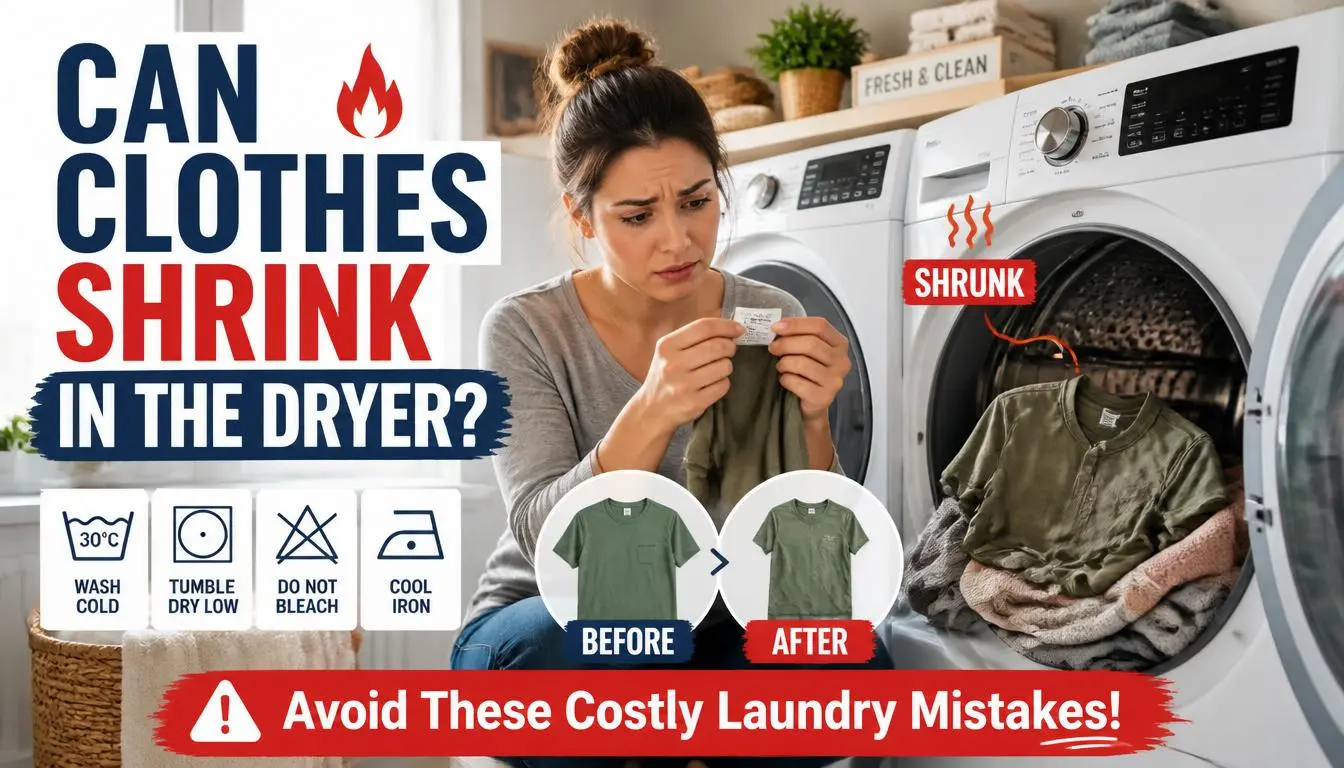
Yes, clothes can shrink in a dryer. Heat, moisture, and fabric construction all play a role in clothing shrinkage, and certain materials such as cotton, wool, and rayon are especially vulnerable. If you use the wrong dryer setting or dry garments for too long, you may notice shirts, jeans, sweaters, and other items becoming noticeably smaller.
According to the American Cleaning Institute (ACI), following garment care labels is one of the most effective ways to prevent fabric damage, including shrinkage. Improper laundering and drying remain among the most common causes of clothing wear and reduced garment lifespan.
Many people assume all dryers affect clothing the same way, but shrinkage depends on fabric type, temperature, moisture levels, and garment construction. Understanding these factors can help you keep your favorite clothes fitting properly for years.
In this guide, you’ll learn why clothes shrink in the dryer, which fabrics are most at risk, how to prevent clothing shrinkage, and the best drying practices for different types of garments.
Why Can Clothes Shrink in Dryer?
Clothing shrinkage affects more than appearance. A garment that shrinks can become uncomfortable, lose its intended fit, and sometimes become unusable.
Common problems people experience include:
- T-shirts becoming shorter after washing and drying
- Jeans feeling tighter around the waist
- Sweaters shrinking dramatically after one drying cycle
- Children’s clothing becoming too small quickly
- Expensive garments losing their original shape
- Fabric fibers becoming stiff or distorted
When clothes are exposed to heat and moisture, fibers can relax, contract, or tighten. Once these fibers cool, they often remain in their new, smaller shape.
Fabric Shrinkage Comparison Table
| Fabric Type | Shrinkage Risk | Dryer Recommendation |
|---|---|---|
| Cotton | High | Low heat or air dry |
| Wool | Very High | Avoid dryer when possible |
| Rayon | Very High | Air dry flat |
| Linen | Moderate to High | Low heat setting |
| Polyester | Low | Low to medium heat |
| Nylon | Low | Low heat |
| Acrylic | Low to Moderate | Low heat only |
| Blended Fabrics | Moderate | Follow care label |
Best Ways to Prevent Clothes from Shrinking in the Dryer
1. Read the Care Label Before Drying
The care label provides the manufacturer’s recommended drying instructions. Symbols often indicate whether tumble drying is safe and what temperature should be used.
Benefits: Prevents accidental shrinkage and fabric damage.
Drawbacks: Requires taking extra time before laundry.
2. Use Low Heat Settings
High temperatures are one of the leading causes of garment shrinkage. Using low heat significantly reduces stress on fabric fibers.
Benefits: Protects delicate fabrics and preserves garment size.
Drawbacks: Clothes may take longer to dry.
3. Remove Clothes While Slightly Damp
Overdrying can cause unnecessary fiber contraction. Removing clothes when slightly damp helps maintain their original dimensions.
Benefits: Reduces heat exposure.
Drawbacks: May require brief air drying afterward.
4. Separate Fabrics by Material
Different fabrics respond differently to heat. Drying cotton with delicate materials can expose sensitive fabrics to excessive temperatures.
Benefits: Improves drying efficiency and garment protection.
Drawbacks: Requires sorting laundry carefully.
5. Use Moisture Sensors When Available
Many modern dryers include moisture-sensing technology. These sensors stop the cycle once clothes reach the desired dryness level.
Benefits: Prevents overdrying.
Drawbacks: Not available on every dryer model.
6. Choose Air Dry or No-Heat Cycles
Air-only settings circulate room-temperature air without adding heat.
Benefits: Virtually eliminates heat-related shrinkage.
Drawbacks: Longer drying times.
7. Avoid Overloading the Dryer
An overloaded dryer restricts airflow and causes uneven drying. This often leads users to increase drying time unnecessarily.
Benefits: More efficient drying and reduced shrinkage risk.
Drawbacks: Requires multiple loads.
8. Reshape Garments Immediately After Drying
Some fabrics can shift or tighten during drying. Gently reshaping garments while warm helps maintain their original fit.
Benefits: Preserves appearance and size.
Drawbacks: Requires prompt attention after drying.
Step-by-Step Guide to Drying Clothes Without Shrinkage
Step 1: Check the Care Label
Review manufacturer instructions before placing garments in the dryer.
Step 2: Sort by Fabric Type
Separate cotton, wool, synthetics, and delicate fabrics.
Step 3: Choose the Correct Dryer Setting
Select low heat or delicate cycles whenever possible.
Step 4: Avoid Overloading
Fill the drum loosely to allow proper airflow.
Step 5: Use Dryer Balls if Desired
Dryer balls can improve airflow and reduce drying time.
Step 6: Monitor Drying Progress
Check garments periodically instead of relying solely on the timer.
Step 7: Remove Clothes Promptly
Take garments out as soon as they are dry.
Step 8: Reshape and Hang
Smooth wrinkles and restore garment shape immediately.
Pro Tip: If you’re unsure whether a fabric will shrink, use the lowest heat setting available and finish drying naturally on a clothes rack.
Dryer Drying vs Air Drying Comparison Table
| Feature | Dryer Drying | Air Drying |
|---|---|---|
| Drying Speed | Fast | Slow |
| Risk of Shrinkage | Higher | Very Low |
| Energy Usage | Higher | Lower |
| Fabric Wear | Moderate | Minimal |
| Convenience | Excellent | Moderate |
| Wrinkle Reduction | Good | Depends on hanging method |
| Suitable for Delicates | Limited | Excellent |
| Winner Analysis | Best for convenience | Best for preserving garment size and fabric quality |
Expert Tips and Common Mistakes
Expert Tips
- Always check care symbols before drying.
- Turn garments inside out before drying.
- Use moisture-sensing cycles when available.
- Dry delicate fabrics separately.
- Reduce heat whenever possible.
- Air dry expensive or sentimental clothing.
Common Mistakes to Avoid
Mistake #1: Using High Heat for Every Load
Many people assume higher temperatures are better. Excessive heat is one of the primary causes of clothing shrinkage and fabric damage.
Mistake #2: Ignoring Care Labels
Manufacturers test fabrics extensively before creating care instructions. Ignoring these guidelines increases shrinkage risk significantly.
Mistake #3: Overdrying Clothes
Leaving garments in the dryer longer than necessary exposes fibers to unnecessary heat and stress.
Mistake #4: Drying Wool and Rayon Like Cotton
Wool and rayon require more delicate treatment than standard cotton garments and can shrink dramatically in high heat.
Frequently Asked Questions
Can clothes shrink in dryer after just one cycle?
Yes. Certain fabrics, especially cotton, wool, and rayon, can shrink noticeably after a single high-heat drying cycle.
What fabric shrinks the most in a dryer?
Wool and rayon typically experience the greatest shrinkage. Cotton also shrinks significantly, particularly when exposed to high temperatures.
Can polyester shrink in the dryer?
Polyester is generally resistant to shrinkage. However, extreme heat can still cause minor size changes or fabric damage.
Does low heat prevent clothes from shrinking?
Low heat greatly reduces shrinkage risk but may not eliminate it entirely, especially for natural fibers.
How do I know if a garment can go in the dryer?
Check the care label. Dryer-safe symbols indicate whether tumble drying is allowed and what heat level is recommended.
Can shrunken clothes be restored?
Sometimes. Cotton and wool garments may be stretched back partially using fabric-conditioning methods, but complete restoration is not guaranteed.
Is air drying better than machine drying?
For preventing clothing shrinkage and extending garment lifespan, air drying is usually the safer option.
Conclusion
So, can clothes shrink in dryer? The answer is yes. Heat and moisture can cause many fabrics to contract, particularly natural fibers such as cotton, wool, rayon, and linen. The risk increases when garments are exposed to high temperatures or excessive drying times.
Fortunately, clothing shrinkage is often preventable. Reading care labels, using low heat settings, avoiding overdrying, and separating fabrics can significantly reduce the chances of garments becoming smaller.
By following proper laundry practices, you can protect your clothing investment and maintain the fit and appearance of your favorite items. For more laundry care advice, explore our other laundry guides and fabric care comparisons to keep your wardrobe looking its best.
Expert Opinion
After years of helping homeowners and consumers care for their clothing, I’ve found that dryer shrinkage is usually preventable rather than inevitable. Most shrinkage issues occur because garments are exposed to more heat than their fibers can safely tolerate.
Organizations such as the American Cleaning Institute and the Federal Trade Commission’s Care Labeling Rule emphasize the importance of following care instructions. In my experience, consumers who consistently use low-heat settings and pay attention to fabric types experience far fewer shrinkage problems.
If you’re concerned about preserving garment fit, treat heat as a limited resource. Use only as much as necessary to dry your clothes, and choose air drying whenever practical. This simple habit can dramatically extend the life of your wardrobe.

Oliver Bennett is a home appliance writer specializing in washer and dryer solutions, laundry care, and energy-efficient appliances. He provides detailed reviews, buying guides, and maintenance tips to help users choose reliable machines and achieve better laundry results.