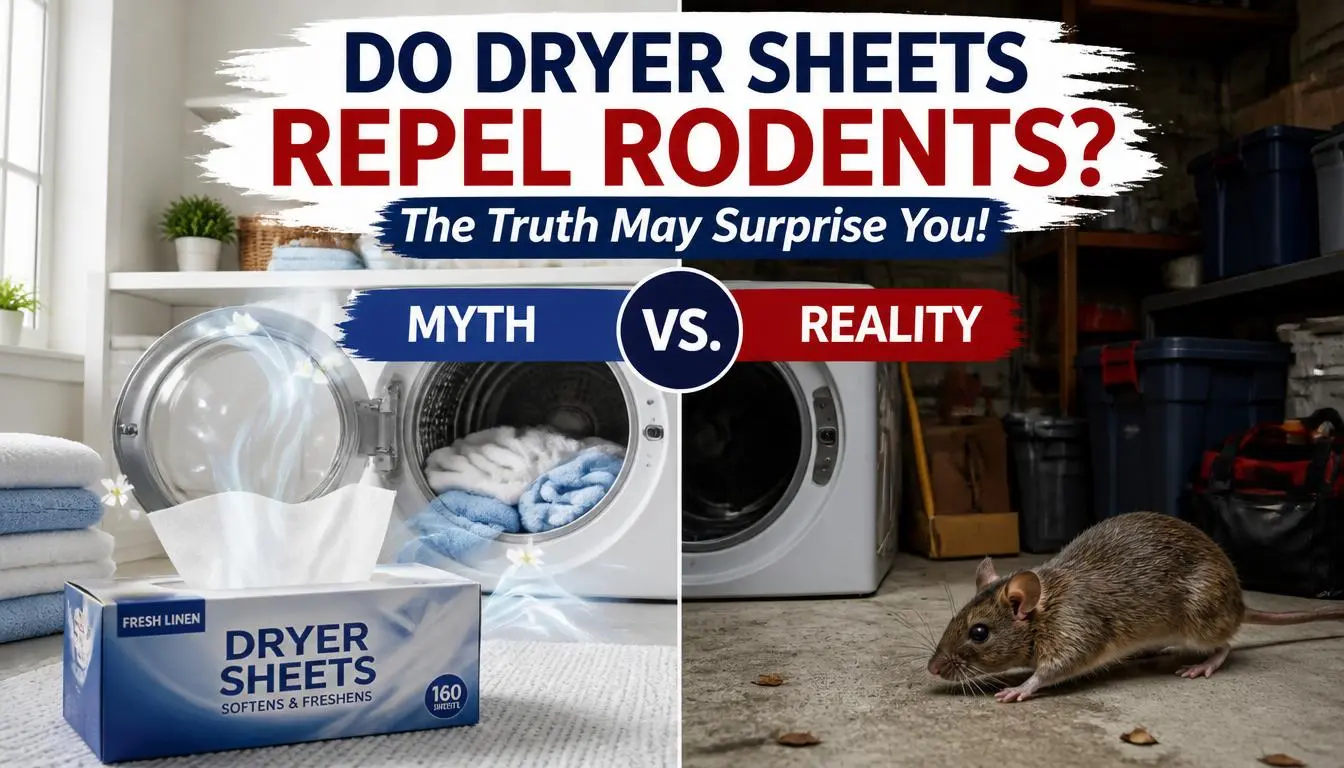
Do dryer sheets repel rodents? The short answer is not reliably. While some homeowners report temporary success using scented dryer sheets to discourage mice or rats, there is no strong scientific evidence proving they are an effective long-term rodent repellent.
For lasting protection, experts recommend sealing entry points, removing food sources, and using proven rodent control methods.
Rodents are among the most frustrating household pests in the United States, Canada, the United Kingdom, and Australia. Whether it’s scratching noises in the attic, droppings in the garage, or chewed wires under the hood of your car, a rodent infestation can quickly become a costly problem.
Because of this, many homeowners search for simple DIY solutions before calling a pest control professional. One of the most common suggestions you’ll find online is placing dryer sheets in areas where mice or rats are active. Supporters claim the strong fragrance keeps rodents away, while others insist it does nothing at all.
So, who’s right?
In this guide, we’ll separate myths from facts, examine what experts and available research say, compare dryer sheets with other rodent deterrents, and explain the methods that actually work for keeping rodents out of your home.
Expert Insight: Dryer sheets may provide a temporary scent that some rodents avoid, but they should never be considered a primary or permanent pest control solution.
Do Dryer Sheets Really Repel Rodents?
The simple answer is not consistently.
Dryer sheets contain fragrances designed to leave laundry smelling fresh. Some people believe these strong scents irritate a rodent’s sensitive sense of smell, encouraging mice or rats to stay away.
While this idea sounds reasonable, the evidence tells a different story.
There are countless personal stories online claiming dryer sheets worked in garages, sheds, campers, or parked vehicles. However, these experiences are largely anecdotal. They don’t prove that dryer sheets are a dependable rodent repellent under different conditions.
In many cases, rodents eventually ignore unfamiliar odors when food, warmth, or shelter is available. Once they become accustomed to the scent, the dryer sheets lose whatever temporary deterrent effect they may have had.
Key Takeaway
- Dryer sheets might discourage some rodents for a short period.
- They do not eliminate rodents.
- They do not prevent infestations.
- They should never replace proven rodent control methods.
Why Do People Think Dryer Sheets Repel Mice?
The belief didn’t come from scientific research. Instead, it spread through years of homeowner advice, internet forums, RV communities, and word of mouth.
Several reasons explain why this myth continues today.
Strong Fragrance
Mice rely heavily on their sense of smell to locate food and detect danger. Because dryer sheets release a noticeable fragrance, many people assume rodents naturally dislike it.
Temporary Success
Sometimes rodents leave an area shortly after dryer sheets are placed there.
However, this doesn’t necessarily mean the sheets caused the change. Other factors may be involved, such as:
- Seasonal movement
- Reduced food availability
- Increased human activity
- Weather changes
Confirmation Bias
If someone places dryer sheets in a storage box and never sees another mouse, it’s easy to assume the sheets worked even though the rodents may have left for unrelated reasons.
What Does Scientific Research Say?
One of the biggest surprises for homeowners is that very little scientific research supports using dryer sheets as rodent repellents.
Most pest management specialists agree on several important points:
- No widely accepted scientific studies prove dryer sheets effectively repel rodents.
- Professional pest control companies rarely recommend them as a primary solution.
- Agricultural extension programs generally focus on exclusion, sanitation, and trapping rather than scented household products.
In other words, dryer sheets may smell pleasant to people, but there is no reliable evidence showing they consistently keep mice or rats away.
Why Scientific Evidence Matters
Rodent behavior varies depending on several factors:
- Species
- Hunger level
- Population density
- Shelter availability
- Environmental conditions
When food and nesting opportunities are available, rodents often tolerate unpleasant smells rather than abandon a safe location.
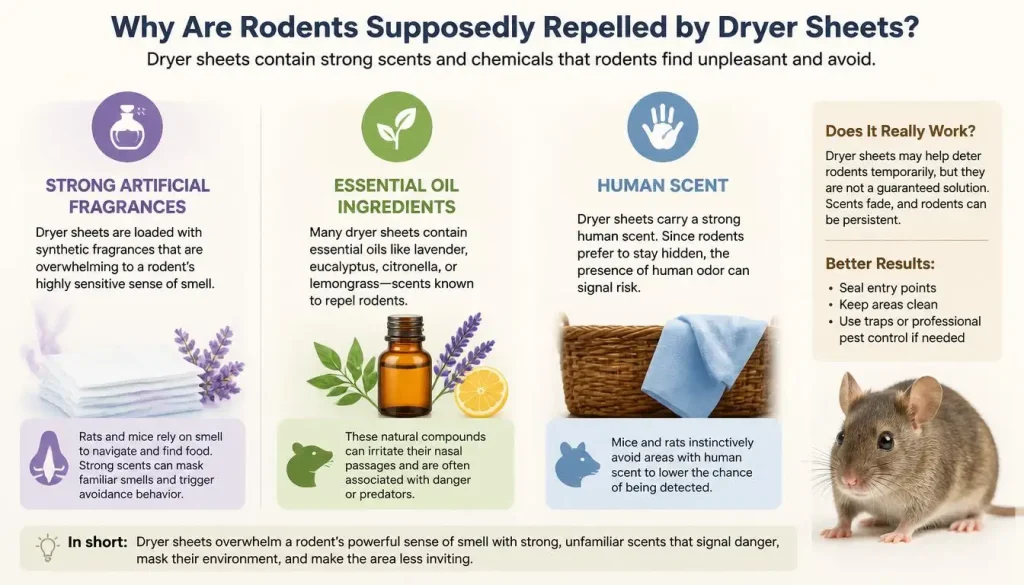
Why Are Rodents Supposedly Repelled by Dryer Sheets?
Understanding the theory helps explain why this myth sounds believable.
Strong Artificial Fragrances
Dryer sheets contain scented chemicals that linger after clothes are dried. Some people believe these fragrances overwhelm a rodent’s sensitive nose.
Essential Oil Ingredients
Certain dryer sheets include fragrance compounds inspired by essential oils.
Since some natural oils such as peppermint and clove may temporarily discourage rodents, people assume dryer sheets have similar effects.
The problem is that dryer sheet fragrances are not designed or tested as pest repellents.
Human Scent
Fresh dryer sheets often carry both fragrance and human scent from handling.
Some homeowners believe this combination discourages cautious rodents, although evidence remains limited.
Can Dryer Sheets Keep Mice Away Permanently?
No.
Even if dryer sheets appear to work initially, they rarely provide long-term protection.
Rodents are highly adaptable animals. Once they discover food, warmth, or nesting materials, they often ignore unfamiliar smells.
Think of dryer sheets as a temporary odor source—not a security system.
Why the Effect Doesn’t Last
- Fragrance fades over time.
- Air circulation weakens the scent.
- Dust reduces effectiveness.
- Rodents gradually adapt.
- Hunger outweighs odor avoidance.
For these reasons, dryer sheets should never be considered a permanent solution.
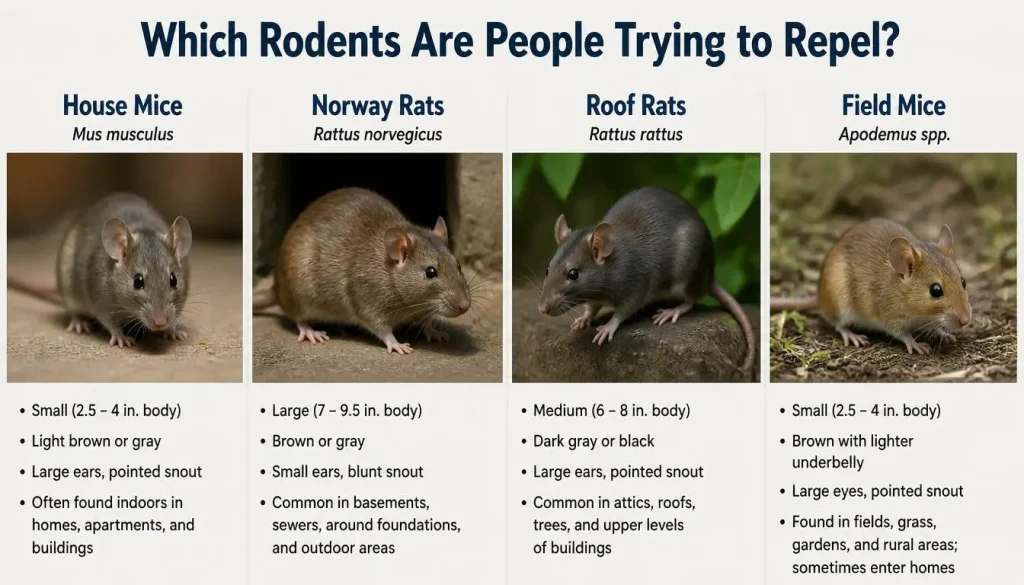
Which Rodents Are People Trying to Repel?
Different rodent species respond differently to environmental changes.
House Mice
House mice are the most common indoor rodent.
They enter homes through surprisingly small openings and often nest near kitchens, garages, basements, and attics.
Norway Rats
Norway rats are larger and usually seek shelter near foundations, crawl spaces, sheds, and outdoor structures.
Strong odors alone rarely stop them once they’ve established a nesting site.
Roof Rats
Roof rats prefer elevated locations such as attics, ceilings, and trees.
Like mice, they quickly adapt to familiar scents.
Field Mice
Field mice often move indoors during colder months in search of warmth and food.
Seasonal migration is one reason people mistakenly believe dryer sheets “worked” when rodents naturally left an area.
Where Do People Commonly Place Dryer Sheets?
Homeowners use dryer sheets in many different locations.
Popular places include:
- Attics
- Garages
- Basements
- Storage bins
- Closets
- RVs
- Campers
- Boats
- Garden sheds
- Vehicle engine compartments
- Seasonal decorations
- Outdoor furniture storage
Although these locations are frequently mentioned online, there is no guarantee dryer sheets will prevent rodents from entering or nesting there.
Which Dryer Sheet Brands Do People Use?
If you browse online forums, you’ll notice several well-known brands mentioned repeatedly.
Examples include:
- Bounce
- Gain
- Snuggle
- Downy
- Generic store brands
Some users believe one brand works better than another because of its stronger scent.
However, no dryer sheet brand has been scientifically proven to repel rodents more effectively than another.
Choosing a stronger fragrance does not necessarily improve rodent prevention.
How Often Should You Replace Dryer Sheets?
If you choose to experiment with dryer sheets, remember that their scent fades relatively quickly.
Several factors affect how long they remain fragrant:
- Temperature
- Humidity
- Air movement
- Dust accumulation
- Sunlight exposure
Many homeowners replace them every few weeks, but there is no established replacement schedule because their effectiveness against rodents has never been scientifically confirmed.
Pros and Cons of Using Dryer Sheets Against Rodents
| Pros | Cons |
|---|---|
| Affordable | Little scientific evidence |
| Easy to find | Does not eliminate rodents |
| Simple to place | Fragrance fades quickly |
| Pleasant smell for many people | Rodents often adapt |
| No special equipment required | Cannot stop an active infestation |
| May provide temporary psychological reassurance | Does not replace professional pest control |
Common Mistakes People Make
Many homeowners unintentionally make rodent problems worse by relying on DIY methods alone.
Avoid these common mistakes:
Using Only Dryer Sheets
Dryer sheets should never be your only rodent prevention strategy.
Ignoring Entry Holes
A mouse can squeeze through an opening about the width of a pencil.
Even the strongest fragrance won’t matter if rodents have easy access indoors.
Leaving Food Available
Pet food, bird seed, pantry items, and uncovered trash provide constant food sources.
Forgetting About Water
Rodents also need water.
Leaking pipes, pet bowls, and standing water encourage activity.
Never Replacing Dryer Sheets
Even if you believe the scent helps, old dryer sheets quickly lose their fragrance.
What Scents Do Rodents Actually Dislike?
Certain strong odors appear more promising than dryer sheets, although none should be considered a complete solution by themselves.
Some commonly suggested scents include:
- Peppermint oil
- Clove oil
- Cinnamon oil
- Eucalyptus oil
- Vinegar
- Ammonia (use cautiously and never mix with cleaning chemicals)
These scents may temporarily discourage rodents in some situations, but they work best when combined with proper exclusion and sanitation practices.
Dryer Sheets vs. Other Rodent Repellents
| Method | Effectiveness | Cost | Long-Term Solution |
|---|---|---|---|
| Dryer Sheets | Low | Low | No |
| Peppermint Oil | Moderate | Low | Limited |
| Snap Traps | High | Low | Yes |
| Electronic Traps | High | Medium | Yes |
| Live Traps | Moderate | Medium | Depends |
| Professional Pest Control | Very High | Higher | Best Long-Term Option |
What Actually Works Better Than Dryer Sheets?
If your goal is to keep rodents out permanently, proven prevention methods are far more effective than relying on scented laundry products.
The following strategies are recommended by pest management professionals because they address the root causes of rodent infestations rather than simply attempting to mask them.
Seal Every Possible Entry Point
The most effective rodent control starts by preventing mice and rats from getting inside in the first place.
Seal Every Possible Entry Point
Mice can squeeze through openings as small as 1/4 inch (6 mm), while rats can enter through holes about 1/2 inch (12 mm) wide. Carefully inspect your home’s exterior and seal any gaps around:
- Utility pipes
- Dryer vents
- Foundation cracks
- Garage doors
- Windows
- Roof vents
- Air conditioning lines
- Exterior doors
Use durable materials such as steel wool, copper mesh, metal flashing, or caulk designed for pest exclusion.
Remove Food Sources
Even the strongest scent won’t stop hungry rodents.
Reduce food availability by:
- Storing dry foods in airtight containers
- Cleaning up crumbs immediately
- Keeping pet food sealed
- Securing garbage bins with tight-fitting lids
- Cleaning under appliances regularly
- Picking up fallen fruit outdoors
A food-free environment is far less attractive to rodents.
Eliminate Nesting Materials
Rodents love quiet places filled with soft materials.
Reduce hiding spots by:
- Removing cardboard piles
- Organizing storage rooms
- Keeping firewood away from the house
- Trimming overgrown shrubs
- Decluttering garages and sheds
Less clutter means fewer places for rodents to hide.
Use Traps
When rodents are already inside, trapping is one of the fastest and most reliable solutions.
Common options include:
- Snap traps
- Electronic traps
- Live traps (where legal and practical)
Place traps along walls where rodents typically travel instead of in the middle of open rooms.
Call a Pest Control Professional
Large or recurring infestations often require professional treatment.
A licensed pest control technician can:
- Identify entry points
- Determine the rodent species
- Recommend the best treatment plan
- Help prevent future infestations
Professional intervention is usually the most effective long-term solution.
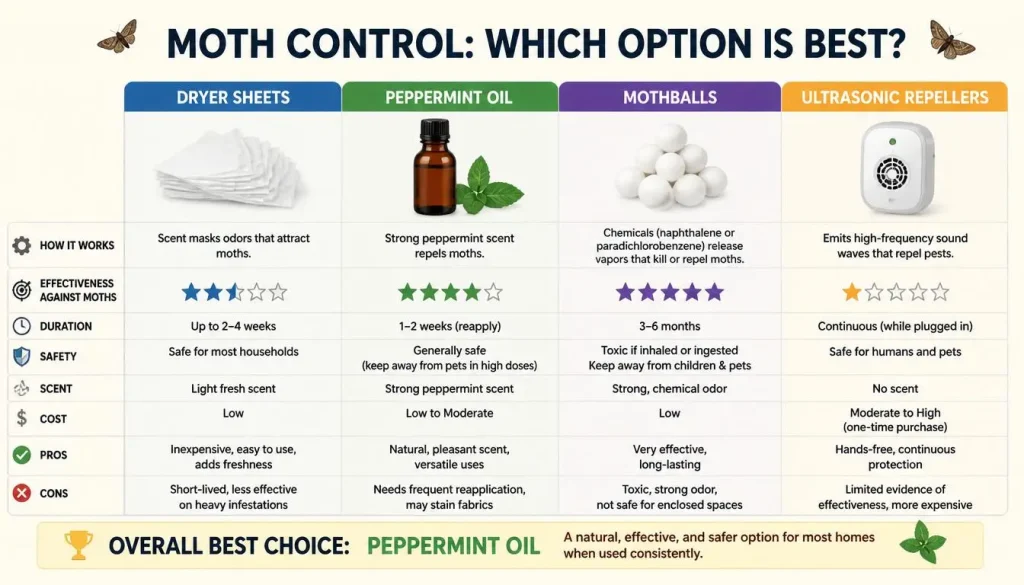
Dryer Sheets vs. Peppermint Oil vs. Mothballs vs. Ultrasonic Repellers
Many homeowners compare popular DIY rodent deterrents before deciding which one to try.
| Method | Works for Short-Term? | Proven Long-Term? | Recommended? |
|---|---|---|---|
| Dryer Sheets | Sometimes | No | Limited |
| Peppermint Oil | Sometimes | No | Supplemental Only |
| Mothballs | Limited | No | Use With Caution |
| Ultrasonic Repellers | Mixed Results | No Strong Evidence | Supplemental Only |
| Snap Traps | Yes | Yes | Highly Recommended |
| Professional Control | Yes | Yes | Best Choice |
No scent-based solution is as dependable as exclusion and trapping.
Can Dryer Sheets Help Protect Cars, RVs, or Campers?
Many people place dryer sheets inside:
- Parked cars
- RVs
- Motorhomes
- Boats
- Seasonal vehicles
- Storage trailers
The idea is that the scent discourages mice from nesting in engine compartments or storage areas.
While some owners report positive experiences, mechanics and pest professionals generally recommend combining multiple preventive measures instead, including:
- Sealing openings
- Removing food
- Checking vehicles regularly
- Using traps when necessary
Dryer sheets alone should not be relied upon to protect expensive vehicles.
Can Rodents Become Used to Dryer Sheet Smells?
Yes.
Rodents are extremely adaptable animals.
When food, water, and shelter are available, they often become accustomed to unfamiliar smells.
This process, called habituation, explains why a product that seems effective at first may stop working after several days or weeks.
Can Dryer Sheets Stop Mice From Nesting?
Not reliably.
If a warm, protected nesting area is available, mice are unlikely to abandon it simply because a dryer sheet is nearby.
Removing nesting materials and sealing access points is far more effective.
Do Scented Dryer Sheets Work Better Than Unscented Ones?
If dryer sheets have any temporary deterrent effect, it would most likely come from their fragrance.
Unscented dryer sheets are not generally believed to repel rodents.
However, even strongly scented versions have not been scientifically proven to provide dependable protection.
Are Dryer Sheets Safe Around Pets and Children?
Dryer sheets should always be used according to the manufacturer’s instructions.
Keep in mind:
- Do not allow pets to chew or eat dryer sheets.
- Keep them out of reach of small children.
- Avoid placing them where food is stored.
- Dispose of used sheets properly.
If accidental ingestion occurs, contact your veterinarian or local poison center immediately.
Signs Your Rodent Problem Is Getting Worse
Ignoring early warning signs can lead to larger infestations.
Watch for:
- Rodent droppings
- Chewed food packaging
- Gnaw marks on wood or wires
- Scratching noises in walls or ceilings
- Nesting materials
- Strong musky odors
- Frequent rodent sightings
If you notice several of these signs, it’s time to take immediate action.
How to Rodent-Proof Your Home
Follow this simple prevention checklist.
Step 1: Inspect the Exterior
Walk around your property and look for cracks, holes, and damaged vents.
Step 2: Seal Every Opening
Close gaps using durable pest-resistant materials.
Step 3: Remove Food Sources
Store food securely and clean up spills promptly.
Step 4: Reduce Clutter
Eliminate hiding places indoors and outdoors.
Step 5: Set Traps
Place traps in high-activity areas.
Step 6: Monitor Regularly
Inspect garages, attics, basements, and crawl spaces every few weeks.
Step 7: Call Professionals if Needed
Persistent infestations usually require expert treatment.
Expert Opinion
Dryer sheets have become one of the internet’s most popular DIY pest control tips, but popularity does not equal effectiveness.
Based on current evidence and professional pest management practices, dryer sheets may provide a temporary scent barrier in certain situations, but they should never be considered a reliable rodent control method.
For lasting protection, focus on exclusion, sanitation, trapping, and routine home maintenance. These proven strategies consistently outperform scent-based home remedies.
Frequently Asked Questions About Do Dryer Sheets Repel Rodents
Do dryer sheets really keep mice away?
Sometimes they may temporarily discourage mice because of their fragrance, but there is no strong scientific evidence proving they work as a dependable rodent repellent.
What smell do rodents hate the most?
Rodents may dislike strong scents such as peppermint, clove, eucalyptus, and cinnamon, although these odors should not replace proper rodent prevention methods.
Which dryer sheet brand works best for rodents?
No dryer sheet brand has been scientifically proven to repel rodents better than another.
How often should dryer sheets be replaced?
If you choose to use them, replace them once the scent fades. However, there is no research-based replacement schedule because their effectiveness against rodents has not been established.
Can dryer sheets keep rats away?
They may temporarily discourage some rats, but they are not considered an effective or permanent rat control solution.
Are dryer sheets safe around pets?
They should be kept away from pets because chewing or swallowing dryer sheets may cause health problems.
What is the best way to prevent rodents permanently?
The most effective approach combines sealing entry points, removing food and water sources, reducing clutter, setting traps when necessary, and seeking professional pest control for serious infestations.
Final Verdict
So, do dryer sheets repel rodents?
The answer is not reliably.
Although some homeowners report temporary success, there is no strong scientific evidence showing that dryer sheets consistently repel mice or rats. Rodents are highly adaptable and often ignore unfamiliar scents once food, water, or shelter becomes available.
If you’re dealing with an active rodent problem or want to prevent one, the best strategy is to:
- Seal entry points
- Remove food and water sources
- Eliminate nesting areas
- Use proven traps
- Contact a pest control professional for persistent infestations
Dryer sheets may leave your laundry smelling fresh, but when it comes to rodent control, they should be viewed as a temporary DIY experiment rather than a dependable solution.

Oliver Bennett is a home appliance writer specializing in washer and dryer solutions, laundry care, and energy-efficient appliances. He provides detailed reviews, buying guides, and maintenance tips to help users choose reliable machines and achieve better laundry results.