

Yes, you can put jeans in the tumble dryer, but you should use low or medium heat and remove them while they are still slightly damp. High heat can shrink denim, fade dark washes, weaken stretch fibers, and make jeans feel tighter than they should.
This matters because jeans are one of the most frequently worn items in most wardrobes. The American Cleaning Institute’s 2026 National Cleaning Survey found that 43% of U.S. households do one to three loads of laundry per week, while another 37% do four to six loads weekly. That means many people are regularly drying everyday clothes like jeans and may be shortening their life without realizing it.
The safest answer depends on the jeans. Heavy 100% cotton denim can usually handle a short tumble dry on low heat. Stretch jeans, black jeans, coated denim, and embellished jeans need more care because heat can damage elastic fibers, fade dye, or affect finishes.
In this guide, you’ll learn when tumble drying jeans is safe, when to air dry them, which dryer setting to use, how to avoid shrinkage, and how to keep denim looking good for longer.
Why Drying Jeans the Right Way Matters
Drying jeans may seem simple, but denim reacts strongly to heat, friction, and over-drying. Cotton fibers can tighten when exposed to heat. Stretch fibers can lose recovery. Dark dyes can fade faster when jeans tumble against the drum for too long.
The right drying method helps your jeans keep their size, color, fit, and structure. It also reduces the rough, stiff feeling that happens when denim gets too hot or dries unevenly.
Common problems readers experience include:
- Jeans feel tighter after drying
- Waistbands shrink more than the legs
- Black or dark jeans fade quickly
- Stretch jeans lose shape at the knees
- Denim feels stiff, rough, or warped
- Seams twist after repeated dryer use
Can You Put Jeans in the Tumble Dryer? Denim Comparison Table
| Type of Jeans | Can You Tumble Dry? | Best Drying Method | Main Risk |
|---|---|---|---|
| 100% cotton jeans | Yes, with care | Low or medium heat, remove slightly damp | Shrinkage |
| Stretch jeans | Sometimes | Low heat or air dry | Elastic damage |
| Black jeans | Yes, but carefully | Inside out, low heat | Color fading |
| Raw denim | Usually no | Air dry only | Shrinkage and dye loss |
| Distressed jeans | Sometimes | Low heat, short cycle | Extra fraying |
| Embellished jeans | Usually no | Air dry flat or hang dry | Damage to trims |
| Coated denim | No | Air dry | Finish cracking |
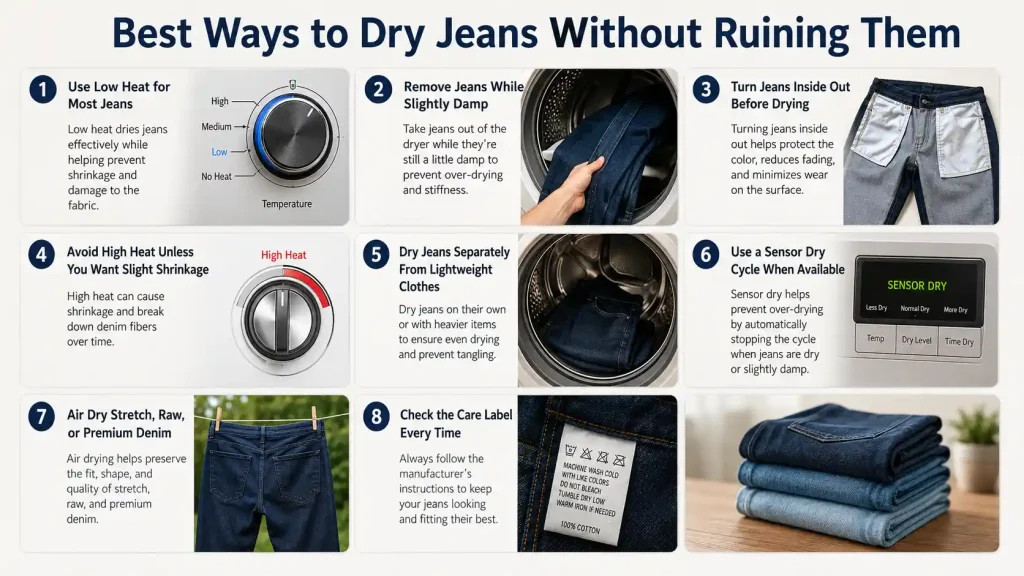
Best Ways to Dry Jeans Without Ruining Them
1. Use Low Heat for Most Jeans
Low heat is the safest dryer setting for most jeans. Whirlpool notes that low dryer heat is around 125°F, or about 52°C, and may be labeled “tumble dry low.”
Low heat takes longer, but it reduces shrinkage and protects stretch fibers. It is especially useful for skinny jeans, jeggings, and jeans with elastane or spandex.
Benefits: Less shrinkage, less fading, better shape retention.
Drawbacks: Longer drying time.
2. Remove Jeans While Slightly Damp
Do not wait until jeans are bone dry. Remove them when they feel slightly damp at the seams, waistband, and pockets.
This helps prevent over-drying, which can make denim stiff and tight. Hang the jeans or lay them flat to finish drying naturally.
Benefits: Helps preserve fit and softness.
Drawbacks: You need extra drying time outside the machine.
3. Turn Jeans Inside Out Before Drying
Turning jeans inside out protects the outer fabric from friction. This is especially important for black jeans, dark indigo jeans, and printed denim.
The inside-out method also protects buttons, rivets, and zippers from rubbing against the drum. It is a simple habit that can slow visible fading.
4. Avoid High Heat Unless You Want Slight Shrinkage
High heat can make jeans shrink, especially if they contain a high percentage of cotton. Some people use this on purpose when jeans feel too loose.
But high heat is risky for stretch denim. It can weaken elastic fibers and make the jeans lose their original fit over time.
Benefits: Can tighten loose cotton jeans slightly.
Drawbacks: Higher risk of shrinkage, fading, and fabric stress.
5. Dry Jeans Separately From Lightweight Clothes
Jeans take longer to dry than T-shirts, underwear, and light cotton garments. Mixing them with thin clothes can lead to uneven drying.
Light items may over-dry while the jeans stay damp. Drying jeans separately also reduces friction and helps the dryer work more efficiently.
6. Use a Sensor Dry Cycle When Available
A sensor dry cycle stops the dryer when it detects that clothes are dry enough. This can reduce unnecessary heat exposure.
If your dryer has a “less dry” or “damp dry” option, use it for jeans. GE Appliances lists low heat at 125°F and medium heat at 135°F, which is about 52°C and 57°C.
Benefits: Reduces over-drying and saves energy.
Drawbacks: Thick seams may still feel damp.
7. Air Dry Stretch, Raw, or Premium Denim
Air drying is best for jeans you want to protect. This includes raw denim, expensive jeans, coated denim, and jeans with stretch.
Hang jeans by the waistband or lay them flat on a drying rack. Keep dark jeans away from direct sunlight to reduce fading.
8. Check the Care Label Every Time
Your jeans’ care label gives the most specific guidance. The tumble dry symbol usually looks like a square with a circle inside. A crossed-out tumble dry symbol means you should not use the dryer.
Whirlpool explains that care label temperature numbers such as 30°C, 40°C, 50°C, and 60°C refer to maximum wash temperatures, equal to about 85°F, 105°F, 120°F, and 140°F.
Step-by-Step Guide
- Read the care label first. Look for the tumble dry symbol. If the care label says “do not tumble dry,” air dry the jeans instead.
- Check the fabric content. Jeans made from 100% cotton can usually handle more dryer time than stretch jeans. If you see elastane, spandex, or Lycra, use extra care.
- Turn the jeans inside out. This protects the color and outer surface. It also reduces friction on visible denim fibers.
- Zip the zipper and fasten buttons. This helps the jeans keep their shape. It also prevents metal parts from catching on other garments.
- Choose low heat or delicate. Use low heat around 125°F or 52°C when possible. Medium heat around 135°F or 57°C may work for sturdy cotton jeans, but avoid it for stretch denim.
- Use a short cycle first. Start with 15 to 25 minutes instead of a full timed dry. Jeans often need less machine time than people think.
- Check the waistband and seams. These areas dry slower than the legs. Remove the jeans when they are slightly damp but not wet.
- Reshape the jeans by hand. Gently pull the waistband, legs, and seams back into shape. Do this before the fabric fully dries.
- Finish drying on a rack. Hang the jeans or lay them flat. Keep dark jeans away from direct sunlight.
Pro tip: If your jeans feel stiff after air drying, tumble them on air fluff or no heat for 5 to 10 minutes. This softens the fabric without adding shrinkage risk.
Comparison Table
| Factor | Tumble Drying Jeans | Air Drying Jeans |
|---|---|---|
| Speed | Fast, usually 20 to 45 minutes | Slower, often several hours |
| Shrinkage risk | Higher, especially with heat | Lower |
| Best temperature | Low heat around 125°F / 52°C | Room temperature |
| Color protection | Moderate if inside out | Better, especially for dark denim |
| Stretch denim safety | Risky if over-dried | Safer |
| Fabric softness | Softer right away | Can feel stiff at first |
| Energy use | Uses electricity or gas | No dryer energy needed |
| Winner analysis | Best when you need jeans dry quickly | Best for long-term denim care |
Expert Tips and Common Mistakes
Expert Tips
- Wash jeans less often unless they are dirty or sweaty.
- Turn jeans inside out before both washing and drying.
- Use cold water around 85°F or 30°C for dark denim when the label allows.
- Choose low spin when washing stretch jeans.
- Dry similar-weight garments together.
- Remove jeans before the waistband becomes hot and fully dry.
Common Mistakes to Avoid
Mistake 1: Using high heat every time.
High heat may seem faster, but it increases the risk of garment shrinkage and color loss. It can also make stretch jeans lose their snap and recovery.
Mistake 2: Ignoring the care label.
The care label tells you what the manufacturer recommends for that specific garment. A crossed-out tumble dry symbol means the dryer can damage the jeans.
Mistake 3: Drying jeans until they are completely hot and stiff.
If jeans feel very hot when you remove them, they have likely been over-dried. This can make denim feel tighter and rougher.
Mistake 4: Treating all jeans the same.
Raw denim, stretch jeans, black jeans, and coated jeans all need different care. A method that works for heavy cotton work jeans may damage premium stretch denim.
Frequently Asked Questions
Can you put jeans in the tumble dryer?
Yes, you can put jeans in the tumble dryer if the care label allows it. Use low heat, turn them inside out, and remove them while slightly damp to reduce shrinkage.
Will jeans shrink in the tumble dryer?
Jeans can shrink in the tumble dryer, especially if they are made from 100% cotton. High heat and over-drying create the highest risk.
What dryer setting is best for jeans?
Low heat or tumble dry low is usually the best setting for jeans. For sturdy 100% cotton jeans, medium heat may be acceptable if the care label allows it.
Can I put stretch jeans in the dryer?
You can, but it is safer to use low heat for a short time or air dry them. Heat can weaken elastane, spandex, and other stretch fibers.
Should jeans be air dried or tumble dried?
Air drying is better for long-term denim care. Tumble drying is more convenient when you need jeans dry quickly, but it should be done with low heat.
How long should jeans go in the tumble dryer?
Start with 15 to 25 minutes on low heat. Check the jeans and remove them when the seams and waistband are slightly damp.
Can you tumble dry black jeans?
Yes, but turn black jeans inside out and use low heat. Air drying is better if you want to preserve the dark color for longer.
Conclusion
So, can you put jeans in the tumble dryer? Yes, you can, but the safest method is low heat, short drying time, and removing the jeans while they are still slightly damp. This approach helps reduce shrinkage, fading, stiffness, and fabric damage.
For everyday denim, tumble drying can be convenient. For stretch, raw, black, coated, or premium jeans, air drying is usually the better choice. Always check the care label, because the symbol on the tag matters more than general laundry advice.
If you want your jeans to last longer, treat the dryer as a tool you use carefully, not automatically. For more practical laundry help, explore our other denim care guides and laundry appliance comparisons.
Expert Opinion
In my experience, the biggest mistake people make with jeans is not washing them too often. It is drying them too aggressively. Denim can handle daily wear, but repeated high heat changes the way cotton and stretch fibers behave.
I also recommend paying attention to real care guidance from organizations such as the American Cleaning Institute and appliance manufacturers like Whirlpool. Their advice supports the same practical rule I use at home: check the care label, use low heat, and stop the cycle before denim gets completely dry.
If you own only one or two pairs of jeans that you wear often, air drying is worth the extra time. If you have a busy household, tumble drying is fine as long as you use the right setting and avoid over-drying.

Oliver Bennett is a home appliance writer specializing in washer and dryer solutions, laundry care, and energy-efficient appliances. He provides detailed reviews, buying guides, and maintenance tips to help users choose reliable machines and achieve better laundry results.