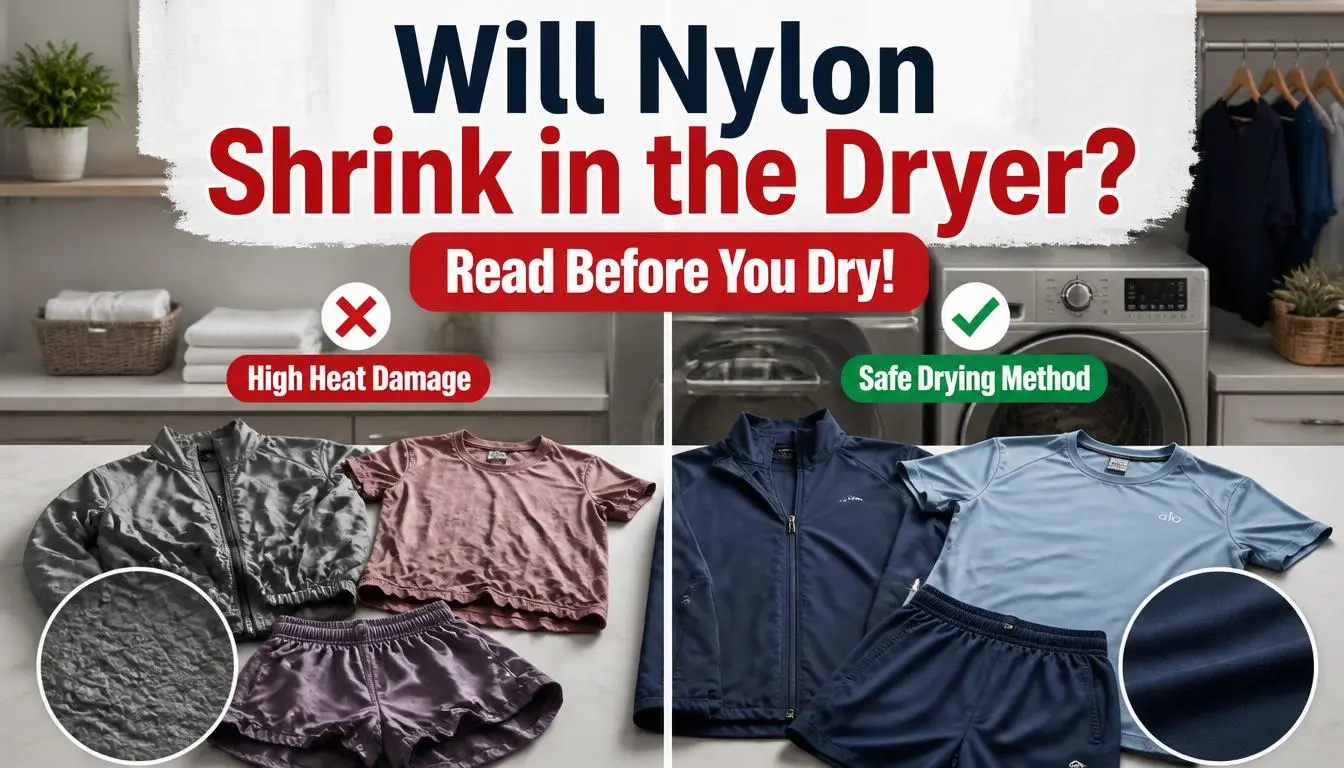
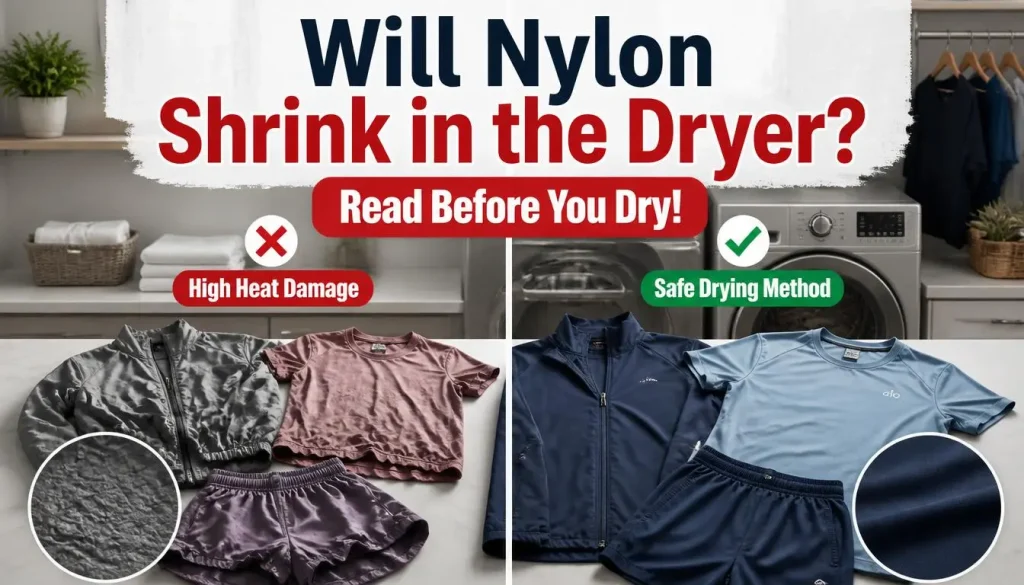
Nylon can shrink in the dryer, but it is generally more resistant to shrinkage than natural fibers like cotton or wool. High heat is the main cause of nylon shrinkage, and even though the material is designed to be durable and flexible, excessive dryer temperatures can damage fibers and cause garments to become smaller, misshapen, or less elastic.
According to the American Cleaning Institute (ACI), following garment care labels is one of the most effective ways to extend clothing life and prevent fabric damage. Nylon is commonly used in activewear, hosiery, swimwear, jackets, and performance clothing because of its strength and resistance to wear. However, improper drying can still affect its shape and fit.
Many people accidentally shrink nylon garments by using high dryer settings or leaving clothes in the dryer longer than necessary. Understanding how heat interacts with synthetic fibers can help you avoid costly mistakes.
In this guide, you’ll learn whether nylon shrinks in the dryer, how much shrinkage is possible, the safest drying methods, and practical tips for keeping your nylon clothing looking its best.
Why Will Nylon Shrink in the Dryer Matter?
Nylon is found in countless household wardrobes. If you regularly wash workout clothes, leggings, jackets, underwear, or blended-fabric garments, understanding shrinkage risks can save both money and frustration.
Common problems people experience include:
- Activewear becoming tighter after drying
- Nylon jackets losing their original fit
- Stretch fabrics becoming less flexible
- Swimwear losing shape and elasticity
- Wrinkling caused by excessive heat exposure
- Premature fabric wear and fiber damage
Unlike cotton, nylon doesn’t usually experience dramatic shrinkage. However, repeated exposure to temperatures above recommended levels can gradually affect the fabric’s dimensions and performance.
Nylon Fabric Comparison Table
| Fabric Type | Heat Resistance | Shrinkage Risk in Dryer | Best Drying Method |
|---|---|---|---|
| Nylon | Moderate | Low to Moderate | Air dry or low heat |
| Polyester | High | Very Low | Low heat or air dry |
| Cotton | Low | High | Low heat |
| Wool | Very Low | Very High | Flat air dry |
| Rayon | Low | High | Air dry |
| Spandex/Elastane | Moderate | Moderate | Air dry |
This comparison highlights why nylon is often considered a safer synthetic fabric. While it performs better than many natural fibers, heat exposure still requires caution.
Best Ways to Prevent Nylon from Shrinking in the Dryer
1. Use the Lowest Heat Setting
Most nylon garments can tolerate low-temperature drying. Choose a delicate or low-heat cycle whenever possible.
Benefits:
- Reduces shrinkage risk
- Preserves elasticity
Drawbacks:
- Longer drying time
2. Check the Care Label First
Manufacturers test fabrics and provide specific instructions for garment care. Always follow the label before washing or drying.
Benefits:
- Prevents accidental damage
- Extends garment lifespan
Drawbacks:
- Labels may fade over time
3. Remove Clothes While Slightly Damp
Nylon dries quickly. Removing garments before they become completely dry minimizes unnecessary heat exposure.
Benefits:
- Less fiber stress
- Fewer wrinkles
Drawbacks:
- Requires monitoring dryer cycles
4. Use Air Dry Settings
Many modern dryers include an air-fluff or no-heat option. This setting circulates air without applying damaging temperatures.
Benefits:
- Virtually eliminates shrinkage risk
- Protects delicate fabrics
Drawbacks:
- Slower drying process
5. Dry Similar Fabrics Together
Mixing heavy cotton towels with lightweight nylon garments often increases drying times and heat exposure.
Benefits:
- More consistent drying
- Better fabric protection
Drawbacks:
- Requires sorting laundry
6. Avoid Overdrying
Excessive drying is one of the most common causes of fabric damage. Once nylon is dry, remove it promptly.
Benefits:
- Maintains shape
- Conserves energy
Drawbacks:
- Requires attention to cycle completion
7. Consider Air Drying for Valuable Items
Premium athletic wear and specialty garments often last longer when air dried.
Benefits:
- Maximum protection
- Better elasticity retention
Drawbacks:
- Longer drying time
Step-by-Step Guide to Drying Nylon Safely
Step 1: Read the Care Label
Check manufacturer instructions for temperature limits and drying recommendations.
Step 2: Inspect the Garment
Look for signs of wear, loose seams, or stretched areas that could worsen during drying.
Step 3: Wash Using Cool or Warm Water
Avoid excessively hot wash temperatures that can weaken synthetic fibers.
Step 4: Shake Out the Garment
This helps reduce wrinkles and promotes even drying.
Step 5: Select a Low-Heat Cycle
Choose delicate, low-temperature, or permanent-press settings.
Step 6: Check Progress Periodically
Nylon dries faster than many fabrics, so monitor drying times.
Step 7: Remove While Slightly Damp
This minimizes heat exposure and helps maintain shape.
Step 8: Finish Air Drying
Hang or lay flat until completely dry.
Pro tip: If you’re unsure about a garment’s heat tolerance, skip the dryer entirely and air dry it indoors.
Dryer Drying vs Air Drying Comparison
| Feature | Dryer Drying | Air Drying |
|---|---|---|
| Speed | Fast | Slow |
| Convenience | High | Moderate |
| Shrinkage Risk | Low to Moderate | Very Low |
| Energy Usage | Higher | None |
| Elasticity Protection | Moderate | Excellent |
| Fabric Longevity | Good | Excellent |
| Wrinkle Reduction | Better | Moderate |
| Overall Winner | Good for convenience | Best for garment protection |
Winner Analysis: Air drying is the safest option for preventing nylon shrinkage and preserving garment performance. Dryer drying remains acceptable when using low heat and proper care techniques.
Expert Tips and Common Mistakes
Expert Tips
- Wash nylon with similar synthetic fabrics.
- Turn garments inside out before washing.
- Use mild detergent designed for delicate fabrics.
- Clean dryer lint filters regularly for efficient drying.
- Hang athletic wear immediately after washing.
- Follow care label symbols carefully.
Common Mistakes to Avoid
Using high heat settings
High temperatures can weaken nylon fibers and increase the likelihood of shrinkage over time.
Leaving garments in the dryer too long
Even low heat can become problematic when exposure lasts longer than necessary.
Ignoring care labels
Manufacturers provide garment-specific guidance that often differs between nylon products.
Drying nylon with heavy cotton loads
Heavy fabrics increase drying times and expose nylon to more heat than needed.
Frequently Asked Questions
Will nylon shrink in the dryer on high heat?
Yes. High heat is the most common cause of nylon shrinkage. While the shrinkage is often less dramatic than cotton, repeated exposure can affect fit and elasticity.
How much can nylon shrink in the dryer?
Most nylon garments experience minimal shrinkage when properly cared for. Significant shrinkage typically occurs only after exposure to excessive heat.
Is nylon safer in the dryer than cotton?
Generally, yes. Nylon is more resistant to shrinkage than cotton, but it can still be damaged by high temperatures.
Can I intentionally shrink nylon clothing?
You may achieve slight shrinkage using heat, but results are unpredictable. Excessive heat can damage the fabric before achieving the desired size reduction.
What dryer setting is best for nylon?
A low-heat, delicate, or air-fluff setting is usually the safest option.
Does nylon shrink every time it goes into the dryer?
No. Most properly dried nylon garments maintain their size. Problems usually occur when high heat is used repeatedly.
Should nylon activewear be air dried?
Yes. Air drying helps preserve elasticity, moisture-wicking performance, and overall garment lifespan.
Conclusion
So, will nylon shrink in the dryer? The answer is yes, but usually only when exposed to excessive heat. Nylon is naturally more resistant to shrinkage than many fabrics, yet high temperatures can still affect its size, shape, and performance.
The safest approach is to use low heat, remove garments promptly, and air dry valuable or delicate nylon items whenever possible. These simple habits can significantly extend the life of your clothing.
If you’re looking to protect other fabrics and garments, explore our other laundry guides and fabric care comparisons to make every load of laundry safer and more effective.
Expert Opinion
As a textile care specialist, I’ve found that nylon is one of the more forgiving synthetic fabrics in modern clothing. However, many shrinkage complaints I encounter stem from repeated high-heat drying rather than a single laundry mistake.
Organizations such as the American Cleaning Institute and consumer textile manufacturers consistently recommend following garment care labels because fabrics vary significantly by construction, blends, and finishes. A nylon jacket may behave differently from nylon athletic leggings, even though both contain the same base fiber.
My recommendation is simple: treat nylon as a low-heat fabric. If maintaining fit and performance matters, air drying remains the best long-term strategy. A few extra hours of drying time can add years to the life of your favorite garments.

Oliver Bennett is a home appliance writer specializing in washer and dryer solutions, laundry care, and energy-efficient appliances. He provides detailed reviews, buying guides, and maintenance tips to help users choose reliable machines and achieve better laundry results.