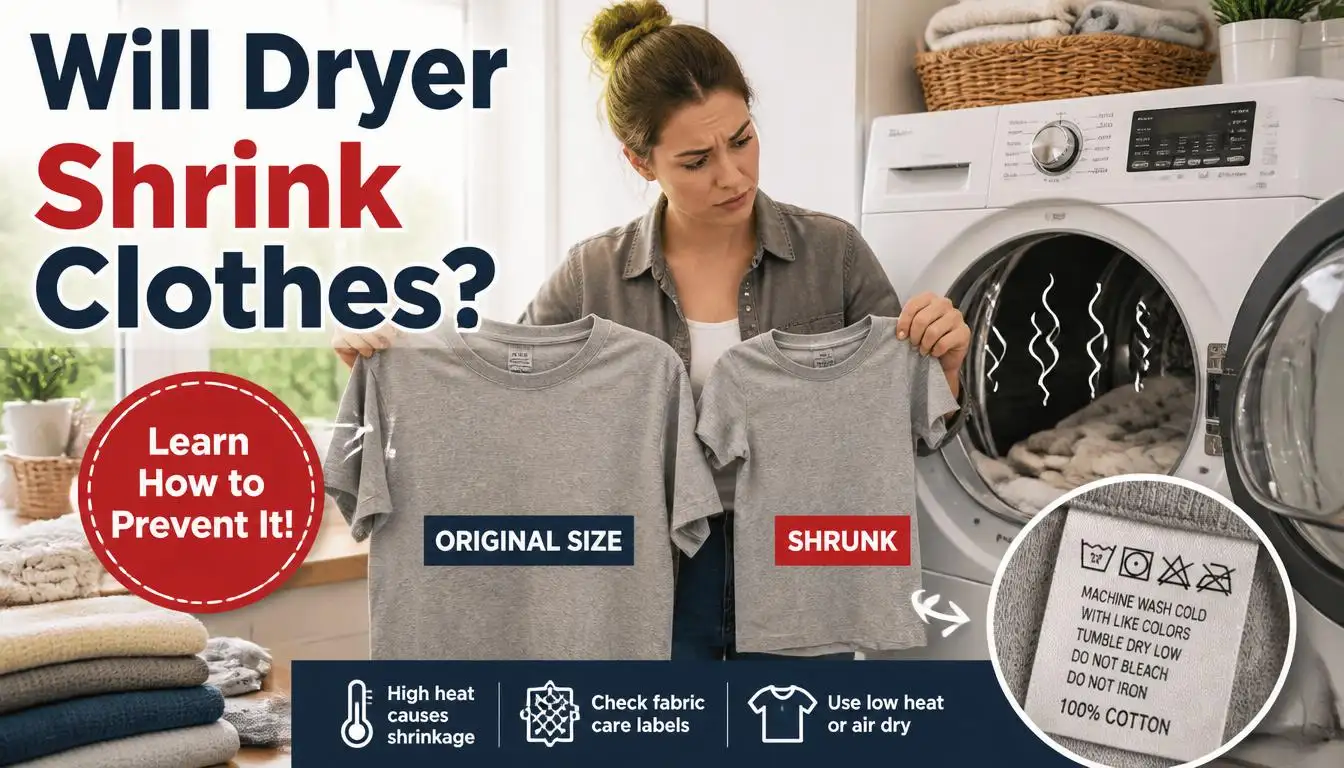
Will a dryer shrink clothes? Yes, dryers can and do shrink clothes, especially garments made from cotton, wool, rayon, and other natural fibers. Excessive heat causes fibers to contract, reducing a garment’s size. Understanding dryer settings, fabric types, and proper laundry techniques can help you prevent unwanted shrinking and keep your clothes fitting properly.
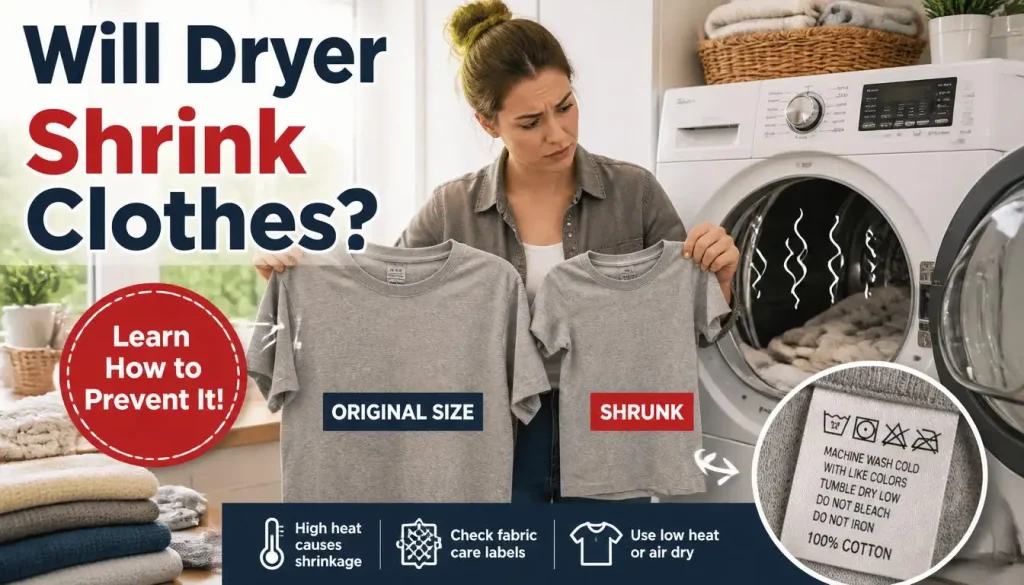
Few laundry frustrations are more annoying than pulling your favorite shirt or pair of jeans from the dryer only to discover they’ve become noticeably smaller. Many people wonder whether the dryer is truly responsible or if the clothing manufacturer is to blame. In reality, both factors can play a role, but heat is the primary culprit.
Modern dryers are designed to dry clothes quickly and efficiently, yet improper use can shorten the lifespan of garments. High temperatures, extended drying cycles, and ignoring care labels all contribute to shrinkage. According to the American Cleaning Institute, nearly 1 in 3 Americans has accidentally shrunk a garment in the dryer — and most cases were entirely preventable.
In this guide, you’ll learn why dryers shrink clothes, which fabrics are most vulnerable, how to prevent shrinkage, and the best drying practices to keep your clothes looking and fitting like new.
Why Dryer Shrinkage Matters
Clothing shrinkage is more than just an inconvenience. It leads to wasted money, shortened garment life, and increased textile waste. As the average cost of clothing continues to rise, extending the lifespan of your wardrobe has never been more important.
Many modern dryers now feature moisture sensors, adaptive heat controls, and energy-efficient cycles specifically designed to reduce fabric damage. However, these technologies can only help if users select the correct settings.
Shrinkage typically occurs when heat disrupts the structure of fibers. Natural fibers such as cotton and wool are especially susceptible because they absorb moisture and contract when exposed to high temperatures. Synthetic materials like polyester are generally more resistant but can still suffer damage under extreme heat.
Consumer complaints about laundry-related clothing damage remain common. People frequently experience:
- T-shirts becoming shorter after washing
- Jeans fitting tighter after drying
- Sweaters losing their original shape
- Athletic wear developing uneven shrinkage
- Delicate fabrics becoming distorted
The good news is that most shrinkage is entirely preventable. By understanding how dryers affect different fabrics, you can avoid costly mistakes and maintain your wardrobe for years.
Which Fabrics Shrink the Most in the Dryer?
Not all fabrics react to heat the same way. Here’s a quick breakdown:
| Fabric | Shrinkage Risk | Recommended Drying Method |
|---|---|---|
| Cotton | High | Low heat or air dry |
| Wool | Very High | Air dry only |
| Rayon | High | Air dry only |
| Linen | Medium-High | Low heat |
| Bamboo | Medium-High | Low heat |
| Polyester | Low | Low to medium heat |
| Nylon | Low | Low heat |
| Acrylic | Low | Low heat |
| Spandex/Lycra blends | Medium | Low heat |
Best Ways to Prevent Clothes from Shrinking in the Dryer
If you’re worried about dryer shrinkage, these practical solutions will dramatically reduce your risk.
1. Use Low Heat Settings
Lower temperatures minimize fiber contraction and are safer for most fabrics. Most dryers label these as “Delicate,” “Low,” or “Gentle” cycles.
Benefits:
- Significantly reduces shrinkage risk
- Extends garment lifespan
- Saves energy and lowers electricity bills
Drawback: Slightly longer drying times
2. Follow Care Label Instructions
Manufacturers test fabrics and provide drying recommendations for a reason. Always check the care label before putting a garment in the dryer. Common symbols include:
- Square with circle inside = tumble dry allowed
- Dot inside the circle = temperature setting (one dot = low, two = medium, three = high)
- X over the square = do not tumble dry
3. Remove Clothes While Slightly Damp
Allowing garments to air dry for the final 10–15 minutes reduces heat exposure and virtually eliminates residual shrinkage from overdrying.
4. Use Moisture Sensor Cycles
Modern dryers automatically stop when clothes reach the desired dryness level, preventing the overdrying that causes most shrinkage. If your dryer has this feature, always use it over a timed cycle.
5. Separate Fabrics by Weight and Material
Drying heavy towels alongside lightweight shirts forces delicate garments to endure longer, hotter cycles than they need. Sort loads by fabric type whenever possible.
6. Air Dry Sensitive Materials
The following fabrics should almost always be air dried:
- Wool
- Silk
- Rayon
- Linen
- Cashmere
- Delicate blends and embroidered items
7. Choose a Heat-Pump Dryer
Heat-pump dryers operate at significantly lower temperatures than conventional dryers, making them the gentlest option for fabric care. They also use up to 50% less energy — a practical choice for households that do laundry frequently.
Step-by-Step Guide: How to Dry Clothes Without Shrinking Them
Follow these steps every time you do laundry:
- Read the garment care label before washing.
- Sort clothes by fabric type and weight before drying.
- Select the lowest appropriate temperature for the load.
- Use a moisture sensor cycle if your dryer has one.
- Avoid overloading the drum — clothes need room to tumble freely.
- Check clothing periodically during the cycle.
- Remove garments immediately when dry or slightly damp.
- Fold or hang clothes right away to maintain shape.
Pro tip for cotton: Stop the cycle 5 minutes early and lay cotton items flat or hang them to finish air drying. This small step can prevent years of gradual shrinkage.
Temperature Guide: High Heat vs. Low Heat Drying
| Feature | High Heat Drying | Low Heat Drying | Winner |
|---|---|---|---|
| Temperature (°F) | 135°F / 57°C | 125°F / 52°C | — |
| Temperature (°C) | 57°C | 52°C | — |
| Drying Speed | Faster | Slightly slower | High Heat |
| Energy Use | Higher | Lower | Low Heat |
| Shrinkage Risk | High | Low | Low Heat |
| Fabric Wear Over Time | Accelerated | Minimal | Low Heat |
| Best For | Towels, bedding | Clothing, delicates | Low Heat |
| Long-Term Fabric Condition | Degraded faster | Better preserved | Low Heat |
Analysis: While high heat drying offers faster results, low heat is the better long-term choice for clothing. It reduces shrinkage, preserves fabric integrity, lowers energy use, and keeps garments looking newer for longer. Reserve high heat for sturdy items like towels, cotton bedsheets, and denim work clothes.
Expert Tips and Common Mistakes
Expert Tips
- Choose a moisture-sensing dryer over a timer-only model whenever you replace your appliance.
- Use the delicate cycle for cotton blends, premium shirts, and fitted clothing.
- Clean the lint filter before every load to maintain proper airflow and drying efficiency.
- Never overdry — stop the cycle slightly early and allow final air drying.
- Consider a heat-pump dryer if you regularly dry wool blends or premium garments.
- Turn clothes inside out before drying to protect printed graphics and surface finishes.
Common Mistakes to Avoid
Using high heat for every load. Many people assume hotter settings dry clothes faster without consequences. Repeatedly drying cotton garments on high heat can cause up to one to two sizes of shrinkage over time. The same garment dried consistently on low heat can maintain its original fit for years.
Ignoring care labels. A wool sweater and a polyester athletic top require entirely different drying approaches. Taking 10 seconds to check the label prevents costly mistakes.
Overloading the dryer. Crowded loads reduce airflow and lead users to run extra-long cycles, compounding heat exposure and shrinkage risk.
Drying everything until completely dry. Many garments only need to reach a slightly damp state before being finished with air drying. Over-drying is one of the leading causes of premature fabric wear.
Frequently Asked Questions on Will Dryer Shrink Clothes
Will a dryer shrink clothes every time I use it?
Not necessarily. Shrinkage depends on fabric type, dryer temperature, and drying duration. Natural fibers like cotton and wool are far more likely to shrink than synthetic materials such as polyester. Using low heat and moisture sensor cycles greatly reduces the risk.
Which fabrics shrink the most in a dryer?
Cotton, wool, rayon, linen, and bamboo fabrics are among the most susceptible to shrinkage. Their natural fibers absorb moisture and contract when exposed to heat. Synthetic fabrics like polyester and nylon are more heat-resistant.
Can clothes shrink gradually after multiple dryer cycles?
Yes. Shrinkage often occurs gradually over repeated drying cycles, particularly when garments are regularly exposed to high heat. A shirt may lose only a small amount of size per cycle, but the cumulative effect over months adds up noticeably.
Is low heat completely safe from shrinkage?
Low heat significantly reduces the risk but does not eliminate it entirely. Fabric composition, garment construction, and drying duration all play a role. For the most delicate items, air drying remains the safest option.
Can you reverse dryer shrinkage?
Sometimes. Soaking the garment in lukewarm water mixed with a capful of hair conditioner or fabric softener for 30 minutes, then gently stretching it back to its original shape and laying flat to dry, can recover some lost size. Results vary by fabric and degree of shrinkage.
Are heat-pump dryers better for preventing shrinkage?
Yes. Heat-pump dryers operate at lower temperatures (typically below 120°F / 49°C) and are considerably gentler on fabrics than conventional dryers. They are widely regarded as the best option for households that regularly dry delicate or premium clothing.
Should I air dry clothes instead of using a dryer?
For delicate fabrics, wool, silk, and garments prone to shrinking, air drying is the safest option. That said, most everyday cotton and synthetic items can be safely machine dried on a low heat setting, especially if removed while slightly damp.
Conclusion
So, will a dryer shrink clothes? Yes, but shrinkage is largely preventable. High temperatures, prolonged drying times, and sensitive fabrics are the primary reasons garments lose their original size. By selecting low heat settings, using moisture-sensing technology, following care labels, and removing clothes promptly, you can dramatically reduce the risk.
Today’s home appliances offer smarter controls, energy-efficient operation, and fabric-protection features that make proper laundry care easier than ever. However, user habits still play the most important role. Taking a few extra precautions each laundry day can save significant money, preserve clothing quality, and extend the life of your wardrobe.
If you’re researching drying techniques, home appliance recommendations, or fabric care solutions, explore our other laundry guides, dryer comparisons, and buying recommendations to make smarter decisions for your home.
Expert Opinion
After evaluating numerous dryer models and reviewing fabric-care guidance from organizations including the American Cleaning Institute and Woolmark, overheating remains the single most common and preventable cause of clothing shrinkage.
Modern dryers equipped with moisture sensors and adaptive heat programs perform significantly better at protecting garments than older timer-based machines. In my experience advising households on laundry care, consumers consistently prioritize drying speed over fabric preservation and consistently regret it when their favorite items no longer fit.
For households that regularly dry cotton, wool blends, or premium clothing, investing in a dryer with genuine fabric-care technology is worth the additional upfront cost. The savings in clothing replacement alone typically offset the price difference within two to three years.

Oliver Bennett is a home appliance writer specializing in washer and dryer solutions, laundry care, and energy-efficient appliances. He provides detailed reviews, buying guides, and maintenance tips to help users choose reliable machines and achieve better laundry results.