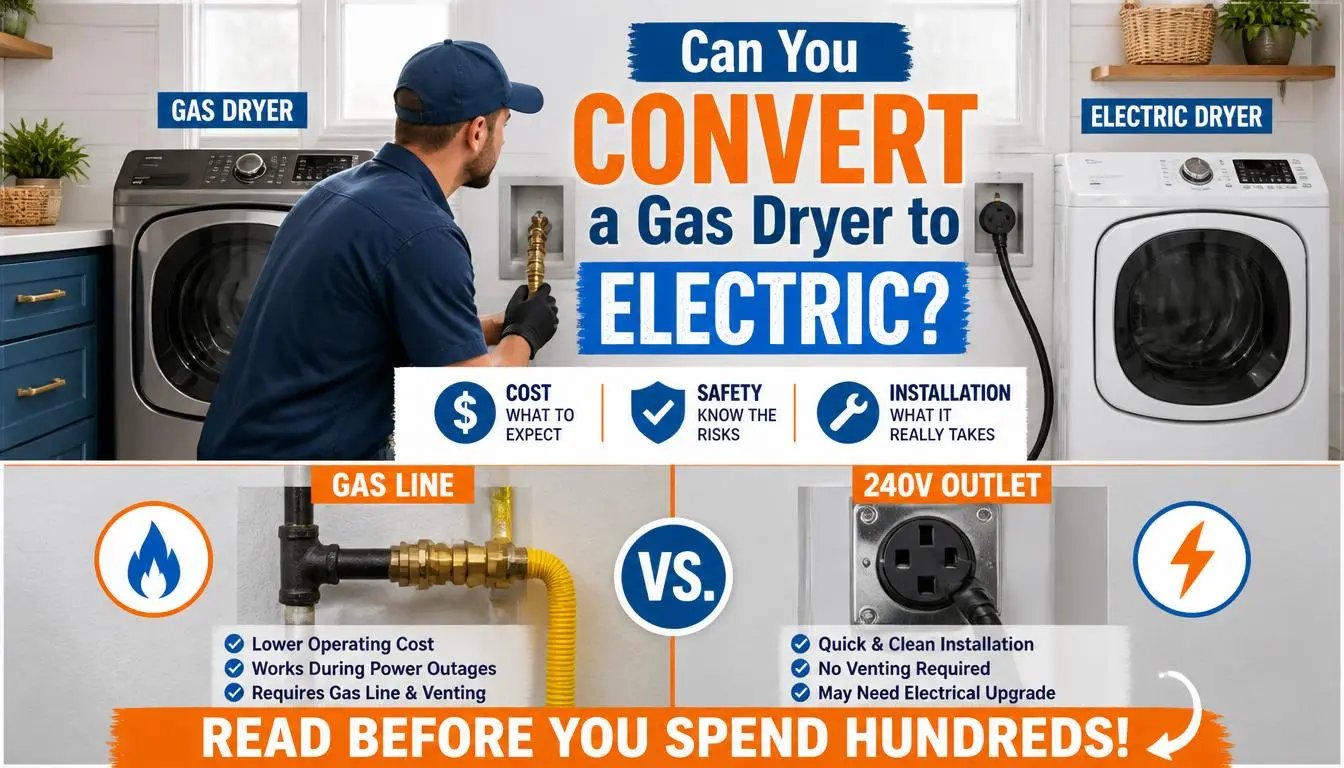
Converting a gas dryer to electric is not a simple modification. In most cases, you cannot practically convert a gas dryer to electric because the heating systems, wiring, internal components, and electrical requirements are fundamentally different. Purchasing a dedicated electric dryer is usually safer, more reliable, and often less expensive than attempting a conversion.
According to the U.S. Department of Energy, clothes dryers are among the largest household energy users, making efficiency, proper installation, and safety essential considerations when choosing a dryer. Likewise, organizations such as the American Gas Association emphasize that gas appliances should only be installed, serviced, or modified according to manufacturer specifications and local building codes.
Many homeowners ask this question when moving into a new house that only has an electric dryer outlet or when replacing an older appliance. While the idea sounds straightforward, the reality involves significant mechanical and electrical differences.
In this guide, you’ll learn whether you can convert a gas dryer to electric, why manufacturers generally discourage it, safer alternatives, cost comparisons, and expert recommendations to help you make the best decision.
Why Can You Convert a Gas Dryer to Electric Matter?
Understanding whether a gas dryer can be converted helps you avoid expensive mistakes, unsafe installations, and appliance damage.
Trying to modify a dryer beyond its original design can create electrical hazards, void the manufacturer’s warranty, reduce efficiency, and violate local building codes. Since dryers generate high heat, even minor installation errors can become serious safety risks.
Common problems homeowners experience include:
- Buying a gas dryer before checking available utility connections
- Discovering there is only a 240-volt electric outlet instead of a gas line
- Receiving conflicting advice from online forums
- Spending money on unnecessary conversion kits
- Accidentally voiding the appliance warranty
- Hiring contractors for modifications that ultimately cost more than replacing the appliance
Gas Dryer vs Electric Dryer Comparison Table
| Feature | Gas Dryer | Electric Dryer | Practical Impact |
|---|---|---|---|
| Heat Source | Natural gas or propane burner | Electric heating element | Completely different heating systems |
| Electrical Supply | 120V outlet | 240V outlet | Different household wiring |
| Heating Method | Gas flame | Resistance heating element | Cannot simply swap parts |
| Installation | Gas line required | Heavy-duty electrical circuit | Different home infrastructure |
| Drying Speed | Usually faster | Slightly slower | Depends on load size |
| Operating Cost | Often lower where gas is inexpensive | Depends on electricity rates | Varies by region |
| Conversion Feasibility | Not recommended | Not applicable | Replacement is usually better |
Best Ways to Solve the Problem
1. Purchase an Electric Dryer Instead
Buying a purpose-built electric dryer is the safest and most economical solution in most situations. Manufacturers design every internal component around its intended power source.
Benefits
- Manufacturer warranty remains valid
- Maximum safety
- Better long-term reliability
Drawbacks
- Higher upfront purchase cost
2. Install a Gas Line Instead
If you already own a relatively new gas dryer, adding a gas line may cost less than replacing the appliance.
A licensed plumber or gas technician can determine whether your home can safely support a new gas connection.
Benefits
- Keep your existing dryer
- Lower operating costs in many areas
Drawbacks
- Installation costs vary considerably
3. Sell the Gas Dryer
Many homeowners recover part of their investment by selling a nearly new gas dryer and purchasing an electric model.
This option often avoids expensive installation work.
Benefits
- Simple solution
- Reduces wasted investment
Drawbacks
- Resale value varies
4. Check Manufacturer Recommendations
Always review the owner’s manual before considering any modifications.
Manufacturers clearly state whether conversion is supported. For almost all residential dryers, no approved gas-to-electric conversion kit exists.
Benefits
- Accurate information
- Protects warranty
Drawbacks
- Usually confirms conversion isn’t possible
5. Compare Installation Costs
Sometimes installing a gas line costs less than buying a new electric dryer.
Obtain estimates from licensed professionals before making a decision.
Benefits
- Better financial planning
Drawbacks
- Requires multiple contractor quotes
6. Verify Home Electrical Capacity
Electric dryers require a dedicated 240-volt circuit.
Older homes may require electrical panel upgrades before installing an electric dryer.
Benefits
- Prevents overloaded circuits
Drawbacks
- Panel upgrades can increase costs
7. Consider Energy Costs
Compare local natural gas and electricity rates before choosing a dryer type.
Operating costs differ significantly depending on where you live.
Benefits
- Lower long-term utility bills
Drawbacks
- Utility prices fluctuate
Step-by-Step Guide
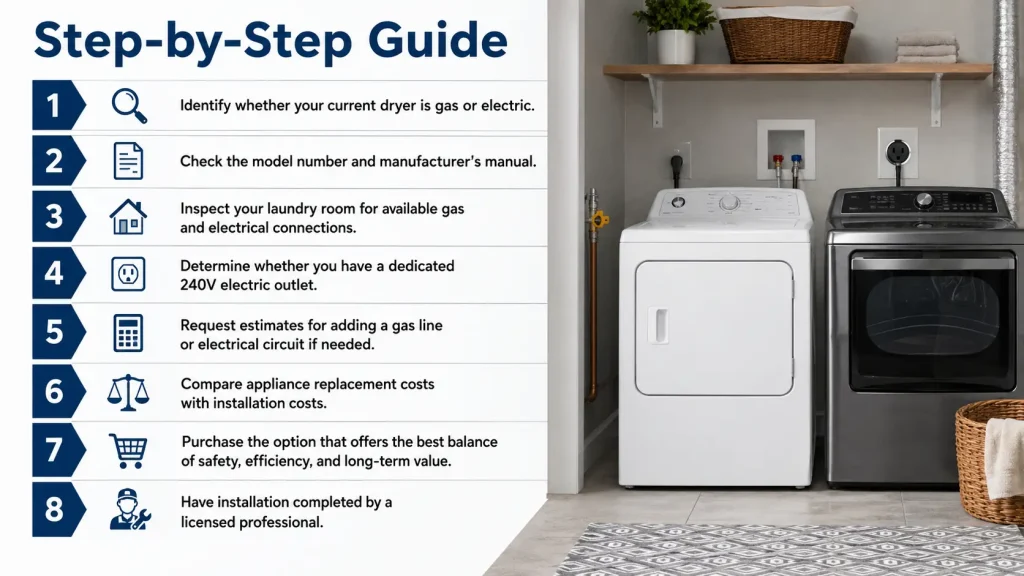
- Identify whether your current dryer is gas or electric.
- Check the model number and manufacturer’s manual.
- Inspect your laundry room for available gas and electrical connections.
- Determine whether you have a dedicated 240V electric outlet.
- Request estimates for adding a gas line or electrical circuit if needed.
- Compare appliance replacement costs with installation costs.
- Purchase the option that offers the best balance of safety, efficiency, and long-term value.
- Have installation completed by a licensed professional.
Pro Tip: If your gas dryer is more than ten years old, replacing it with a new energy-efficient electric model may provide better long-term value than investing in major utility modifications.
Gas Dryer vs Buying an Electric Dryer
| FactorKeep Gas DryerBuy Electric Dryer | ||
|---|---|---|
| Initial Cost | Lower if utilities already exist | Purchase required |
| Installation Complexity | Gas line needed | 240V circuit required |
| Safety | Safe when professionally installed | Safe when properly wired |
| Warranty | Maintained | New warranty |
| Energy Source | Natural gas | Electricity |
| Drying Performance | Slightly faster | Consistent performance |
| Temperature | Gas flame heating | Electric element heating |
| Winner | Best if gas already available | Best if home already has a 240V outlet and no gas connection |
Expert Tips and Common Mistakes
Expert Tips
- Verify your home’s utility connections before purchasing a dryer.
- Read the installation requirements in the owner’s manual.
- Use licensed electricians and gas technicians.
- Compare total ownership costs, not just purchase price.
- Consider future utility prices when choosing a dryer.
- Check local building codes before modifying laundry connections.
Common Mistakes to Avoid
Buying the wrong dryer first
Always verify whether your home has gas service or a 240V dryer outlet before shopping.
Assuming a conversion kit exists
Unlike some gas ranges, residential dryers generally do not have manufacturer-approved gas-to-electric conversion kits.
Ignoring electrical requirements
Electric dryers require dedicated high-voltage circuits that standard household outlets cannot provide.
Attempting DIY modifications
Changing heating systems or internal wiring creates serious fire and electrical hazards and should never be attempted without manufacturer approval.
Frequently Asked Questions
Can you convert a gas dryer to electric?
In most cases, no. Residential gas dryers are not designed for conversion because their internal heating systems, electrical wiring, and safety components differ completely from electric models.
Is there a gas-to-electric dryer conversion kit?
Generally, manufacturers do not offer approved conversion kits for residential gas dryers.
Is it cheaper to convert a gas dryer or buy an electric one?
Buying an electric dryer is often less expensive than attempting major modifications that require replacing multiple internal components.
Can I plug a gas dryer into a 240V outlet?
No. Gas dryers typically use a standard 120V outlet for controls and the motor while the heat comes from natural gas or propane.
Do gas and electric dryers dry clothes differently?
Both dry clothes effectively. Gas dryers often heat up slightly faster, while electric dryers provide consistent performance with proper installation.
Can I replace the heating element inside a gas dryer?
No. Gas dryers use burners rather than electric heating elements, making such replacement impractical.
Should I hire a professional?
Yes. Whether installing a gas line or wiring a 240V dryer circuit, licensed professionals ensure compliance with local codes and safe operation.
Conclusion
So, can you convert a gas dryer to electric? For nearly every residential dryer, the practical answer is no. The appliances are engineered with completely different heating systems, electrical components, and safety features, making conversion impractical and potentially unsafe.
If your home only has an electric dryer connection, purchasing a dedicated electric dryer is usually the smartest long-term solution. If you already own a newer gas dryer, installing a gas line may be worth comparing before making a final decision.
For more laundry appliance advice, explore our other dryer guides and dryer comparisons to find the best solutions for your home.
Expert Opinion
After working with residential laundry appliances for many years, I rarely recommend attempting to convert a gas dryer into an electric model. The engineering differences go far beyond replacing a heating source. Manufacturers design the cabinet, wiring, controls, airflow, and safety systems around a specific fuel type.
Guidance from organizations such as the U.S. Department of Energy and manufacturer installation manuals consistently supports using appliances exactly as they were designed. Doing so provides better efficiency, safer operation, and fewer long-term maintenance issues.
If you are deciding between installing a gas line or purchasing a new electric dryer, compare the total installation cost, expected operating expenses, and the remaining lifespan of your current appliance. In many situations, replacing the dryer is the simpler, safer, and more economical choice.

Oliver Bennett is a home appliance writer specializing in washer and dryer solutions, laundry care, and energy-efficient appliances. He provides detailed reviews, buying guides, and maintenance tips to help users choose reliable machines and achieve better laundry results.