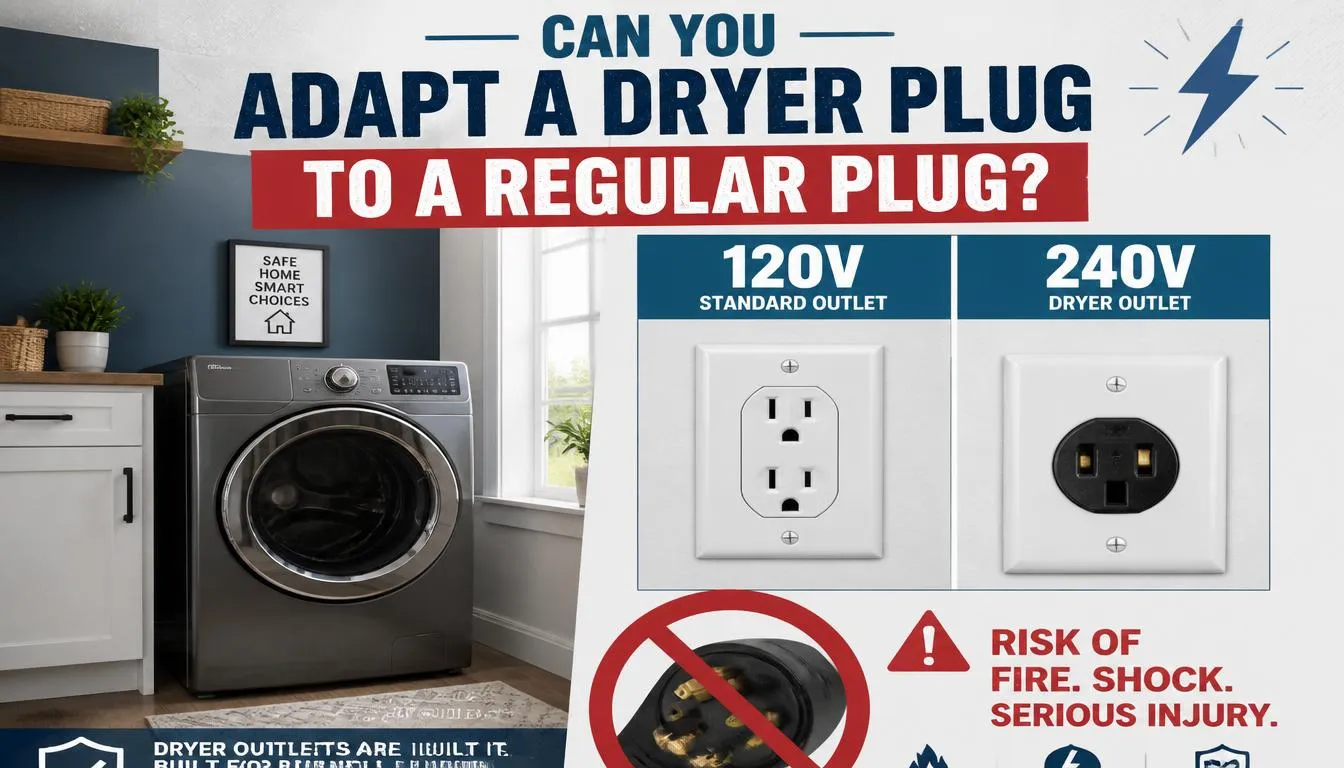
Can you adapt a dryer plug to a regular plug? In most cases, no. A standard electric clothes dryer cannot be safely or legally powered from a regular 120-volt household outlet using a simple plug adapter. Electric dryers require a dedicated 240-volt circuit with the correct amperage, while regular household outlets provide only 120 volts and significantly less power.
According to the U.S. Consumer Product Safety Commission (CPSC) and the National Fire Protection Association (NFPA), electrical overloads and improper wiring remain significant causes of residential electrical fires. Using the wrong outlet or an unsafe adapter can damage your dryer, trip breakers repeatedly, or create a serious fire hazard.
If you’re wondering whether an adapter exists, whether a converter will work, or what your safe alternatives are, you’re not alone. Many homeowners encounter this issue after moving into a new home or replacing an older dryer.
In this guide, you’ll learn why dryer plugs differ from regular plugs, whether any adapters are safe, what your options are, and how to power your dryer correctly without risking damage or violating electrical codes.
Why Can You Adapt Dryer Plug to Regular Plug Matters
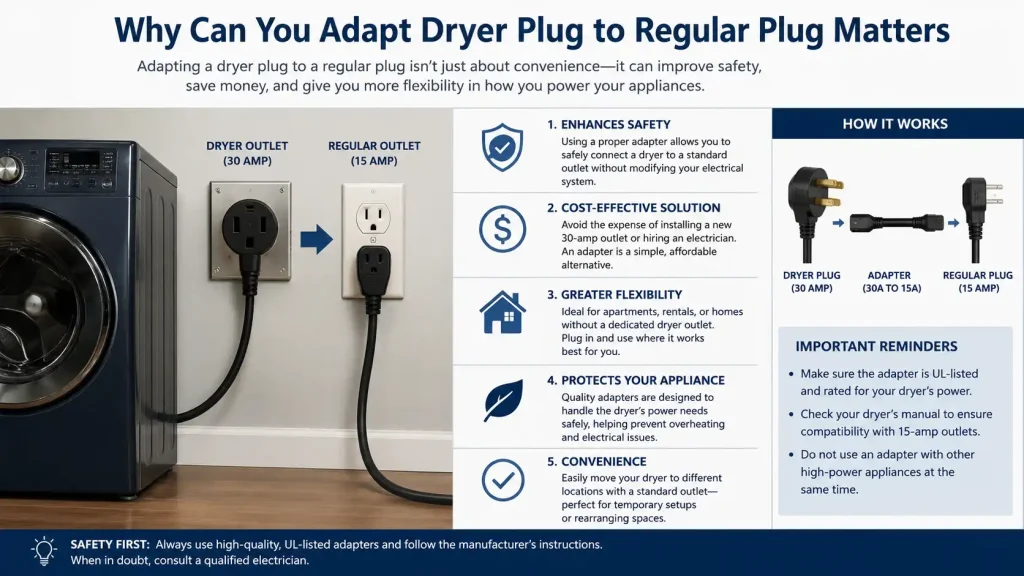
Understanding the difference between a dryer outlet and a standard household outlet is important for both safety and appliance performance.
Most electric dryers require:
- A dedicated 240V circuit
- Either a 30-amp 3-prong or 4-prong outlet
- Heavy-gauge wiring
- Proper grounding
A regular wall outlet typically supplies:
- 120V
- 15 or 20 amps
- Power suitable for lamps, TVs, chargers, and small appliances
Trying to bridge this gap with a simple adapter can create several problems:
- Dryer will not heat properly
- Motor may not operate correctly
- Breakers may trip repeatedly
- Wiring can overheat
- Fire risk increases
- Manufacturer warranty may become void
Dryer Outlet Comparison Table
| Outlet Type | Voltage | Typical Amperage | Common Use |
|---|---|---|---|
| Standard Household Outlet | 120V | 15A | Lamps, TVs, small appliances |
| 20A Household Outlet | 120V | 20A | Kitchen appliances, workshops |
| 3-Prong Dryer Outlet (NEMA 10-30) | 240V | 30A | Older electric dryers |
| 4-Prong Dryer Outlet (NEMA 14-30) | 240V | 30A | Modern electric dryers |
| Gas Dryer Outlet | 120V | 15A | Gas dryers (electric powers controls only) |
Best Ways to Solve the Problem
1. Confirm Whether Your Dryer Is Electric or Gas
Many people assume all dryers require 240 volts.
A gas dryer typically plugs into a regular 120V outlet because electricity only powers the controls and drum motor. Natural gas or propane provides the heat.
Benefits
- May already work with your outlet
- No electrical upgrades needed
Drawbacks
- Requires a gas connection
2. Read the Dryer’s Data Plate
Every dryer includes a manufacturer label showing:
- Voltage
- Amperage
- Wattage
- Model number
Never assume your dryer’s requirements based only on appearance.
3. Install the Correct Dryer Outlet
If your home lacks the proper outlet, hiring a licensed electrician is the safest solution.
According to the National Electrical Code (NEC), electric dryers should be connected to a dedicated branch circuit designed for their electrical load.
Benefits
- Safe
- Code compliant
- Protects appliance warranty
Drawbacks
- Installation cost
4. Replace the Dryer Cord When Appropriate
Sometimes the outlet is correct but the plug is not.
For example:
- Home has a 4-prong outlet
- Dryer has an older 3-prong cord
Replacing the cord is usually acceptable when performed according to the manufacturer’s instructions.
5. Avoid Cheap Plug Adapters
Simple plug adapters sold online cannot magically convert:
- 120V into 240V
- 15 amps into 30 amps
They only change the physical plug shape.
Using one on an electric dryer is unsafe.
6. Consider a Gas Dryer
If upgrading electrical wiring isn’t practical, switching to a gas dryer may cost less than rewiring in some homes.
Always compare installation costs before deciding.

7. Ask an Electrician Before Modifying Wiring
Electrical work should never rely on guesswork.
A licensed electrician can verify:
- Circuit size
- Wire gauge
- Breaker rating
- Outlet type
- Grounding
This ensures the installation meets local code requirements.
Step-by-Step Guide
Step 1
Check whether your dryer is electric or gas.
Step 2
Locate the manufacturer’s electrical specifications.
Step 3
Identify your existing wall outlet.
Step 4
Determine whether the voltage matches.
Remember:
- Regular outlet = 120V
- Electric dryer outlet = 240V
Step 5
Inspect the breaker panel for a dedicated dryer breaker.
Step 6
If the plug style differs, verify whether only the cord needs replacement.
Step 7
Have a licensed electrician install the correct outlet if necessary.
Step 8
Test the dryer after proper installation.
Pro tip: Never use extension cords, power strips, or inexpensive plug adapters with an electric dryer.
Comparison Table
| Feature | Regular Outlet | Proper Dryer Outlet |
|---|---|---|
| Voltage | 120V | 240V |
| Temperature Support | Not suitable | Designed for dryer operation |
| Amperage | 15–20A | 30A |
| Grounding | Standard | Dedicated dryer configuration |
| Heating Performance | Insufficient | Full performance |
| Safety | Unsafe for electric dryers | Safe when correctly installed |
| Electrical Code Compliance | No | Yes |
| Winner | Not recommended | Best and safest option |
Expert Tips and Common Mistakes
Expert Tips
- Verify voltage before plugging in any appliance.
- Read the owner’s manual before replacing a power cord.
- Match the dryer cord to the outlet, not the other way around.
- Keep the dryer on its dedicated circuit.
- Check the breaker rating before installation.
- Have older homes inspected if electrical wiring hasn’t been updated.
Common Mistakes to Avoid
Using a simple plug adapter
Changing the plug shape does not change the electrical supply. Your dryer still requires 240 volts and sufficient current.
Ignoring the manufacturer’s instructions
Installing an incorrect cord or using the wrong circuit may void the warranty and reduce safety.
Using extension cords
Extension cords are not designed to carry the continuous high current required by electric dryers and can overheat.
Assuming all dryers are the same
Gas dryers and electric dryers have different electrical requirements. Always verify your specific model before connecting it.
Frequently Asked Questions
Can you adapt dryer plug to regular plug?
No. A standard electric dryer cannot safely operate from a regular 120V outlet using a simple adapter. It requires a dedicated 240V, 30-amp circuit.
Is there an adapter that converts a dryer plug to a regular outlet?
Physical adapters exist, but they do not convert 120V power into the 240V power an electric dryer needs. Using them for this purpose is generally unsafe.
Why does my dryer have a 4-prong plug?
Modern electrical codes require 4-prong dryer outlets that separate the neutral and grounding conductors for improved safety.
Can I use a voltage converter instead?
A converter capable of powering an electric dryer would need to handle several thousand watts, making it impractical and typically more expensive than installing the correct circuit.
Can a gas dryer plug into a regular outlet?
Yes. Most gas dryers use a standard 120V household outlet because electricity powers only the controls and drum motor, while gas supplies the heat.
How much power does an electric dryer use?
Most residential electric dryers operate on 240 volts and draw around 24 to 30 amps, depending on the model and heating elements.
Is replacing a dryer cord safe?
Yes, if your dryer supports the replacement cord type and you follow the manufacturer’s instructions or have the work completed by a qualified electrician.
Conclusion
So, can you adapt dryer plug to regular plug? For a standard electric dryer, the answer is no. A simple adapter cannot provide the voltage or current the appliance requires, and attempting to use one can create safety hazards, damage the dryer, or violate electrical codes.
The safest solution is to use the correct 240V, 30-amp dryer outlet or have one installed by a licensed electrician. If your dryer is a gas model, however, a regular 120V outlet is typically all that’s required for the electrical components.
For more practical laundry and home appliance advice, explore our other dryer guides and laundry appliance comparisons to keep your home running safely and efficiently.
Expert Opinion
In my experience evaluating home appliances and residential electrical requirements, questions about dryer plug adapters usually arise after homeowners move into an older house or purchase a new appliance. While inexpensive adapters may seem convenient, they rarely address the actual electrical requirements of an electric dryer. Safety should always take priority over short-term convenience.
Organizations such as the National Fire Protection Association (NFPA) and the U.S. Consumer Product Safety Commission (CPSC) consistently emphasize the importance of using appliances only with properly rated electrical circuits. Following manufacturer instructions and local electrical codes helps reduce the risk of equipment damage and electrical fires.
If you’re uncertain whether your existing outlet is compatible, I recommend identifying your dryer’s voltage and amperage requirements before making any changes. In most cases, installing the proper outlet or replacing the dryer cord, when appropriate, is a far safer and more reliable solution than relying on an adapter.

Oliver Bennett is a home appliance writer specializing in washer and dryer solutions, laundry care, and energy-efficient appliances. He provides detailed reviews, buying guides, and maintenance tips to help users choose reliable machines and achieve better laundry results.