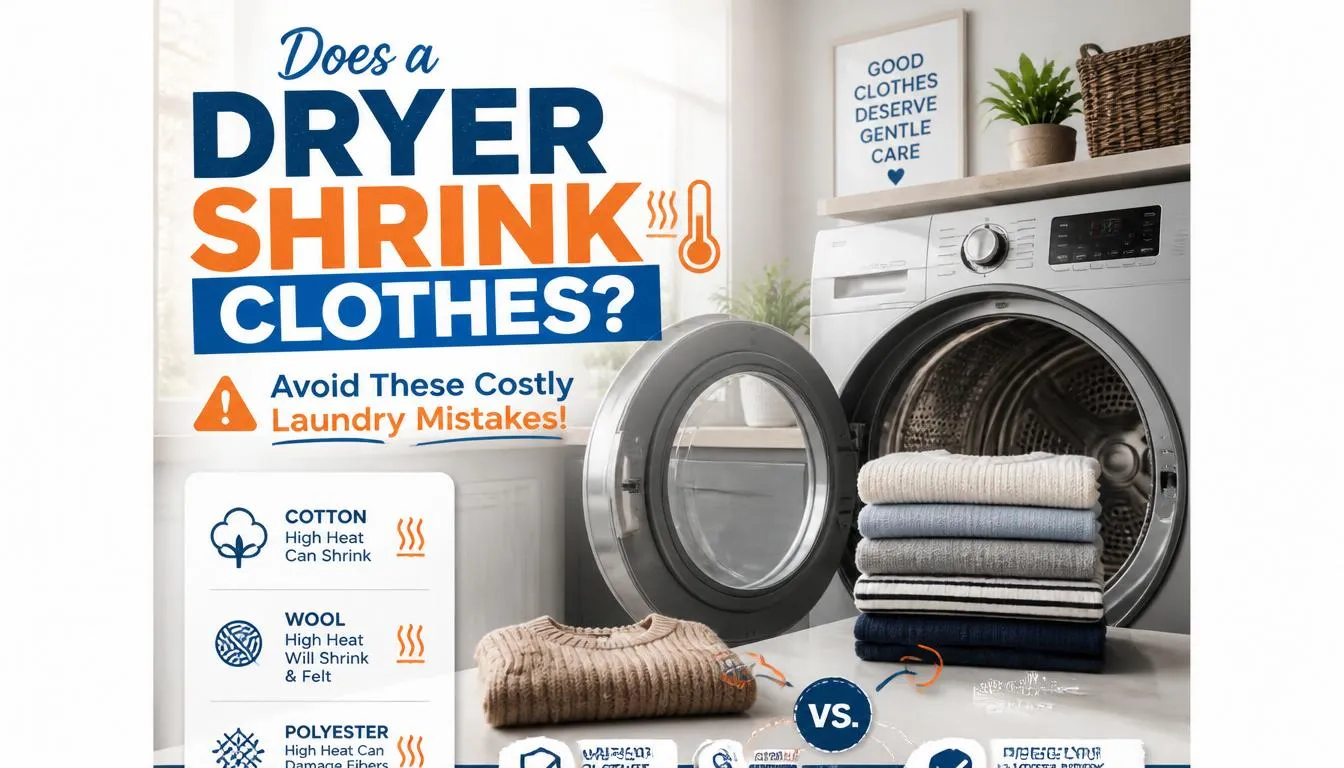
Quick Answer: Yes, a dryer can shrink clothes, but not every garment shrinks the same way. Shrinkage depends on the fabric type, heat level, moisture loss, and drying cycle. Using the correct dryer settings and following care labels can significantly reduce the risk of shrinking your favorite clothes.
Have you ever pulled a favorite T-shirt or sweater out of the dryer only to find it suddenly fits a size smaller? You’re not alone. One of the most common laundry questions people ask is, “Does a dryer shrink clothes?” The answer is yes, but the real reason isn’t simply the dryer itself.
Clothes shrink because of a combination of heat, moisture removal, and mechanical tumbling. Some fabrics, such as cotton and wool, naturally contract when exposed to high temperatures, while synthetic materials like polyester are much more resistant to shrinking. Understanding how different fabrics react to heat can help you avoid costly mistakes and extend the life of your clothing.
In this guide, you’ll learn why clothes shrink, which fabrics are most at risk, how much shrinkage you can expect, whether different dryer types matter, and the best ways to prevent shrinkage. You’ll also discover practical tips for saving clothes that have already shrunk and choosing the safest dryer settings for every load.
Does a Dryer Really Shrink Clothes?
Yes, dryers can shrink clothes, but the amount of shrinkage depends on three main factors:
- Fabric type
- Dryer temperature
- Drying time
Natural fibers contain tiny strands that expand during washing. When these fibers are exposed to heat inside a dryer, they tighten and return to a smaller shape. High temperatures accelerate this process.
However, not every garment shrinks. Clothes made from synthetic fibers such as polyester, nylon, and acrylic are designed to resist heat better than natural fibers.
Why Heat Causes Shrinkage
Heat softens and relaxes natural fibers. As moisture evaporates, those fibers contract, causing the fabric to become smaller.
The higher the temperature, the greater the risk of permanent shrinkage.
Why Tumbling Matters
The rotating drum continuously moves clothing while warm air circulates. This mechanical action helps remove moisture but also encourages fibers to tighten together.
Why Overdrying Makes Things Worse
Leaving clothes in the dryer long after they’re dry exposes fabrics to unnecessary heat. Even medium heat can contribute to gradual shrinkage when garments are repeatedly overdried.
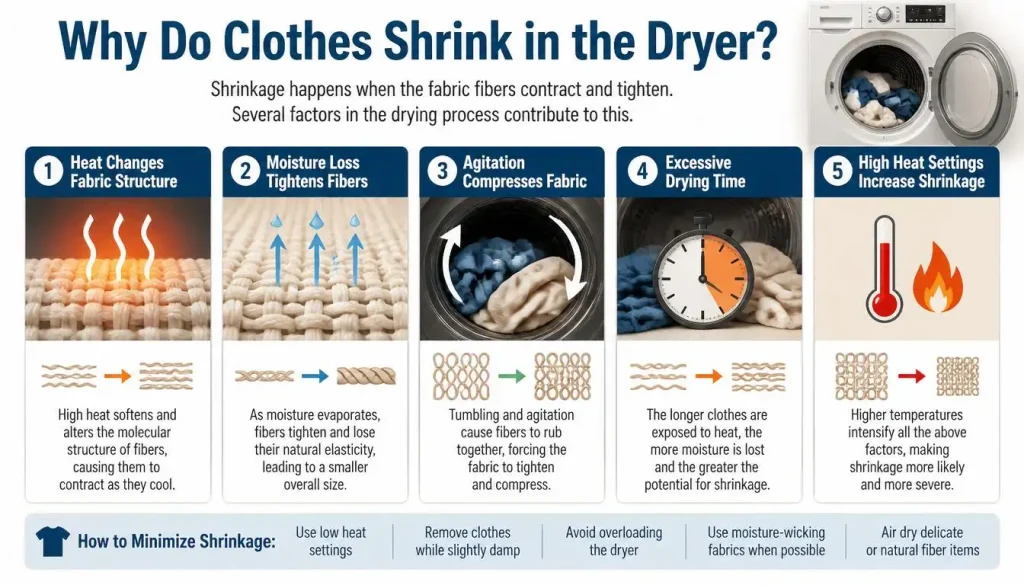
Why Do Clothes Shrink in the Dryer?
Many people assume the dryer alone is responsible, but shrinkage usually results from several factors working together.
Heat Changes Fabric Structure
Natural fibers are made from tiny strands that relax when wet. During drying, heat causes these strands to contract, reducing the overall size of the garment.
Moisture Loss Tightens Fibers
As water evaporates, fibers move closer together. This tightening process is especially noticeable in cotton, linen, and wool.
Agitation Compresses Fabric
The tumbling action twists and bends clothing throughout the cycle. Combined with heat, this encourages fibers to settle into a tighter structure.
Excessive Drying Time
Running a dryer longer than necessary exposes clothes to prolonged heat, increasing the chance of shrinkage and unnecessary fabric wear.
How Much Can Clothes Shrink in a Dryer?
Shrinkage varies depending on fabric construction, manufacturing process, and dryer temperature.
| Fabric Type | Typical Shrinkage |
|---|---|
| Cotton | 3–10% |
| Wool | 5–20% |
| Linen | 4–10% |
| Rayon | Up to 10% |
| Modal | 3–5% |
| Bamboo | 3–8% |
| Polyester | Less than 2% |
| Nylon | Less than 2% |
| Acrylic | Less than 2% |
| Preshrunk Cotton | Around 1–3% |
Keep in mind that the first wash and first drying cycle usually cause the most noticeable shrinkage.
Do Clothes Shrink Every Time You Use the Dryer?
Usually, no.
Most garments experience their greatest shrinkage during the first few wash-and-dry cycles. Once the fibers stabilize, additional shrinkage becomes much smaller.
However, repeatedly drying clothes on high heat can still cause gradual size changes over time.
The likelihood depends on:
- Fabric composition
- Dryer temperature
- Drying frequency
- Garment quality
- Manufacturing process
Higher-quality clothing is often treated during manufacturing to minimize shrinkage.
Which Fabrics Shrink the Most?
Different fabrics respond differently to heat.
| Fabric | Shrink Risk | Dryer Recommendation |
|---|---|---|
| Cotton | High | Low Heat |
| Wool | Very High | Air Dry |
| Linen | High | Low Heat |
| Rayon | Very High | Avoid Dryer |
| Viscose | Very High | Air Dry |
| Modal | Medium | Low Heat |
| Bamboo | Medium | Low Heat |
| Hemp | Medium | Low Heat |
| Silk | Medium | Air Dry |
| Polyester | Low | Medium Heat |
| Nylon | Very Low | Medium Heat |
| Acrylic | Low | Medium Heat |
| Spandex | Low | Low Heat |
| Elastane Blends | Low | Low Heat |
| Denim | Medium | Low Heat |
Natural fibers absorb more water, making them more susceptible to shrinkage during drying.
What Clothes Are Most Likely to Shrink?
Certain garments shrink more often because they’re made primarily from natural fibers.
These include:
- Cotton T-shirts
- Hoodies
- Sweatshirts
- Jeans
- Sweaters
- Dress shirts
- Pajamas
- Baby clothes
- Cotton socks
- Athletic cotton shorts
Always check the care label before placing these items in the dryer.
Why Do Cotton Clothes Shrink More Than Polyester?
Cotton is a natural fiber that expands when wet. During drying, the fibers contract back toward their original shape, resulting in noticeable shrinkage.
Polyester, on the other hand, is manufactured from synthetic polymers that remain stable under normal dryer temperatures.
This is why many modern garments blend cotton with polyester—to reduce shrinkage while maintaining comfort.
Why Do New Clothes Shrink More?
New clothing often shrinks the first time it’s washed and dried because the fibers are still under manufacturing tension.
The first exposure to heat allows those fibers to relax into a more stable shape.
Many manufacturers use preshrinking techniques, but no process completely eliminates shrinkage.
If a garment is labeled pre-shrunk, expect only minimal size changes.
Can You Intentionally Shrink Clothes in a Dryer?
Yes.
Some people intentionally shrink oversized clothing for a better fit.
This method works best with:
- 100% cotton shirts
- Cotton hoodies
- Denim jeans
- Cotton sweatshirts
How to Shrink Clothes Safely
- Wash the garment in warm or hot water if the care label allows.
- Dry using medium or high heat.
- Check the fit every 15–20 minutes.
- Remove the garment as soon as it reaches the desired size.
Avoid attempting this with wool, rayon, silk, or delicate fabrics, as they may shrink unevenly or become permanently damaged.
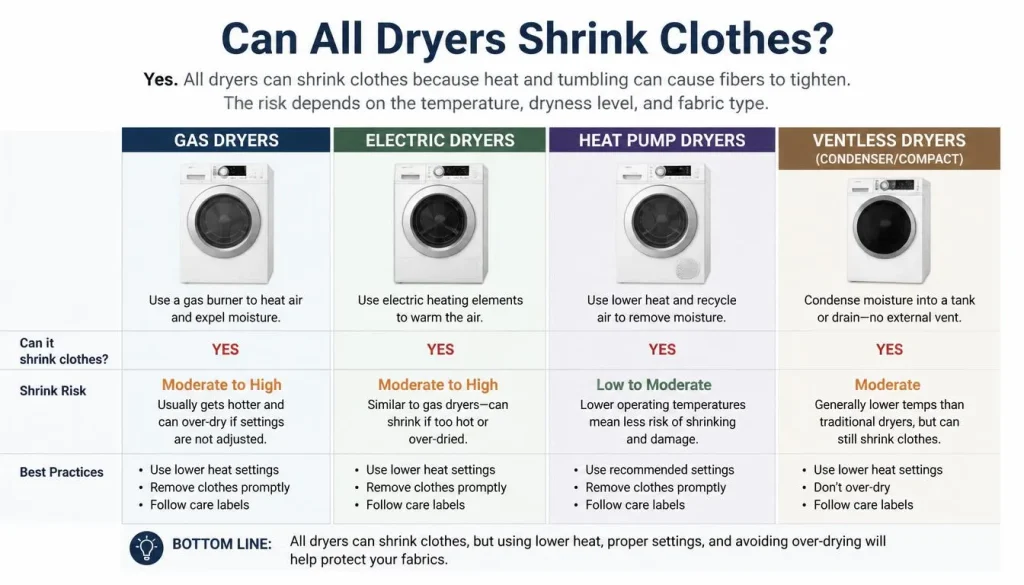
Can All Dryers Shrink Clothes?
Yes, any dryer that uses heat can potentially shrink clothing.
The dryer type matters less than the temperature you choose.
Gas Dryers
Gas dryers heat quickly and efficiently. High heat settings can shrink natural fibers if garments remain inside too long.
Electric Dryers
Electric dryers perform similarly to gas models. Incorrect temperature settings—not electricity—cause shrinkage.
Heat Pump Dryers
Heat pump dryers operate at lower temperatures, making them one of the safest options for delicate fabrics and reducing the likelihood of shrinkage.
Ventless Dryers
Ventless dryers generally use gentler drying methods than traditional vented models. However, high-temperature cycles can still shrink natural fabrics.
What Dryer Settings Help Prevent Clothes from Shrinking?
Choosing the correct drying cycle is one of the easiest ways to protect your clothes.
Low Heat
Best for:
- Cotton blends
- Modal
- Bamboo
- Casual clothing
This setting significantly reduces shrinkage compared with high heat.
Delicate Cycle
Ideal for lightweight fabrics, lingerie, activewear, and garments with elastic fibers.
Permanent Press
Designed for wrinkle reduction while using moderate temperatures that are safer for everyday clothing.
Air Fluff (No Heat)
This cycle uses room-temperature air instead of heated air.
It’s one of the safest options for preventing shrinkage because it removes little or no additional heat stress from fabrics.
Sensor Dry
Modern dryers with moisture sensors automatically stop when clothes are dry.
This prevents overdrying, reduces energy use, and minimizes unnecessary exposure to heat.
Can Clothes Shrink on Low Heat?
Yes, although the risk is much lower.
Low heat still removes moisture, and some natural fibers may contract slightly during drying.
If you’re drying cotton or linen, removing garments while they’re still slightly damp is an effective way to minimize shrinkage even further.
Can Clothes Shrink on Air Fluff?
In most cases, no.
Air Fluff uses unheated air, making it one of the safest dryer settings for delicate fabrics.
However, if a garment has already shrunk during washing, Air Fluff will not reverse the shrinkage—it simply avoids adding more heat.
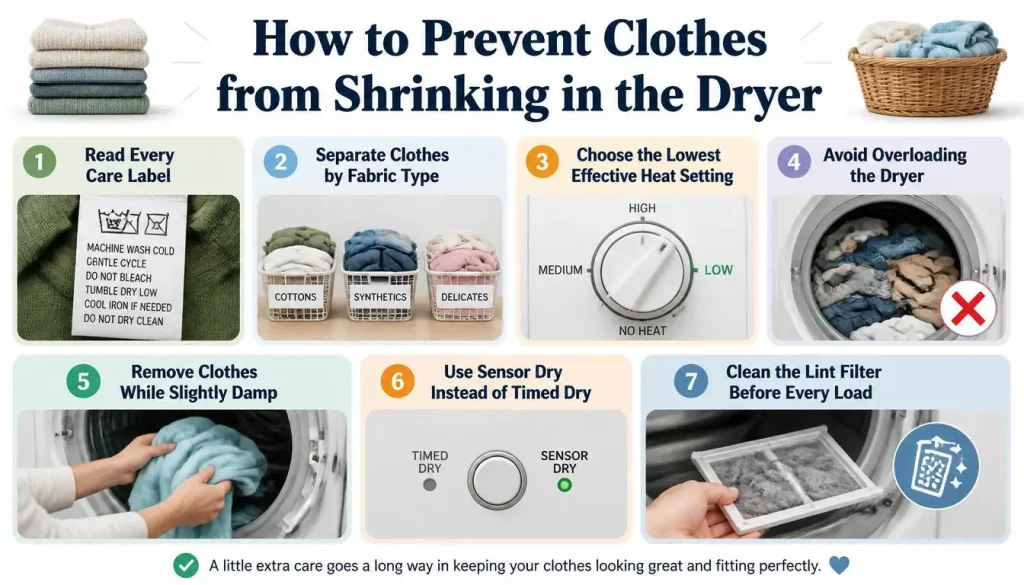
How to Prevent Clothes from Shrinking in the Dryer
Preventing shrinkage starts before you press the Start button. A few simple habits can help your clothes keep their original fit for years.
1. Read Every Care Label
Always follow the manufacturer’s drying instructions. Symbols such as Tumble Dry Low, Do Not Tumble Dry, or Line Dry are there for a reason.
2. Separate Clothes by Fabric Type
Dry heavy cotton towels separately from delicate fabrics. Mixing materials often exposes lightweight garments to more heat than they need.
3. Choose the Lowest Effective Heat Setting
Use low heat whenever possible, especially for cotton, linen, bamboo, modal, and blended fabrics.
4. Avoid Overloading the Dryer
An overloaded drum reduces airflow, forcing the dryer to run longer and increasing heat exposure.
5. Remove Clothes While Slightly Damp
Taking garments out before they become completely dry reduces unnecessary heat exposure and helps preserve their original size and shape.
6. Use Sensor Dry Instead of Timed Dry
If your dryer has a Sensor Dry feature, use it whenever possible. Moisture sensors detect when clothes are dry and automatically stop the cycle, reducing the risk of overheating and shrinkage.
7. Clean the Lint Filter Before Every Load
A clogged lint filter restricts airflow, making the dryer work harder and hotter. Better airflow helps clothes dry faster at a safer temperature.
What Do Laundry Care Symbols Mean?
Understanding laundry symbols can help you avoid accidental shrinkage.
| Symbol | Meaning | Best Practice |
|---|---|---|
| Tumble Dry Low | Dry on low heat | Safe for most everyday clothing |
| Tumble Dry Medium | Moderate heat | Suitable for many synthetic blends |
| Tumble Dry High | High heat | Use only for sturdy fabrics when recommended |
| Do Not Tumble Dry | Avoid the dryer | Air dry or line dry instead |
| Line Dry | Hang to dry naturally | Best for delicate fabrics |
| Dry Flat | Lay garment flat | Recommended for sweaters and knitwear |
Always check the care label before drying a garment for the first time.
Does Washing or Drying Cause More Shrinkage?
Both washing and drying can contribute to shrinkage, but the dryer usually has the greater impact because it combines heat, moisture removal, and tumbling.
| Factor | Washing Machine | Dryer |
|---|---|---|
| Heat | Warm or hot water | Heated air |
| Moisture | Fibers absorb water | Fibers contract as water evaporates |
| Agitation | Moderate | Continuous tumbling |
| Shrinkage Risk | Medium | High when using high heat |
If you wash in cold water and dry on low heat, the risk of shrinkage is much lower.
Why Did My Clothes Shrink So Much?
If your clothes became noticeably smaller after one drying cycle, one or more of these factors may be responsible:
- The garment was made from natural fibers.
- High heat was selected.
- Clothes stayed in the dryer too long.
- The fabric was not pre-shrunk.
- The garment was washed in hot water before drying.
- The care instructions were ignored.
Unfortunately, some shrinkage is permanent, especially if high temperatures caused the fibers to tighten beyond recovery.
Can You Fix Clothes That Have Already Shrunk?
Sometimes.
If the fibers haven’t been permanently damaged, you may be able to restore some of the original size.
Method 1: Baby Shampoo or Hair Conditioner
- Fill a sink with lukewarm water.
- Add one tablespoon of baby shampoo or hair conditioner.
- Soak the garment for about 30 minutes.
- Gently squeeze out excess water without twisting.
- Place the garment on a towel.
- Carefully stretch it back to its original dimensions.
- Allow it to air dry.
This method works best for cotton, wool, cashmere, and some knit fabrics.
Method 2: Stretch While Damp
If the garment has only shrunk slightly:
- Lightly dampen it.
- Stretch the fabric evenly.
- Lay it flat to dry.
When It Won’t Work
Recovery is unlikely if:
- The garment was repeatedly dried on high heat.
- Synthetic fibers melted or warped.
- Wool felted severely.
- The fabric structure became permanently distorted.
Common Mistakes That Cause Clothes to Shrink
Many cases of shrinkage are completely preventable.
Avoid these common mistakes:
- Using the High Heat setting for every load.
- Drying all fabrics together.
- Ignoring garment care labels.
- Overloading the dryer.
- Running extra drying cycles after clothes are already dry.
- Washing with hot water before drying.
- Leaving clothes inside a hot dryer after the cycle finishes.
Small changes in your laundry routine can significantly extend the life of your clothing.
Best Dryer Settings by Fabric
| Fabric | Recommended Setting | Air Dry Recommended |
|---|---|---|
| Cotton | Low Heat | Optional |
| Polyester | Medium Heat | Not necessary |
| Wool | Air Fluff | Yes |
| Linen | Low Heat | Better option |
| Rayon | Avoid Dryer | Yes |
| Viscose | Avoid Dryer | Yes |
| Modal | Low Heat | Optional |
| Bamboo | Low Heat | Recommended |
| Silk | Air Dry | Yes |
| Denim | Low Heat | Optional |
| Spandex | Low Heat | Optional |
| Nylon | Medium Heat | Not necessary |
Myths About Clothes Shrinking
Myth 1: Every Dryer Shrinks Clothes
Fact: Dryer temperature and fabric type determine whether shrinkage occurs.
Myth 2: Expensive Clothes Never Shrink
Fact: Premium fabrics like wool, linen, and cotton can shrink just as easily if they’re dried incorrectly.
Myth 3: New Dryers Prevent Shrinkage
Fact: Modern dryers offer better moisture sensors, but high heat can still shrink natural fibers.
Myth 4: Air Drying Guarantees Zero Shrinkage
Fact: Some fabrics may shrink slightly during washing before they ever reach the dryer.
Expert Tips to Keep Clothes From Shrinking
Follow these habits to protect your wardrobe:
- Wash with cold water whenever possible.
- Sort clothes by fabric instead of color alone.
- Choose Low Heat for most everyday clothing.
- Use Sensor Dry instead of Timed Dry.
- Remove clothes promptly after the cycle ends.
- Air dry delicate garments whenever possible.
- Avoid overdrying towels and cotton items.
- Read the care label before drying new clothing.
These simple practices reduce shrinkage while helping fabrics stay softer and last longer.
Frequently Asked Questions
Does a dryer shrink clothes every time?
No. Most garments shrink during the first few wash-and-dry cycles. After that, additional shrinkage is usually minimal unless high heat is used repeatedly.
Can low heat still shrink clothes?
Yes, but the risk is much lower than with high heat. Natural fibers may still shrink slightly because moisture is being removed.
How much can clothes shrink in a dryer?
Most garments shrink between 3% and 5%, while cotton, wool, and rayon can shrink significantly more depending on the fabric and drying temperature.
Which fabrics shrink the most?
Wool, rayon, viscose, cotton, and linen are among the fabrics most likely to shrink when exposed to high dryer temperatures.
Can I reverse dryer shrinkage?
Sometimes. Soaking the garment in lukewarm water with baby shampoo or hair conditioner and gently stretching it while damp may restore some of its original size.
Why did my clothes shrink after only one drying cycle?
The first drying cycle often causes the greatest shrinkage because natural fibers relax and contract after manufacturing.
How do I stop clothes from shrinking in the future?
Wash in cold water, choose Low Heat or Air Fluff, avoid overdrying, remove clothes while slightly damp, and always follow the care label.
Final Verdict
So, does a dryer shrink clothes? Yes, it can but the dryer isn’t the only factor. Shrinkage is influenced by fabric type, heat level, moisture loss, and drying time.
Natural fibers such as cotton, wool, linen, rayon, and viscose are the most vulnerable, while synthetic materials like polyester and nylon are generally much more resistant. By choosing the right dryer settings, avoiding excessive heat, and following garment care labels, you can greatly reduce the risk of unwanted shrinkage.
A little extra attention during your laundry routine can help your clothes maintain their size, shape, and appearance for years to come.

Oliver Bennett is a home appliance writer specializing in washer and dryer solutions, laundry care, and energy-efficient appliances. He provides detailed reviews, buying guides, and maintenance tips to help users choose reliable machines and achieve better laundry results.