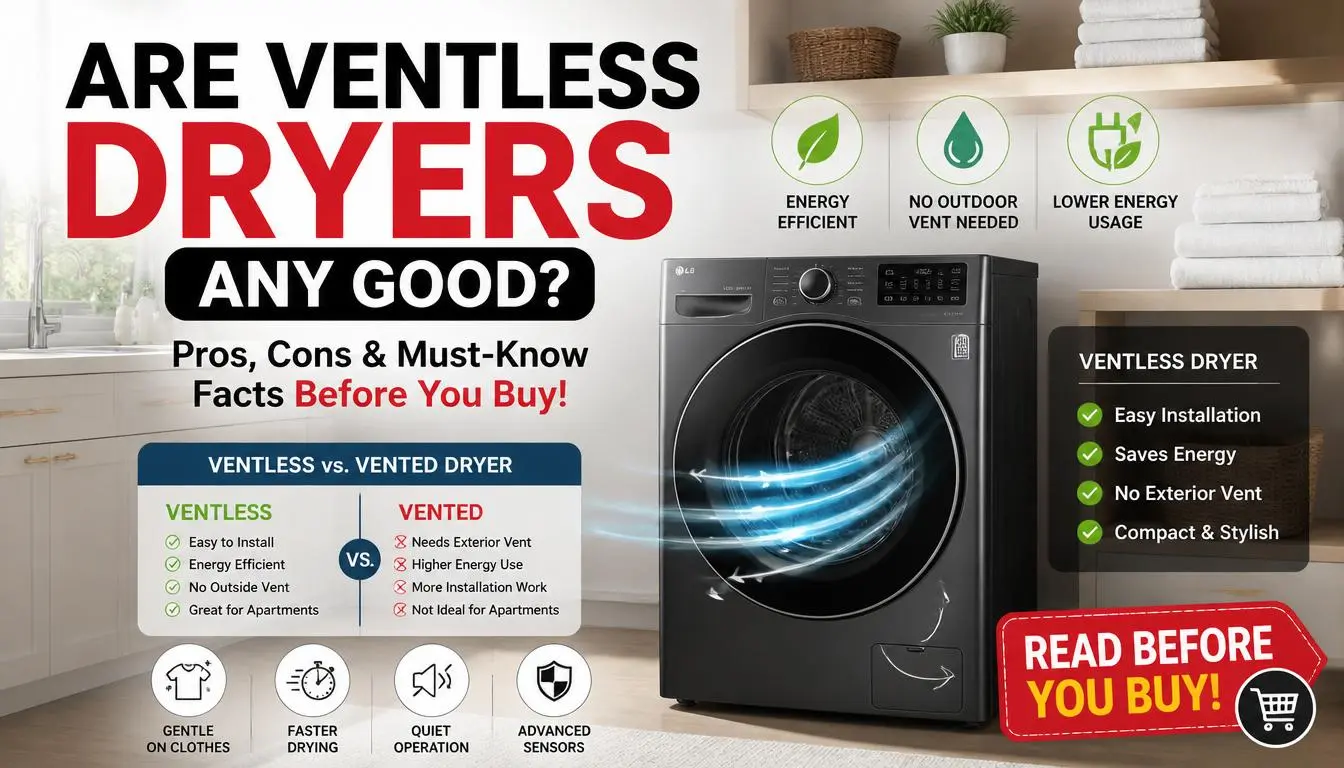
Ventless dryers are a good option for many households, especially apartments, condos, and homes without an exterior dryer vent. They are energy-efficient, flexible to install, and gentler on clothing, although they typically take longer to dry laundry than traditional vented models.
According to the U.S. Department of Energy, clothes dryers account for approximately 6% of residential electricity consumption in the United States, making efficiency an important consideration when choosing a dryer. Many modern ventless dryers, particularly heat pump models, are designed to reduce energy use while maintaining fabric care.
If you’re considering a new laundry appliance, you may wonder whether ventless dryers are worth the investment. The answer depends on your space, budget, laundry habits, and energy priorities.
In this guide, you’ll learn how ventless dryers work, their advantages and disadvantages, how they compare to vented dryers, and whether they’re the right choice for your home.
Why Ventless Dryers Matter
The growing popularity of ventless dryers reflects changing housing trends and increased interest in energy-efficient home appliances. Many modern apartments and smaller homes lack access to an exterior wall for venting, making traditional dryers difficult or impossible to install.
When homeowners choose the wrong dryer type, they often encounter problems such as:
- Limited installation options
- High energy bills
- Excessive clothing shrinkage
- Fabric wear and heat damage
- Moisture management concerns
- Expensive remodeling requirements for vent installation
Understanding the benefits and limitations of ventless dryers can help you make a smarter purchasing decision and avoid costly mistakes.
Ventless Dryer Comparison Table
| Type | How It Works | Energy Efficiency | Drying Speed | Best For |
|---|---|---|---|---|
| Condenser Dryer | Converts moisture into water and stores it in a tank | Moderate | Medium | Apartments and small homes |
| Heat Pump Dryer | Recycles heated air through a heat pump system | Very High | Slower | Energy-conscious households |
| Compact Ventless Dryer | Smaller capacity version of condenser or Heat Pump Dryer | High | Medium | Small spaces |
| Traditional Vented Dryer | Expels moist air outside | Moderate | Fast | Homes with existing vent systems |
Best Ways to Determine if a Ventless Dryer Is Right for You
1. Evaluate Your Installation Space
One of the biggest advantages of ventless dryers is installation flexibility. Since they don’t require an external exhaust vent, you can place them in closets, utility rooms, kitchens, or apartments.
Benefits: Easy installation and placement flexibility.
Drawbacks: Some models still require adequate airflow around the appliance.
2. Consider Your Energy Costs
Heat pump ventless dryers typically consume significantly less electricity than conventional vented models. This can lead to meaningful savings over the appliance’s lifespan.
Benefits: Lower utility bills and reduced environmental impact.
Drawbacks: Higher upfront purchase cost.
3. Think About Drying Time
Ventless dryers generally require longer drying cycles than vented models. A vented dryer may finish a load in 40 to 60 minutes, while a ventless model may take 60 to 120 minutes.
Benefits: Gentler drying process.
Drawbacks: Longer wait times.
4. Evaluate Fabric Care Needs
The lower temperatures used in many ventless dryers reduce stress on fabrics. This helps minimize clothing shrinkage and extends garment lifespan.
Always check clothing care labels before drying. Symbols indicating low-heat drying are especially compatible with heat pump dryers.
Benefits: Better protection for delicate fabrics.
Drawbacks: Some heavy fabrics may require additional drying time.
5. Compare Maintenance Requirements
Ventless dryers require routine maintenance to maintain efficiency. This may include cleaning filters, emptying water reservoirs, or maintaining condenser components.
Benefits: No vent cleaning required.
Drawbacks: More frequent filter maintenance.
6. Assess Household Laundry Volume
Large families who run multiple loads daily may find vented dryers more convenient because of faster cycle times.
Benefits: Works well for moderate laundry needs.
Drawbacks: Heavy laundry users may prefer faster vented systems.
7. Consider Long-Term Ownership Costs
While heat pump dryers often cost more initially, their energy savings can offset some of the purchase price over time.
Benefits: Potential lower total operating costs.
Drawbacks: Higher initial investment.
Step-by-Step Guide
How to Choose the Right Ventless Dryer
- Measure your available laundry space.
- Determine whether you need a full-size or compact unit.
- Compare condenser and heat pump technologies.
- Review your local electricity costs.
- Check the appliance’s Energy Star certification if available.
- Compare capacity ratings based on household size.
- Read manufacturer maintenance requirements.
- Review warranty coverage and service availability.
- Compare total ownership costs instead of purchase price alone.
Pro Tip: If energy efficiency is your top priority, a heat pump ventless dryer is usually the best long-term investment despite the higher upfront cost.
Comparison Table
Ventless Dryer vs Vented Dryer
| Feature | Ventless Dryer | Vented Dryer |
|---|---|---|
| Installation Flexibility | Excellent | Limited |
| Exterior Vent Required | No | Yes |
| Energy Efficiency | High to Very High | Moderate |
| Drying Speed | Moderate | Fast |
| Typical Drying Temperature | 120°F–140°F (49°C–60°C) | 140°F–170°F (60°C–77°C) |
| Fabric Protection | Excellent | Good |
| Upfront Cost | Higher | Lower |
| Maintenance | Filter and condenser cleaning | Vent cleaning |
| Winner Analysis | Best for efficiency and flexibility | Best for speed |
Expert Tips and Common Mistakes
Expert Tips
- Choose a heat pump model if energy savings are important.
- Clean lint filters after every load.
- Avoid overloading the drum.
- Leave adequate clearance around the appliance.
- Use moisture sensors whenever available.
- Follow garment care labels carefully.
Common Mistakes to Avoid
Ignoring maintenance requirements. Many owners overlook condenser cleaning, which can reduce efficiency and increase drying times.
Choosing the wrong capacity. A dryer that’s too small may require additional loads and increase operating costs.
Expecting vented-dryer speed. Ventless dryers prioritize efficiency and fabric care rather than maximum speed.
Blocking airflow around the appliance. Poor ventilation can negatively affect performance and drying results.
Frequently Asked Questions
Are ventless dryers any good for everyday use?
Yes. Modern ventless dryers perform very well for most households and offer excellent energy efficiency and fabric protection. They are especially popular in apartments and homes without vent access.
Do ventless dryers take longer to dry clothes?
Generally, yes. Most ventless dryers require longer drying cycles compared to traditional vented models because they use lower temperatures.
Are ventless dryers more energy efficient?
Heat pump ventless dryers are among the most energy-efficient dryers available today. Many consume significantly less electricity than standard vented units.
Can ventless dryers cause mold problems?
When properly maintained and installed, ventless dryers should not create mold issues. Moisture is collected and managed within the appliance rather than released into the room.
Are ventless dryers better for delicate clothing?
Yes. Lower drying temperatures help reduce heat damage, fabric wear, and clothing shrinkage.
Do ventless dryers require special electrical connections?
Requirements vary by model. Always check manufacturer specifications before installation.
Are ventless dryers worth the extra cost?
For many homeowners, yes. The combination of installation flexibility, energy savings, and fabric protection often justifies the higher purchase price.
Conclusion
So, are ventless dryers any good? For many households, the answer is yes. They provide excellent installation flexibility, strong energy efficiency, and superior fabric care compared with many traditional vented dryers.
The best choice depends on your priorities. If you value fast drying above all else, a vented dryer may still be the better option. However, if you want lower energy consumption, easier installation, and gentler treatment of clothing, a ventless dryer is often the smarter investment.
Before purchasing, compare your space requirements, budget, and laundry habits. You can also explore our other dryer guides and dryer comparisons to find the best appliance for your home.
Expert Opinion
As a Home Appliance Specialist, I’ve watched ventless dryer technology improve dramatically over the past decade. Early models often struggled with drying performance, but modern heat pump systems have become significantly more effective and reliable.
Organizations such as the U.S. Department of Energy and the Environmental Protection Agency continue to emphasize energy-efficient appliances as an important part of reducing household energy consumption. Heat pump dryers align well with those goals while offering practical benefits for homeowners.
In my experience, ventless dryers make the most sense for people who prioritize efficiency, installation flexibility, and garment care. While they may not match the speed of a vented dryer, they often provide a better overall ownership experience for modern households.

Oliver Bennett is a home appliance writer specializing in washer and dryer solutions, laundry care, and energy-efficient appliances. He provides detailed reviews, buying guides, and maintenance tips to help users choose reliable machines and achieve better laundry results.