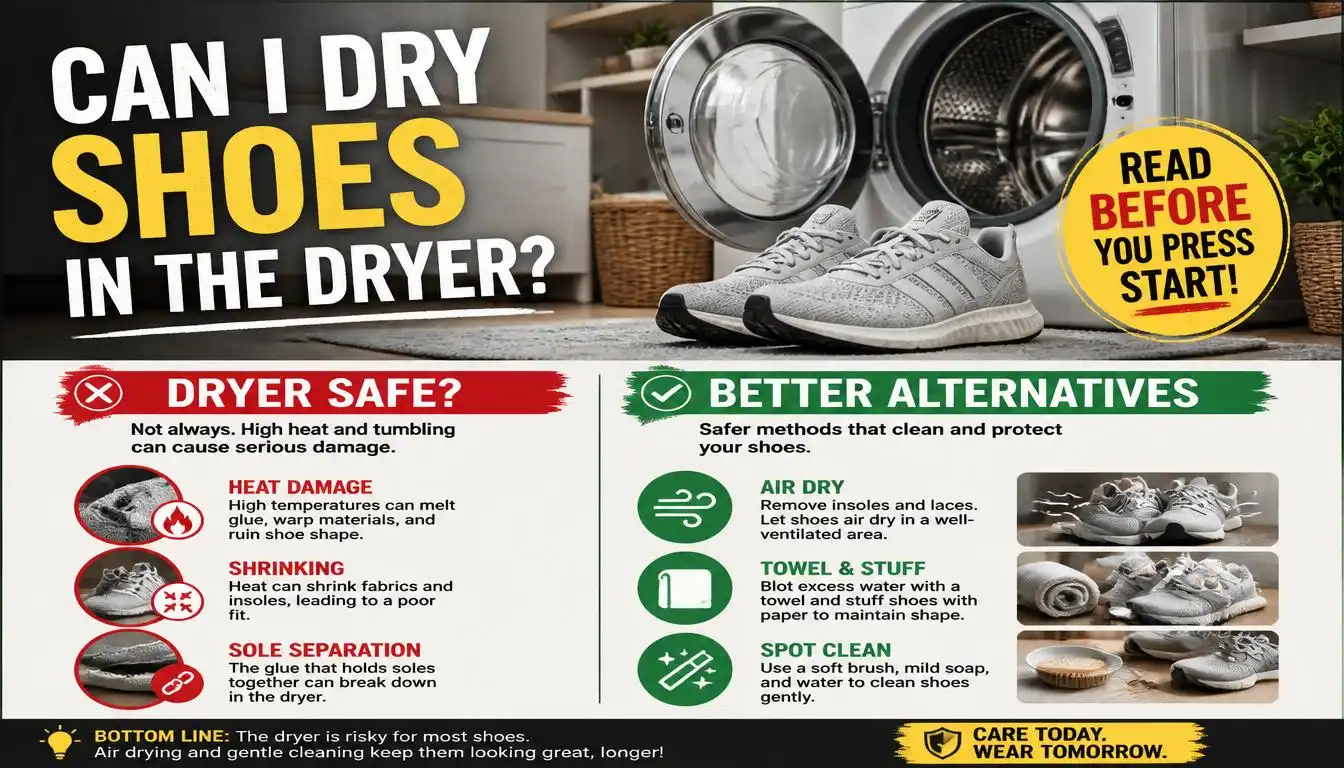
Yes, you can dry some shoes in the dryer, but it depends on the shoe material, construction, and the dryer’s settings. Athletic shoes made from canvas, cotton, polyester, or nylon can often be tumble-dried safely on low or no-heat settings, while leather, suede, dress shoes, and shoes with glued components can suffer permanent damage.
According to the American Cleaning Institute, heat is one of the leading causes of fabric shrinkage, adhesive failure, and material deterioration in washable household items. Similarly, many shoe manufacturers recommend air drying whenever possible to preserve shape and structural integrity.
If you’ve ever needed your shoes dry before work, school, or a workout, you’ve probably wondered whether tossing them in the dryer is safe. The answer is more nuanced than a simple yes or no.
In this guide, you’ll learn which shoes can go in the dryer, which should never be machine-dried, the safest drying methods, and how to avoid damaging your footwear.
Why Can I Dry Shoes in the Dryer Matters
Drying shoes incorrectly can shorten their lifespan dramatically. Excessive heat can weaken adhesives, warp rubber soles, shrink fabric uppers, and cause cracking in certain materials.
Common problems people experience include:
- Shoes shrinking after drying
- Rubber soles separating from the upper
- Loud banging noises damaging the dryer drum
- Misshapen shoes that no longer fit properly
- Cracked leather or suede materials
- Persistent odors caused by incomplete drying
Understanding the correct drying method helps protect both your shoes and your dryer.
Shoe Material Comparison Table
| Shoe Type | Dryer Safe? | Recommended Method | Risk Level |
|---|---|---|---|
| Canvas Sneakers | Usually Yes | Low heat or air dry cycle | Low |
| Running Shoes (Mesh) | Usually Yes | Air fluff or low heat | Low |
| Cotton Shoes | Yes | Low heat setting | Low |
| Nylon Athletic Shoes | Usually Yes | Air dry cycle | Low |
| Leather Shoes | No | Air dry only | High |
| Suede Shoes | No | Air dry only | High |
| Dress Shoes | No | Air dry only | High |
| Hiking Boots | No | Air dry with ventilation | High |
| Shoes with Gel Inserts | Usually No | Air dry | Medium |
| Shoes with Decorative Elements | No | Air dry | High |
Best Ways to Dry Shoes Safely
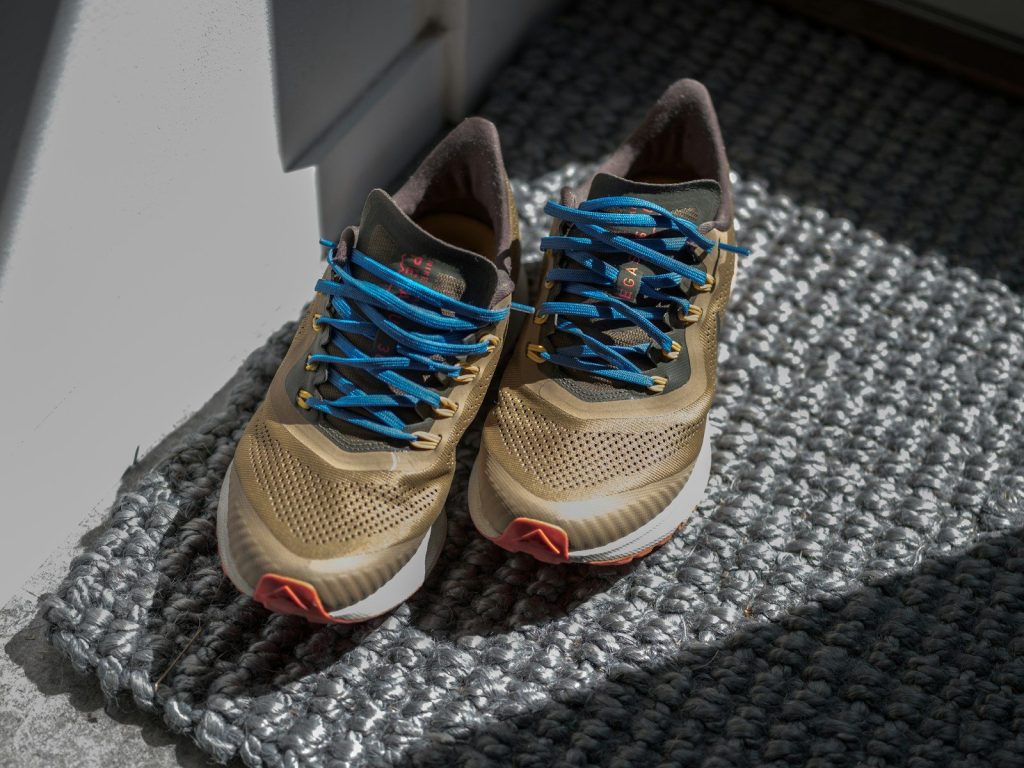
1. Check the Care Label First
Always look for the manufacturer’s care instructions before using a dryer. Many athletic shoe brands provide specific guidance regarding machine drying.
Benefits: Reduces damage risk and preserves warranties.
Drawbacks: Not all shoes include detailed labels.
2. Remove Insoles and Laces
Take out removable insoles and laces before drying. This allows better airflow and speeds up drying.
Benefits: Faster drying and reduced odor buildup.
Drawbacks: Requires reassembly afterward.
3. Use an Air-Only Cycle
An air-fluff cycle uses no heat and is generally the safest dryer option.
Benefits: Minimizes shrinkage and adhesive damage.
Drawbacks: Takes longer than heated drying.
4. Secure Shoes Properly
Tie shoelaces together and hang them from the dryer door or use a drying rack attachment if your dryer includes one.
Benefits: Prevents excessive banging.
Drawbacks: Not all dryers support this method.
5. Add Towels to Balance the Load
Place several dry towels in the dryer with the shoes.
Benefits: Reduces impact noise and cushions movement.
Drawbacks: Can slightly increase drying time.
6. Use Low Heat Only When Necessary
If the shoes are approved for machine drying, use the lowest available heat setting.
Benefits: Faster drying than air-only cycles.
Drawbacks: Some risk of shrinkage remains.
7. Monitor the Drying Process
Check the shoes every 15–20 minutes rather than running a full cycle.
Benefits: Prevents overheating and damage.
Drawbacks: Requires more attention.
Step-by-Step Guide
How to Dry Shoes in the Dryer Safely
- Check the care label and confirm dryer compatibility.
- Remove dirt, mud, and debris from the shoes.
- Take out removable insoles.
- Remove shoelaces if applicable.
- Place several towels inside the dryer.
- Secure the shoes using laces or a dryer rack.
- Select an air-only or low-heat cycle.
- Check progress every 15–20 minutes.
- Allow shoes to cool completely before wearing.
Pro Tip: If your dryer includes a stationary drying rack, use it. This prevents tumbling and significantly reduces wear on both the shoes and dryer.
Dryer Drying vs Air Drying Comparison Table
| Feature | Dryer Drying | Air Drying |
|---|---|---|
| Drying Speed | Fast | Slow |
| Risk of Shrinkage | Moderate | Very Low |
| Risk to Adhesives | Moderate | Very Low |
| Energy Usage | Higher | None |
| Shape Retention | Moderate | Excellent |
| Material Protection | Good with low heat | Best |
| Convenience | High | Medium |
| Long-Term Shoe Lifespan | Moderate | Best |
| Winner Analysis | Faster solution for approved athletic shoes | Best overall method for preserving footwear |
Expert Tips and Common Mistakes
Expert Tips
- Use no-heat cycles whenever possible.
- Stuff air-dried shoes with paper towels to maintain shape.
- Rotate between multiple pairs of shoes if possible.
- Clean shoes before drying to prevent stains from setting.
- Dry insoles separately for better airflow.
- Use a dryer rack when available.
Common Mistakes to Avoid
Mistake #1: Using High Heat
High heat can exceed safe temperatures for many shoe materials. This often leads to shrinkage, warping, or sole separation.
Mistake #2: Drying Leather Shoes
Leather loses natural oils when exposed to heat. The result can be cracking, stiffness, and permanent damage.
Mistake #3: Ignoring Manufacturer Instructions
Different brands use different adhesives and materials. Following care instructions helps avoid costly mistakes.
Mistake #4: Leaving Shoes in Too Long
Extended dryer cycles increase the risk of material breakdown and shape distortion.
Frequently Asked Questions
Can I dry shoes in the dryer without damaging them?
Yes, many canvas and athletic shoes can be dried safely using an air-only or low-heat cycle. Always check the manufacturer’s care instructions first.
Can running shoes go in the dryer?
Many running shoes can tolerate low-heat drying, but excessive heat may weaken adhesives and cushioning materials. Air drying remains the safest option.
How long does it take to dry shoes in the dryer?
Most athletic shoes require 20–60 minutes depending on material thickness, moisture level, and dryer settings.
Can shoes shrink in the dryer?
Yes. Heat can cause fabric uppers and certain synthetic materials to shrink. This is one reason low-heat settings are recommended.
What temperature is safe for drying shoes?
If heat is necessary, use the lowest available setting. Generally, temperatures below 120°F (49°C) are less likely to cause damage than high-heat cycles.
Can I dry leather shoes in the dryer?
No. Leather shoes should never be tumble-dried. Air drying at room temperature is the recommended method.
Is air drying better than dryer drying?
For most footwear, yes. Air drying offers the best protection against shrinkage, warping, adhesive failure, and material damage.
Conclusion
So, can I dry shoes in the dryer? The answer is yes for many athletic, canvas, and fabric-based shoes, provided you use low heat or an air-only setting. However, leather, suede, dress shoes, and specialty footwear should always be air-dried.
The safest approach is to check the care label, remove insoles and laces, secure the shoes properly, and monitor the drying process closely. Taking a few extra minutes can prevent expensive damage and extend the life of your footwear.
For more laundry and footwear care advice, explore our other shoe care guides and laundry appliance comparisons to keep your clothing and footwear in top condition.
Expert Opinion
In my experience as a textile care specialist, most shoe damage occurs not during washing but during drying. Many people assume a dryer is harmless, yet excessive heat can quickly weaken adhesives and distort materials that were never designed for high temperatures.
Organizations such as the American Cleaning Institute and major footwear manufacturers consistently recommend air drying whenever practical. While modern athletic shoes are generally more durable than older designs, heat exposure still remains one of the biggest risks to long-term shoe performance.
When I need shoes ready quickly, I prefer an air-fluff dryer cycle combined with periodic checks. This balances convenience with protection and significantly reduces the chances of shrinkage, warping, or premature wear.

Oliver Bennett is a home appliance writer specializing in washer and dryer solutions, laundry care, and energy-efficient appliances. He provides detailed reviews, buying guides, and maintenance tips to help users choose reliable machines and achieve better laundry results.