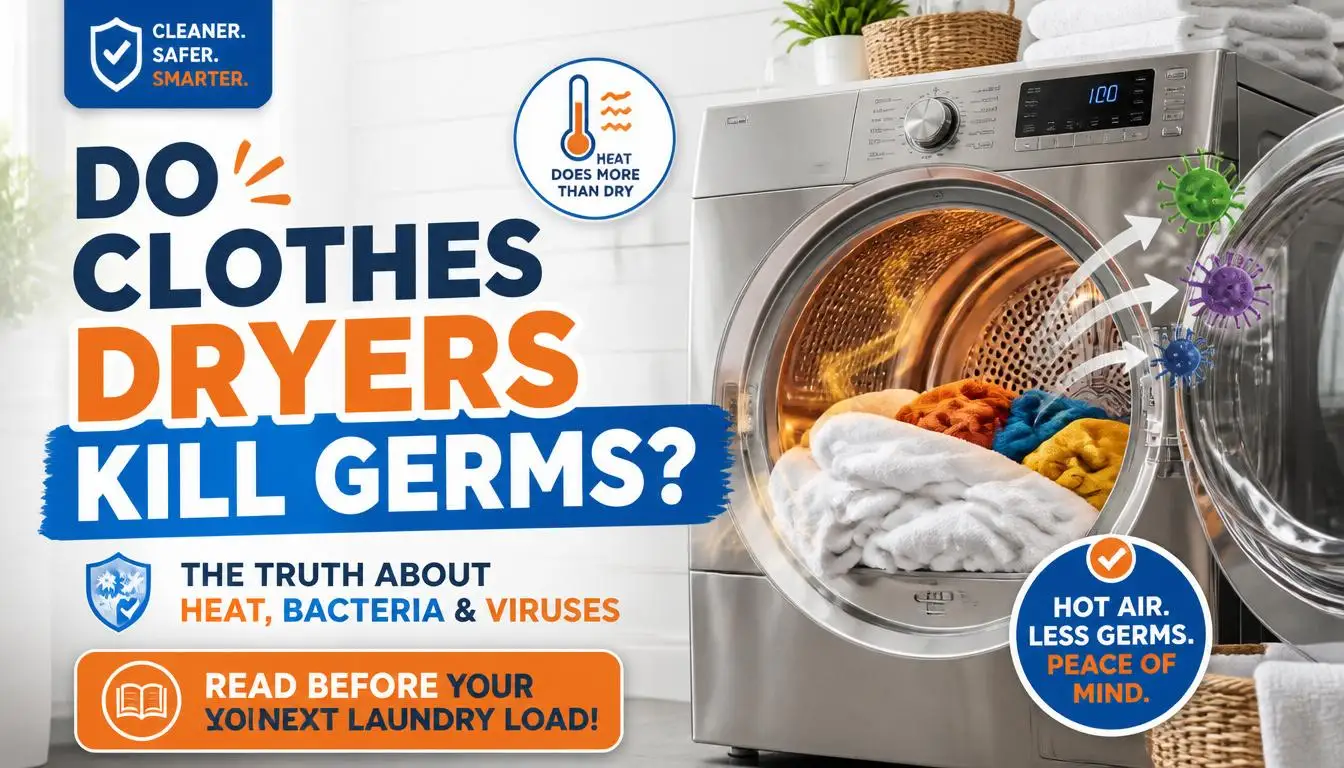
Quick Answer: Yes, clothes dryers can kill many germs, bacteria, and some viruses but only when they reach a high enough temperature for a sufficient amount of time. A dryer alone is not a complete disinfectant. For the best hygiene, wash clothes with detergent first and then dry them on the highest heat setting that is safe for the fabric.

Laundry is part of everyday life, but many people wonder whether tossing clothes into the dryer does more than simply remove moisture. If you’ve recently been sick, handled dirty gym clothes, cleaned up after pets, or washed towels and bedding, you may ask yourself: Do clothes dryers kill germs?
The short answer is yes—but with important limitations. Heat is one of the most effective ways to reduce harmful microorganisms, but not every dryer cycle reaches temperatures that can sanitize fabrics. The type of germ, the drying temperature, the length of the cycle, and even the fabric itself all influence how effective your dryer is.
In this guide, you’ll learn how clothes dryers affect bacteria, viruses, mold, and other microorganisms, which dryer settings work best, when washing is more important than drying, and the safest way to sanitize laundry at home.
Do Clothes Dryers Kill Germs?
Yes, clothes dryers can kill many germs, especially when they operate at high temperatures for long enough. Heat damages the proteins and cell structures that many bacteria and viruses need to survive.
However, a dryer should not be viewed as a replacement for washing clothes. Dirt, sweat, body oils, and organic matter can protect microorganisms from heat. That’s why washing with detergent first is essential.
In general:
- High heat reduces many common bacteria.
- Longer drying times improve effectiveness.
- Fully drying clothes is more effective than leaving them damp.
- Combining washing and drying provides the best protection.
Think of your dryer as the second step in the cleaning process rather than the only one.
How Does Heat Kill Germs?
Heat destroys microorganisms by damaging their proteins, enzymes, and cell membranes. When exposed to high temperatures for enough time, many bacteria lose the ability to grow and reproduce.
Different microorganisms react differently to heat.
| Microorganism | Heat Effect |
|---|---|
| Common bacteria | Often killed by sustained high heat |
| Many viruses | Heat significantly reduces survival |
| Mold | Growth stops, but spores may survive |
| Dust mites | High heat is highly effective |
| Bacterial spores | Some may survive household dryer temperatures |
This explains why hospitals, commercial laundries, and healthcare facilities rely heavily on high-temperature washing and drying processes.
Does Every Clothes Dryer Kill Germs?
No.
Not every dryer reaches temperatures that effectively reduce microorganisms.
Several factors affect performance:
- Dryer model
- Heat setting
- Cycle length
- Load size
- Ventilation efficiency
- Moisture remaining in clothing
For example, a heavily overloaded dryer often struggles to circulate hot air evenly, meaning some garments may never become hot enough.
Older dryers with clogged vents or poor airflow may also produce inconsistent temperatures.
How Hot Does a Clothes Dryer Get?
Household dryers generally operate within a range of temperatures depending on the selected cycle.
| Dryer Setting | Approximate Temperature | Germ Reduction |
|---|---|---|
| Air Fluff | No heat | No |
| Delicate / Low | 120–125°F (49–52°C) | Limited |
| Medium | 130–140°F (54–60°C) | Moderate |
| High | 145–160°F (63–71°C) | Effective for many germs |
| Sanitize Cycle | 160°F+ (71°C+) | Best household option |
Remember that these temperatures vary by manufacturer and dryer model.
The Sanitize setting is specifically designed to expose fabrics to higher temperatures for longer periods, making it one of the most effective options available in residential dryers.
Do Clothes Dryers Sanitize Clothes?
Many modern dryers include a Sanitize Cycle, but it’s important to understand what “sanitize” actually means.
Sanitizing does not mean sterilizing.
Instead, sanitizing reduces the number of microorganisms to levels generally considered safe for everyday use.
A sanitize cycle typically:
- Uses higher heat
- Runs longer
- Maintains consistent temperatures
- Reduces many bacteria on washable fabrics
If your dryer includes this feature, it is an excellent choice for:
- Bath towels
- Bed sheets
- Cotton clothing
- Baby blankets
- Athletic wear
- Washcloths
Always check the care label before using high heat.
What’s the Difference Between Cleaning, Sanitizing, and Disinfecting?
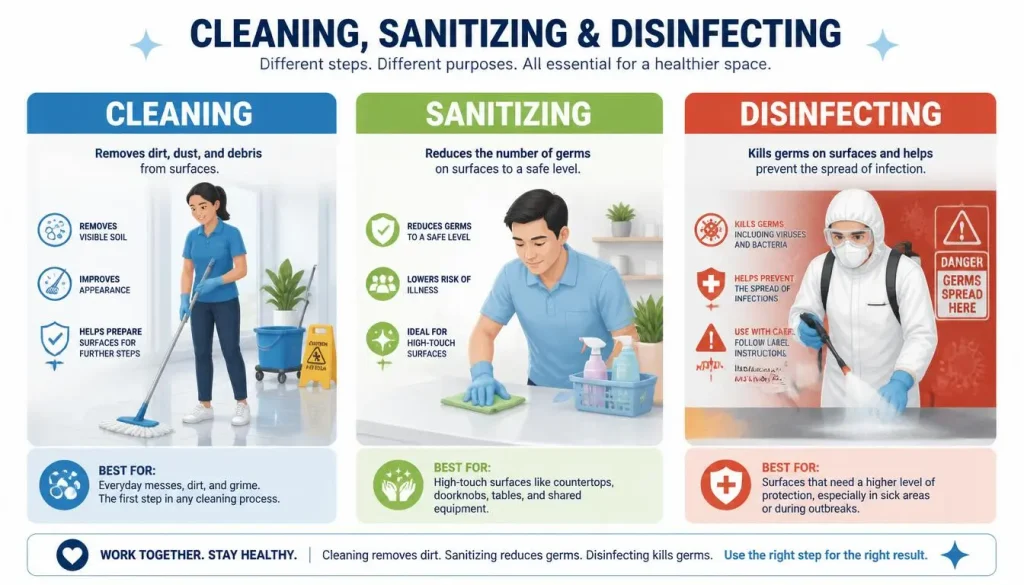
These terms are often confused.
| Process | What It Does |
|---|---|
| Cleaning | Removes dirt, oils, and many germs |
| Sanitizing | Lowers germ levels to safer amounts |
| Disinfecting | Kills or inactivates a much larger percentage of disease-causing organisms |
| Sterilizing | Eliminates nearly all microorganisms |
A household clothes dryer usually sanitizes, but it does not sterilize clothing.
Does Heat Alone Kill Germs on Clothes?
Heat helps, but heat alone is not enough in many situations.
Imagine dirty workout clothes covered with sweat and body oils.
Even if the dryer becomes very hot, organic material can shield bacteria from direct heat.
The safest process is:
- Wash with detergent.
- Use the hottest water safe for the fabric.
- Dry completely using medium, high, or sanitize settings.
This combination removes dirt while also exposing remaining microorganisms to heat.
Does a Clothes Dryer Kill Bacteria?
Yes, many common bacteria are sensitive to prolonged exposure to high temperatures.
Examples include:
- Escherichia coli (E. coli)
- Salmonella
- Staphylococcus aureus
- Many odor-causing bacteria
However, bacteria hidden deep inside thick fabrics or trapped in heavily soiled clothing may survive if garments are not washed first.
This is why healthcare professionals recommend washing contaminated clothing before drying.
Can a Clothes Dryer Kill Viruses?
The answer depends on the virus.
Many viruses become less stable when exposed to heat.
Household drying on high heat can help reduce the survival of several common viruses, especially after clothes have already been washed with detergent.
However:
- Drying alone should not be relied upon after illness.
- Washing remains the most important step.
- High heat provides additional protection.
For families dealing with seasonal illnesses like influenza, combining hot washing with complete drying is generally the safest approach.
Does a Dryer Kill Mold, Fungus, and Mildew?
Heat can stop mold from actively growing because mold requires moisture.
However, mold spores are much more resistant than ordinary bacteria.
A dryer may:
- Remove moisture
- Reduce active mold growth
- Kill some fungi
- Lower mildew odors
But if visible mold is present, washing with appropriate detergent is still necessary.
Never rely on drying alone to remove mold contamination.
Do Clothes Dryers Kill Dust Mites?
Yes.
High dryer temperatures are very effective against dust mites.
This is one reason allergy specialists often recommend drying:
- Bedding
- Pillowcases
- Blankets
- Comforters
- Children’s stuffed animals
on high heat whenever the fabric allows.
For people with asthma or dust allergies, regular washing followed by high-heat drying can significantly reduce dust mite exposure.
What Germs Can Survive a Clothes Dryer?
Although dryers reduce many microorganisms, some can survive depending on the conditions.
Examples include:
- Heat-resistant bacterial spores
- Some mold spores
- Certain fungi
- Germs protected inside thick organic debris
- Microorganisms on partially dried clothing
Low heat cycles are much less effective than high heat or sanitize settings.
Similarly, damp clothes removed before the cycle finishes may still contain microorganisms that thrive in moisture.
Best Dryer Settings for Killing Germs
Choosing the right dryer setting can make a significant difference in reducing germs on clothing.
| Dryer Setting | Best For | Germ Reduction |
|---|---|---|
| Air Fluff | Delicate items only | Very Low |
| Low Heat | Synthetic fabrics | ⭐ Limited |
| Medium Heat | Everyday clothing | ⭐⭐ Moderate |
| High Heat | Towels, cotton, bedding | ⭐⭐⭐⭐ High |
| Sanitize Cycle | Heavy-duty hygiene | ⭐⭐⭐⭐⭐ Best |
Whenever possible, choose the highest heat setting that is safe for the fabric. Always follow the care label to avoid shrinking or damaging clothing.
How Long Should Clothes Stay in the Dryer to Kill Germs?
Time is just as important as temperature.
A short high-heat cycle may not expose every garment to enough heat, especially in large loads.
General Recommendations
| Dryer TemperatureRecommended Drying Time | |
|---|---|
| Medium Heat | 45–60 minutes |
| High Heat | 30–45 minutes |
| Sanitize Cycle | Complete the entire cycle |
Avoid stopping the cycle early if your goal is reducing germs.
Is Washing or Drying More Important for Killing Germs?
Both play important roles, but washing comes first.
Detergent removes dirt, oils, and many microorganisms before the dryer’s heat provides an additional level of germ reduction.
| Washing Machine | Clothes Dryer |
|---|---|
| Removes dirt and body oils | Removes moisture |
| Washes away many germs | Reduces additional germs with heat |
| Uses detergent | Uses heat |
| Essential first step | Important second step |
Best practice: Wash first, then dry completely.
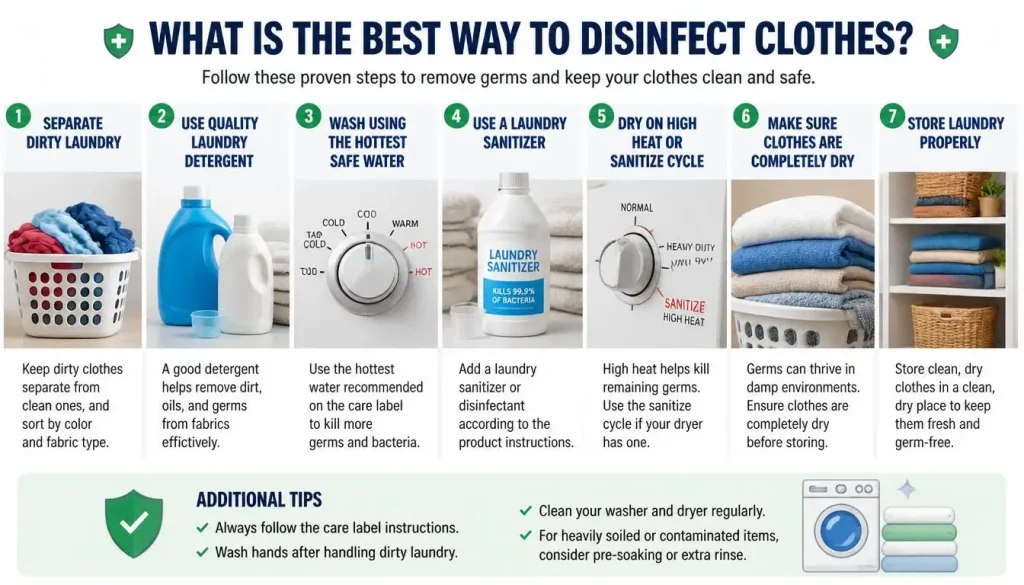
What Is the Best Way to Disinfect Clothes?
If you’re washing clothes after illness, caring for someone who is sick, or cleaning heavily soiled laundry, follow these steps.
Step 1: Separate Dirty Laundry
Keep contaminated clothing away from clean laundry.
Step 2: Use Quality Laundry Detergent
Detergent removes oils, sweat, and many microorganisms during washing.
Step 3: Wash Using the Hottest Safe Water
Check the care label before selecting a hot water cycle.
Step 4: Use a Laundry Sanitizer (Optional)
A laundry sanitizer can provide additional protection when washing towels, bedding, baby clothes, or gym wear.
Step 5: Dry on High Heat or Sanitize Cycle
Complete the full drying cycle.
Step 6: Make Sure Clothes Are Completely Dry
Moisture encourages bacterial and fungal growth.
Step 7: Store Laundry Properly
Fold or hang clean clothing in a dry, clean location.
When a Dryer Alone Is Not Enough
There are situations where drying clothes alone is not sufficient.
These include clothing contaminated with:
- Blood
- Vomit
- Urine
- Feces
- Pet waste
- Mold
- Heavy food contamination
In these cases:
- Wash immediately.
- Use detergent.
- Use the hottest safe water.
- Dry completely afterward.
People with weakened immune systems should also follow enhanced laundry hygiene practices.
Which Fabrics Should Not Be Dried on High Heat?
High temperatures can damage certain fabrics.
| Fabric | High Heat Safe? |
|---|---|
| Cotton | Yes |
| Towels | Yes |
| Linen | Usually |
| Polyester | Sometimes |
| Rayon | No |
| Wool | No |
| Silk | No |
| Spandex | No |
Always read the garment care label before selecting a dryer cycle.
Common Mistakes That Prevent a Dryer From Killing Germs
Even a high-quality dryer won’t perform well if used incorrectly.
Avoid these common mistakes:
- Overloading the dryer
- Using only low heat
- Removing clothes while still damp
- Drying dirty clothes without washing
- Ignoring lint filter maintenance
- Blocking dryer ventilation
- Mixing heavily contaminated laundry with clean clothes
Proper airflow allows heat to circulate evenly around every garment.
Can Germs Spread Inside the Dryer?
In most households, the risk is low.
During normal drying cycles, high temperatures and constant airflow make it difficult for many germs to survive.
However, germs may spread if:
- Wet contaminated clothing sits inside the drum.
- The dryer isn’t cleaned regularly.
- Damp clothes remain in the machine for several hours after the cycle ends.
Cleaning the lint filter after every load and wiping the drum occasionally helps maintain good laundry hygiene.
Does Drying Clothes in Sunlight Kill Germs?
Sunlight can help reduce certain microorganisms because ultraviolet (UV) rays have natural antimicrobial properties.
However, sunlight is less predictable than a household dryer because effectiveness depends on:
- Weather
- UV intensity
- Drying time
- Fabric thickness
For consistent results, machine washing followed by proper machine drying remains the most reliable approach.
Can You Disinfect Clothes Without Bleach?
Yes.
Many fabrics cannot safely be washed with chlorine bleach.
Alternative options include:
- Laundry sanitizers
- Oxygen bleach (when fabric-safe)
- Hot water washing
- High-heat drying
- Proper detergent
These methods are generally suitable for colored clothing and delicate fabrics when used according to product instructions.
Expert Opinion
Professional laundry hygiene recommendations consistently emphasize that no single step completely eliminates germs.
The most effective approach combines:
- Appropriate detergent
- Correct washing temperature
- Thorough rinsing
- Complete drying
- Good laundry handling practices
For households with children, older adults, allergy sufferers, or anyone recovering from illness, following the complete washing and drying process provides the best balance of cleanliness and fabric care.
Frequently Asked Questions
Do clothes dryers kill germs without washing?
They can reduce some germs through heat, but washing with detergent is still necessary for removing dirt, oils, and many microorganisms.
Can a clothes dryer sanitize clothes?
Yes. A dryer with a sanitize cycle can significantly reduce many common germs when used correctly.
Does high heat kill bacteria on clothes?
Yes. Sustained high heat helps kill many common bacteria, especially after clothes have been washed.
Can low heat kill germs?
Low heat has limited effectiveness and should not be relied upon for sanitizing clothing.
Do clothes dryers kill bed bugs and their eggs?
High dryer temperatures maintained for the full cycle can kill bed bugs and their eggs on many washable fabrics.
Is the sanitize cycle worth using?
Yes. It provides longer exposure to higher temperatures, making it one of the most effective household dryer settings for reducing germs.
What is the safest way to disinfect clothes at home?
Wash clothes with detergent using the hottest water safe for the fabric, then dry them completely on high heat or a sanitize cycle.
Final Verdict
So, do clothes dryers kill germs? The answer is yes—but only under the right conditions.
A household dryer can significantly reduce many bacteria, viruses, dust mites, and other microorganisms when it reaches high temperatures for a sufficient amount of time. However, drying alone should never replace washing, especially when clothing is heavily soiled or contaminated.
For the safest and most effective laundry hygiene routine:
- Wash clothes with a quality detergent.
- Use the hottest water that is safe for the fabric.
- Dry clothes completely on high heat or the sanitize cycle whenever appropriate.
- Avoid overloading the dryer and keep it clean for optimal performance.
By combining proper washing techniques with effective drying, you can reduce germs, keep your clothes fresher, and create a healthier home environment.

Oliver Bennett is a home appliance writer specializing in washer and dryer solutions, laundry care, and energy-efficient appliances. He provides detailed reviews, buying guides, and maintenance tips to help users choose reliable machines and achieve better laundry results.